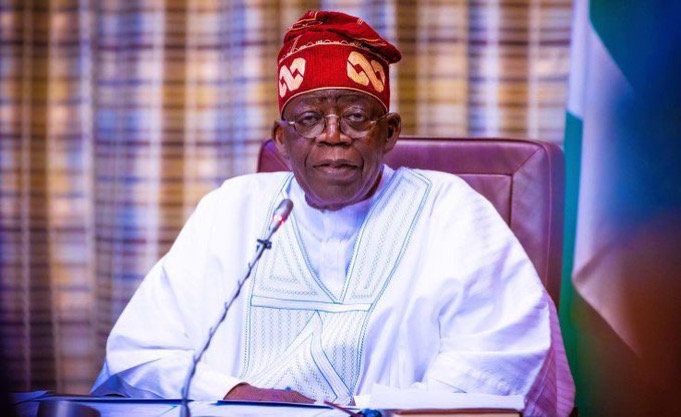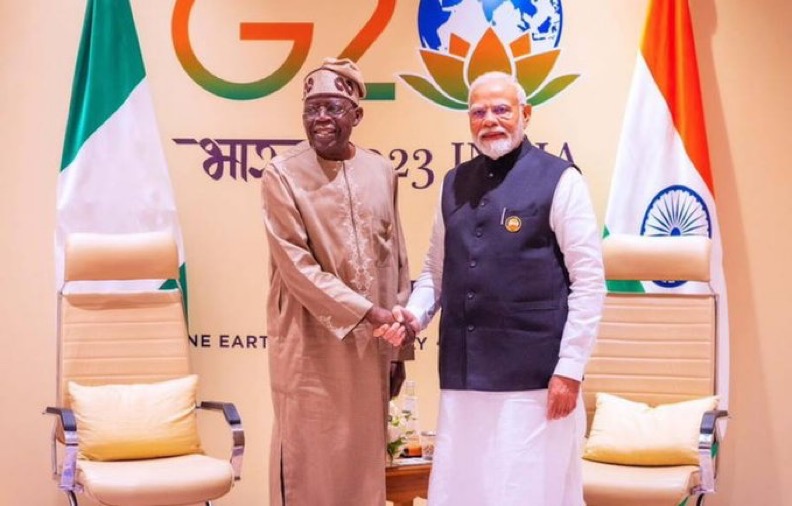
NEW DELHI — Indian Prime Minister Narendra Modi has formally extended an invitation to Nigerian President Bola Ahmed Tinubu to participate in the upcoming BRICS Leaders’ Summit. The high-level international gathering is scheduled to take place on September 12 and 13 in New Delhi, India. The official invitation was announced by India’s High Commissioner to Nigeria, Abhishek Singh, during an interactive session with senior diplomats and news correspondents in Abuja, where he expressed strong optimism that President Tinubu would lead a high-powered diplomatic and trade delegation to the Indian capital.
The invitation highlights Nigeria's institutional standing as a recognized BRICS partner country, positioning Africa's most populous democracy and key economic power at the center of critical deliberations concerning international monetary reform, trade architecture, and South-South geopolitical alignment. According to the Indian envoy, Nigeria’s participation carries immense symbolic and strategic weight, given its pivotal role in West Africa and its expanding influence across the wider African continent.
Strategic Alliance and Shared Global Ambitions: The Diplomatic Dimension
The diplomatic relationship between Nigeria and India has evolved into a strategic partnership grounded in shared global objectives and mutual support across multilateral platforms. High Commissioner Singh noted that both democratic nations consistently align their positions on international bodies, particularly within the United Nations framework. Both nations have long advocated for a comprehensive overhaul of global governance institutions, including mutual support for their respective bids to secure permanent seats on a reformed United Nations Security Council.
By engaging directly with the BRICS alliance—which comprises founding members Brazil, Russia, India, China, and South Africa, alongside newly admitted member nations—Nigeria gains an expanded platform to advocate for the collective interests of the Global South. High Commissioner Singh emphasized that Nigeria’s presence at the New Delhi summit will enable West Africa's leading economy to contribute meaningfully to global dialogues on economic equity, supply chain resilience, technology transfer, and sustainable development, while simultaneously deepening bilateral ties with India.
Background and Evolution of the BRICS Framework: From Economic Concept to Multipolar Block
Understanding the strategic significance of this summit requires examining the historical evolution of BRICS. Originally coined in 2001 as an economic acronym to describe high-growth emerging markets, the grouping formalized into an operational geopolitical block in 2009. Over the past two decades, BRICS has expanded its functional scope from basic trade coordination toward building alternative global economic infrastructure, most notably through the establishment of the New Development Bank (NDB).
In recent years, the alliance initiated a deliberate expansion framework aimed at integrating key regional leaders across Africa, Latin America, the Middle East, and Asia. The creation of the BRICS partner country status represents a calculated diplomatic model, allowing major non-member economies like Nigeria to participate in strategic working groups, trade initiatives, and policy dialogues without immediately assuming full constitutional obligations. This framework provides Nigeria with strategic flexibility, allowing the country to build robust trade bridges with major emerging economies while maintaining its traditional diplomatic alliances across Western nations.
Economic Breakdown: $10 Billion Trade Baseline, Indian Investments, and Local Job Creation
The economic foundation underpinning India-Nigeria relations is robust and rapidly expanding across critical industrial sectors. Bilateral trade volume between the two nations currently hovers near $10 billion annually, driven by energy exports, pharmaceutical manufacturing, agricultural machinery, and telecommunications technology. India remains one of the largest buyers of Nigerian crude oil, providing vital foreign exchange earnings for the West African nation.
In addition to direct commercial trade, Indian corporate investment in Nigeria represents a key pillar of domestic industrial production. Over 200 Indian multinational enterprises and industrial firms currently operate within Nigeria, spanning manufacturing, healthcare infrastructure, automobiles, power generation, and information technology. High Commissioner Singh revealed that these enterprise investments collectively generate direct employment for nearly 100,000 Nigerian citizens, contributing significantly to local human capital development, vocational training, and industrialization efforts across various states.
Explanation: De-Dollarization, Local Currency Settlement, and Trade Mechanics
As discussions at the upcoming New Delhi summit center on economic sovereignty and financial integration, understanding modern international trade terminology becomes essential. A central topic among BRICS partners is the concept of de-dollarization, which refers to policy measures aimed at reducing reliance on the United States dollar as the primary medium for cross-border trade settlements and central bank reserve holdings.
To facilitate trade between emerging markets without exposing businesses to foreign exchange volatility, nations are increasingly negotiating local currency settlement mechanisms. In plain English, a local currency settlement framework allows Nigerian importers to pay for Indian goods in Nigerian naira, while Indian buyers pay for Nigerian energy exports in Indian rupees, bypassing the need to convert transactions into intermediary currencies like dollars or euros. For Nigerian enterprises facing foreign exchange constraints, bilateral currency frameworks established through BRICS partnerships could significantly reduce import costs, lower transaction friction, and stabilize domestic price levels.
Deep-Rooted Historical and Cultural Ties: People-to-People Connections
Beyond institutional diplomacy and macroeconomics, the relationship between India and Nigeria is anchored by deep cultural and historic human connections. An estimated 60,000 Indian expatriates and families reside in Nigeria, with several multi-generational families having settled in major urban centers such as Lagos, Kano, and Port Harcourt prior to Nigeria's independence.
This diaspora community has played a central role in fostering cross-cultural understanding, establishing private schools, running medical facilities, and investing heavily in philanthropy and community development. Joint initiatives in higher education, medical tourism, technical scholarship programs, and creative industries—frequently demonstrated through collaborative cultural exchanges between Bollywood and Nollywood—continue to strengthen bilateral trust at the grassroots level.
Global Geopolitical Realignment and West African Leadership
President Bola Tinubu’s prospective attendance at the BRICS Summit in New Delhi carries profound economic, political, and strategic implications for West Africa. At a time when global supply chains are undergoing structural realignments and traditional multilateral institutions face gridlock, active engagement with BRICS offers Nigeria expanded access to alternative infrastructure financing, technical assistance, and foreign direct investment.
Furthermore, as the current leader within the Economic Community of West African States (ECOWAS), President Tinubu's participation ensures that West Africa’s voice is represented in high-level debates regarding global energy transitions, food security, and international financial architecture. Strengthening strategic ties with India provides Nigeria with valuable leverage, reinforcing its position as a primary gateway for international capital entering the broader African Continental Free Trade Area (AfCFTA).
The Path to New Delhi: High-Stakes Summit and Future Outlook
As official diplomatic preparations intensify ahead of the September 12 and 13 meetings in New Delhi, the focus remains on finalizing bilateral agreements and strategic memoranda of understanding. The high-level discussions between President Tinubu and Prime Minister Modi are expected to cover expanding cooperation in defense technology, joint agricultural development, local healthcare manufacturing, and renewable energy systems.
By accepting Prime Minister Modi’s invitation, Nigeria reaffirms its commitment to an active, independent, and multi-aligned foreign policy. The New Delhi summit promises to serve as a milestone event, providing both Nigeria and India with a vital platform to deepen bilateral trade, advance structural reforms for developing nations, and shape the future trajectory of Global South cooperation.