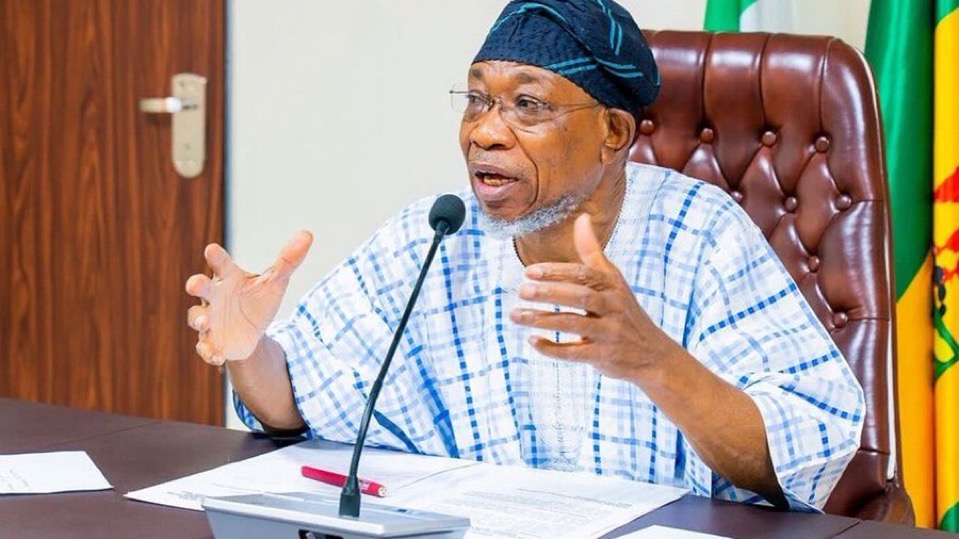
The African Democratic Congress (ADC) has formally raised an alarm regarding an alleged plan by federal security agencies to arrest its National Secretary, Ogbeni Rauf Aregbesola, in the crucial days leading up to the Osun State gubernatorial election. In an official statement issued by the party’s National Publicity Secretary, Bolaji Abdullahi, the opposition platform warned that any attempt to detain or harass its high-ranking national officer on the eve of a major election would represent a deliberate effort to compromise democratic processes and disrupt opposition leadership activities. The warning highlights growing tension in Osun State as political parties enter the final stretch of campaigning, raising significant concerns among civil society groups, election observers, and the electorate regarding security conduct, political neutrality, and state agency neutrality ahead of the polls.
According to the statement released by the party leadership, the reports concerning the impending arrest of the former Governor of Osun State and former Minister of Interior cannot be dismissed given what the ADC described as an established pattern of intimidation, harassment, and federal agency misuse against opposition figures. The party emphasized that if any security agency possesses legitimate legal grounds to question or invite Aregbesola, standardized administrative and legal procedures must be followed rather than executing high-handed detentions designed to create political disadvantage on the eve of a crucial vote.
Allegations of Pre-Election Intimidation and the ADC Official Statement
The African Democratic Congress positioned its public warning as a preemptive measure to safeguard democratic norms and protect its key campaign strategist ahead of Saturday’s ballot. Speaking on behalf of the party's National Working Committee, Bolaji Abdullahi asserted that detaining a central figure responsible for coordinating national and state election operations on the very eve of an election leads to only one logical conclusion: an attempt to paralyze the opposition's organizational machinery.
In its official communication, the ADC put the Federal Government, the All Progressives Congress (APC) administration, and security chiefs on explicit notice, stating that the eyes of the entire nation and the international community are fixed firmly on Osun State. The party cautioned that any administrative or security actions taken prior to, during, or after Saturday’s election will be critically evaluated based on immediate conduct rather than post-event justifications offered by state institutions. The leadership further urged the ruling party to refrain from provocative measures that could destabilize Osun State, reminding federal authorities of their fundamental duty to preserve peace and uphold democratic governance in a constitutional republic.
Rauf Aregbesola’s Political Trajectory and Osun State Dynamics
To fully understand the gravity of the ADC’s statement, one must examine the deep historical footprint of Ogbeni Rauf Aregbesola within Southwestern Nigerian politics and Osun State in particular. Aregbesola served as the Executive Governor of Osun State for two consecutive terms between 2010 and 2018, during which he established a formidable political infrastructure across the state's thirty local government areas.Following his tenure as governor, he was appointed as the Minister of Interior under the federal cabinet, further expanding his national political stature and operational influence over key paramilitary agencies.
However, internal power struggles within the ruling APC led to a high-profile political rift between Aregbesola's political camp and competing factions within Osun State, eventually culminating in his realignment with alternative political platforms and his ascension to the position of National Secretary of the African Democratic Congress. As a veteran politician with deep grassroots mobilization networks in Osun, Aregbesola’s active leadership in the ADC poses a significant tactical challenge to both the incumbent state administration and the ruling federal party. The upcoming Osun State election represents a critical test of political strength for all major gladiators, making security maneuvers and high-profile political figures lightning rods for controversy.
Legal Invitation Protocols Versus Political Detentions
Navigating accusations of pre-election state overreach requires a clear understanding of legal procedures, law enforcement powers, and constitutional rights. Under Nigerian criminal jurisprudence and police administration acts, statutory security agencies possess the legal authority to investigate alleged offenses, request interviews, and execute lawful arrest warrants against any citizen regardless of political standing. However, constitutional experts point out that the timing, execution, and methodology of law enforcement actions carry profound legal and democratic implications, especially during active electoral periods.
When a political party refers to established procedures for invitation, it points to administrative norms that require law enforcement agencies to issue formal, written invitation letters specifying the nature of an inquiry, providing reasonable notice, and allowing legal representation. Conversely, executing surprise detentions or non-bailable arrests of major political leaders on the immediate eve of an election is often characterized by legal analysts as pre-election state intimidation. In plain English, this practice refers to the selective deployment of police or intelligence apparatuses to temporarily remove key operational leaders from the field during critical voting hours, thereby weakening an opposition party's monitoring and logistics networks without necessarily proving any legal wrongdoing in court.
Implications for Security Neutrality, Public Order, and Voter Turnout
The controversy surrounding the alleged plan to arrest Aregbesola carries far-reaching economic, social, and political ramifications for Osun State and the broader Nigerian federation. Off-cycle gubernatorial elections in Nigeria have historically been intense, high-stakes contests where the deployment of security forces frequently becomes a central point of friction between competing political movements. When opposition parties express severe distrust in law enforcement neutrality, public confidence in the overall legitimacy of the electoral process deteriorates significantly.
From a social and security perspective, political intimidation or the high-profile arrest of a prominent leader can trigger civil unrest, spontaneous protests, and voter disenfranchisement. Scared by potential violence or security clashes, prospective voters may opt to stay away from polling units on election day, leading to artificially low turnout and undermined democratic mandates. Economically, election-related instability in Osun State risks disrupting commercial activities, inter-state trade corridors, and regional transport networks across the Southwest geopolitical zone, imposing immediate financial costs on local businesses and informal traders.
Osun State as a National Political Bellwether
Osun State has long occupied a unique position as a political bellwether in Nigerian electoral dynamics. Located in the heart of the Southwestern region, the state’s political outcomes frequently signal broader shifts in voter alignment, coalition strength, and public sentiment regarding federal governance. Consequently, off-cycle elections in Osun are viewed not merely as local contests, but as critical indicators of national momentum ahead of wider general election cycles.
The high-stakes involvement of national party executives, alongside allegations of federal agency mobilization, underscores how regional gubernatorial contests serve as testing grounds for national political strategies. As international observers, domestic monitoring coalitions, and electoral integrity advocacy groups monitor the final preparations in Osun State, the focus remains squarely on whether security institutions will adhere strictly to constitutional neutrality or allow political friction to compromise peace and democratic credibility.
The Road to Election Day: Demands for Transparency and Democratic Safeguards
With Saturday’s ballot fast approaching, the public declaration by the African Democratic Congress puts immense pressure on federal authorities, police leadership, and the Independent National Electoral Commission (INEC) to demonstrate transparency and impartiality. Election integrity advocates emphasize that maintaining open lines of communication, ensuring equal security coverage for all political candidates, and adhering strictly to lawful investigation protocols are essential prerequisites for a peaceful vote.
As the political atmosphere in Osun State reaches a fever pitch, the ultimate test lies in the actions of state security agencies and political actors on the ground. The nation awaits Saturday’s vote with keen interest, observing whether administrative restraint and constitutional order will prevail, allowing the citizens of Osun State to freely exercise their civic franchise without fear, coercion, or political interference.