OSOGBO — Political tensions in Osun State have reached a boiling point following reports that the Economic and Financial Crimes Commission has placed a restrictive lien on a key Osun State Government bank account. The anti-graft agency reportedly issued a "Post No Debit" instruction on a state government account domiciled with First Bank just ten days before the highly anticipated August 15 governorship election.
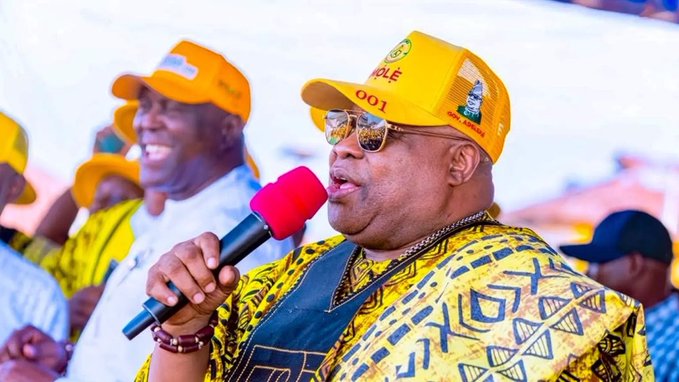
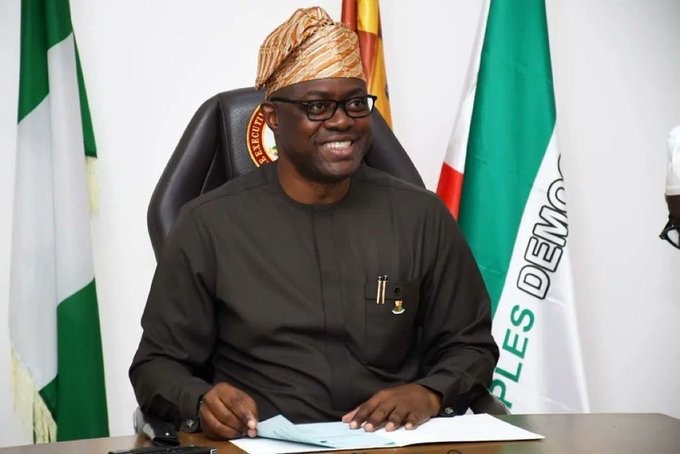
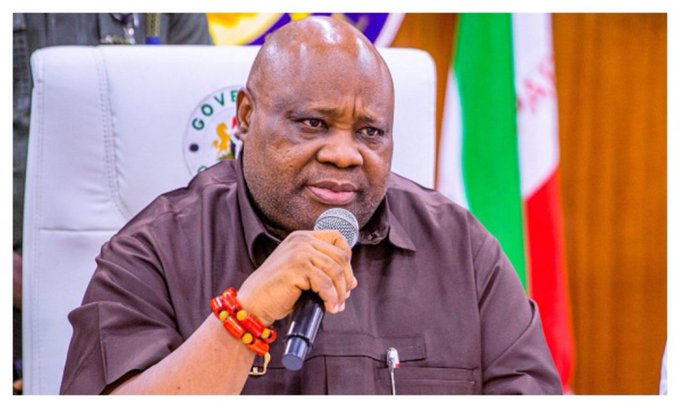
The affected bank account, which financial sources confirm is primarily utilized for the disbursement of monthly salaries and allowances to state civil servants, was restricted shortly after Governor Ademola Adeleke publicly warned that federal anti-graft operatives were planning to freeze state accounts and target top government officials to destabilize his administration ahead of the polls.
In a swift and sharp reaction, the Osun State Government, speaking through the Commissioner for Information and Public Enlightenment, Kolapo Alimi, condemned the reported action as an unconstitutional attempt to paralyze state operations and engineer artificial governance failure on the eve of a critical democratic exercise. While Governor Adeleke maintains that the commission lacks statutory jurisdiction to freeze a sovereign state government's operational accounts, official sources within the state treasury confirmed that financial transactions on the designated account have been effectively halted.
Political Rivalries and Pre-Election Friction in Osun State
The sudden restriction of Osun State's salary account marks the latest escalation in a long-standing political battle for control of the Southwestern state. Osun has historically served as one of Nigeria's most fiercely contested political battlegrounds, characterized by narrow election margins, complex judicial challenges, and intense rivalries between the ruling People's Democratic Party and the opposition All Progressives Congress.
The current political friction traces back to the landmark 2022 Osun governorship election, when Ademola Adeleke defeated the incumbent governor, Gboyega Oyetola, in a closely fought contest that reshaped the region's political landscape. Since assuming office, the Adeleke administration has frequently clashed with federal regulatory bodies and opposition figures over state financial management, subvention allocations, and municipal project executions.
As the August 15 governorship election approached, accusations of political intimidation began to dominate public discourse. Days before the account restriction was reported, Governor Adeleke convened an emergency briefing where he alleged that security reports indicated a coordinated plot by political opponents utilizing federal anti-corruption agencies to freeze state accounts, disrupt civil service payrolls, and provoke public dissatisfaction among voters. The subsequent implementation of the restriction on the First Bank account validated those initial warnings, plunging the state's financial administration into uncertainty.
Post No Debit Orders, State Financial Sovereignty, and Anti-Graft Jurisdiction
To evaluate the legal and administrative dimensions of this development, it is necessary to examine the operational mechanics of financial restrictions, statutory anti-graft mandates, and the constitutional limits of federal authority over state finances.
A "Post No Debit" instruction is an administrative order issued by regulatory bodies or law enforcement agencies to financial institutions, directing them to freeze all outgoing transactions from a specific bank account while allowing incoming deposits to continue. In standard financial investigations, anti-corruption agencies utilize this mechanism to prevent the dissipation of funds suspected to be proceeds of crime or involved in money laundering schemes.
However, the application of a "Post No Debit" order against a state government account introduces complex constitutional questions regarding state financial sovereignty and federalism under the 1999 Constitution of the Federal Republic of Nigeria. Sections 120 and 121 of the Constitution vest the control and management of state public funds exclusively in the State House of Assembly and the executive arm of the state government.
Legal experts and several judicial precedents, including landmark judgments by Nigerian appellate courts, have consistently established that while the Economic and Financial Crimes Commission possesses statutory powers under the EFCC Establishment Act of 2004 to investigate individual public officers accused of diversion or embezzlement, it lacks the constitutional authority to freeze the consolidated revenue fund or operational bank accounts of a sovereign state government. Freezing a state's primary operational account effectively deprives the state of its executive capacity to govern, breaching the fundamental principles of federated governance.
Governance Paralysis, Civil Service Impact, and Election Integrity
The financial restriction imposed on Osun State's salary account carries immediate, profound consequences for local governance, economic stability, and the perceived fairness of the upcoming electoral process.
From an administrative perspective, restricting a state's payroll account directly threatens the livelihoods of tens of thousands of civil servants, healthcare workers, public school teachers, and judicial officers who rely on monthly salary disbursements to support their families. Withholding worker compensation just days before an election creates severe economic distress across local commercial markets, disrupting small businesses, trade transportation, and essential public services that depend on civil service liquidity.
From a political and social standpoint, the timing of the anti-graft agency's intervention raises serious concerns regarding election integrity and institutional neutrality. Disabling a state government's financial capacity during an active campaign period creates an uneven playing field, forcing the incumbent administration to divert operational focus from election logistics and governance duties to emergency legal battles.
Public policy analysts warn that deploying financial restrictions against state governments on the eve of elections risks eroding public trust in federal institutions. When law enforcement agencies are perceived as participating in partisan political conflicts, it damages the credibility of anti-corruption campaigns and fuels civil unrest among voters who view such actions as targeted electoral interference.
Federalism, Institutional Independence, and Electoral Integrity in Africa
The unfolding situation in Osun State reflects broader, persistent challenges surrounding federalism, institutional independence, and the weaponization of state apparatuses across Sub-Saharan Africa.
Across Nigeria's modern political history, federal-state financial disputes have frequently coincided with high-stakes electoral cycles. Similar administrative and legal clashes occurred in previous decades when federal authorities attempted to withhold statutory allocations or restrict state accounts in opposition-controlled territories, demonstrating a recurring structural friction between federal security institutions and sub-national political administrations.
On the broader African continent, international election observers and democracy monitors have repeatedly identified the misuse of state regulatory bodies, tax authorities, and anti-corruption agencies as a significant threat to democratic consolidation. In several emerging democracies, incumbency advantage at the national level is occasionally leveraged to pressure sub-national governments, suppress opposition campaigns, and influence local electoral outcomes.
As Osun State prepares for the August 15 governorship poll, international democratic observers and civil society organizations are monitoring the situation closely. Ensuring that security agencies and anti-corruption bodies maintain strict institutional neutrality, observe constitutional boundaries, and refrain from actions that disrupt civil administration remains essential to preserving electoral fairness, protecting democratic norms, and safeguarding political stability across West Africa.