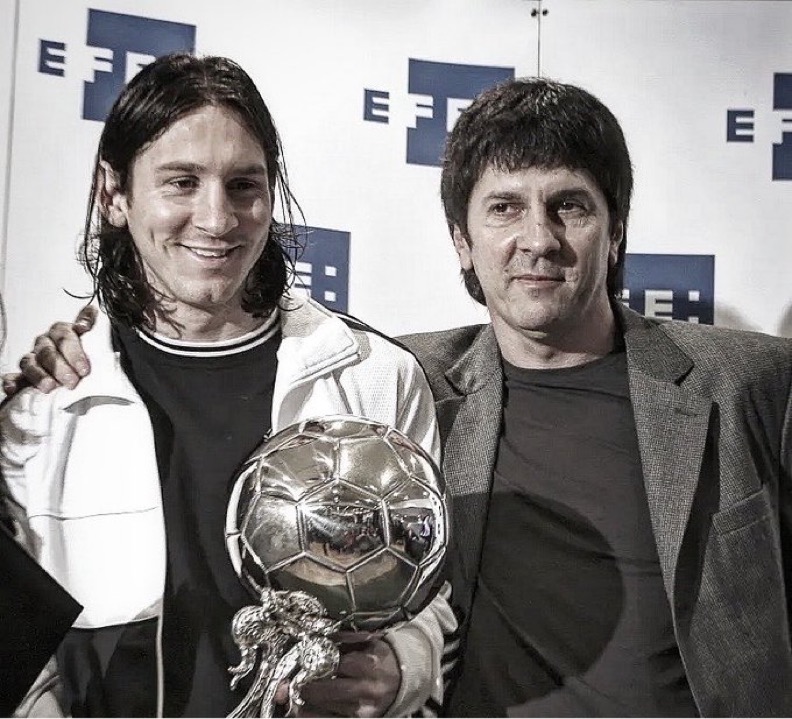
ROSARIO — In a profoundly moving public testament that has reverberated across the global sporting ecosystem, Argentine football icon and Inter Miami forward Lionel Messi has published an emotional open letter honoring his late father, Jorge Horacio Messi. The patriarch and long-time representative of the eight-time Ballon d'Or winner passed away in his hometown of Rosario, Argentina, at the age of 68, following a prolonged battle with a severe chronic illness.
Jorge Messi served as the central pillar behind his son’s unprecedented sporting journey, acting simultaneously as primary caregiver, contract negotiator, and strategic business advisor from Lionel’s early childhood in South America through to his historic professional heights in Europe and North America.

Taking to his social media channels on Wednesday, August 12, 2026, the captain of Argentina's national team shared a raw, deeply personal reflection detailing the intense emotional burden of navigating recent international tournaments while his father’s health steadily declined.
The letter offers a rare, candid glimpse into the private sacrifices made behind closed doors by football’s most celebrated family, revealing how the declining health of his primary mentor impacted Messi's recent international appearances and sparking widespread discussion regarding the superstar’s potential retirement from professional football.
Deciphering the Letter: Physical Strain, World Cup Sacrifices, and a Father’s Final Mandate
The public letter provides extraordinary context regarding the physical and psychological pressures Lionel Messi endured during recent international competitions, shedding light on private conversations between father and son that occurred away from broadcast cameras.
In the emotional release, Messi revealed that his father’s health suffered a severe setback in the days immediately preceding a major international tournament. Despite the worsening medical outlook, Jorge Messi urged his son to remain with the national squad and compete, believing that the recovery process would allow him to travel and watch the latter stages of the competition in person.
Messi detailed how he attempted to push his body beyond its physical limits to prolong his team's tournament run, hoping to buy precious time for his father to stabilize and join him at the final.
However, the physical toll of competing under severe emotional distress proved overwhelming. Messi candidly acknowledged that his body ultimately revolted against the strain, leaving him unable to perform at his accustomed physical baseline during critical matches.
The text reflects a heartbreaking realization: upon returning home after the tournament, Messi discovered that his father's cognitive state had deteriorated to the point where Jorge believed Argentina had lost the final on penalties, preventing the duo from having a clear final conversation about the tournament's true outcome.
The admission underscores the immense psychological burden elite athletes carry when managing severe family crises under the intense scrutiny of global media.
From Steel Mill Worker to Global Sports Architect
To fully grasp the magnitude of Jorge Messi’s impact on modern football, one must examine the decades-long journey that transformed a modest industrial supervisor into one of the most powerful player representatives in international sports history.
During the early 1990s, Jorge Messi worked as a floor manager at a steel manufacturing plant in Rosario, Argentina, while coaching local youth teams at Grandoli, a neighborhood football club. Recognizing his youngest son's natural gifts alongside his diagnosis of Growth Hormone Deficiency, Jorge embarked on a relentless quest to secure medical treatment for Lionel.
When domestic clubs in Argentina refused to cover the expensive monthly hormone therapy regimens required to support the child's development, Jorge leveraged his personal savings to organize a trial with FC Barcelona in Spain.
In September 2000, Jorge made the fateful decision to relocate his family across the Atlantic Ocean, securing a landmark trial at Barcelona’s famed La Masia academy. In December 2000, legendary club director Charly Rexach famously signed Lionel’s initial commitment on a paper napkin—a document preserved by Jorge as the foundational contract of his son's professional career.
Over the next two decades, Jorge managed every aspect of Lionel’s legal, corporate, and competitive affairs, negotiating historic contract renewals at Barcelona, orchestrating a high-profile transfer to Paris Saint-Germain in 2021, and eventually co-structuring a revolutionary multi-entity deal with Inter Miami, Major League Soccer, and Apple TV in 2023.
Paternal Representation, Power of Attorney, and Retirement Dynamics
Understanding the structural significance of Jorge Messi’s role in Lionel’s career requires an examination of sports agency models, legal representation frameworks, and athletic transition dynamics.
Paternal Representation vs. Traditional Sports Agencies represents a distinct management structure in elite athletics where a parent holds exclusive legal authority over an athlete's career rather than an external agency firm. Unlike corporate sports agencies that represent hundreds of clients and charge standard commission fees ranging from three to ten percent, paternal representatives operate with complete alignment of personal and familial interests.
Jorge Messi managed the family’s commercial entities, image rights companies, and tax structures directly, insulating his son from external agency exploitation while retaining total family control over global endorsement deals.
Power of Attorney and Image Rights Licensing refers to the legal instruments utilized by high-net-worth athletes to manage commercial contracts and personal brand monetization. In elite European and American football, an athlete's compensation is divided between playing wages paid by the club and image rights revenue generated through global brand partnerships.
By establishing off-shore and domestic holding companies, Jorge Messi personally directed the legal licensing of the Messi brand to multinational corporations, overseeing intricate royalty agreements, sponsorship activations, and real estate investment portfolios worth hundreds of millions of dollars.
Athletic Grief Dynamics and Competitive Longevity encompasses the psychological and physiological impacts that major bereavement exerts on veteran professional athletes. Clinical sports psychologists emphasize that when an athlete loses their primary lifelong support system and childhood mentor, the intrinsic motivation required to endure rigorous daily training, physical rehabilitation, and travel schedules can diminish rapidly.
With Messi explicitly expressing uncertainty in his letter regarding whether he has the emotional desire to continue playing without his father watching from afar, sports analysts recognize that paternal loss often serves as the final catalyst for athletic retirement.
Commercial Implications for Inter Miami and the Future of the Messi Brand
The passing of Jorge Messi and Lionel’s candid admissions regarding his uncertain professional future hold profound commercial and competitive implications for Inter Miami, Major League Soccer, and global football broadcasting partners.
From a commercial perspective, Lionel Messi’s presence in North America serves as the primary economic engine for Major League Soccer’s global expansion strategy. His arrival in 2023 driven largely by family-focused planning directed by Jorge transformed ticket sales, international TV subscriptions, and corporate sponsorship valuations across the league.
If the emotional weight of his father's passing accelerates Messi's timeline for retirement, commercial partners, event organizers, and broadcasting networks face the sudden loss of the game's biggest attraction, forcing stakeholders to prepare for a post-Messi era sooner than previously anticipated.
From an organizational management standpoint, Jorge Messi was not merely a supportive parent; he was the primary negotiator who maintained direct communication with Inter Miami managing owner Jorge Mas, co-owner David Beckham, and major corporate executives. His absence leaves a major structural void in the management of the Messi family empire.
Transitioning the legal, financial, and strategic oversight of the family's extensive global investments—including hotel chains, lifestyle brands, and venture capital funds—will require significant administrative restructuring by Lionel and his surviving family members during an intensely difficult period of personal mourning.
African Paternal Legacies and International Tributes
The loss of Jorge Messi resonates deeply across international sports culture, finding powerful parallels across Sub-Saharan Africa, South America, and global footballing communities where family sacrifice forms the foundation of athletic success.
Across Nigeria and the wider African continent, where millions of young athletes strive to transition from informal grass-fields to European professional leagues, the narrative of a dedicated father sacrificing personal comfort to advance his child's career is a deeply embedded cultural value.
African football history is rich with stories of parents who worked multiple manual labor jobs to purchase football boots, pay for transportation to academy trials, and advocate tirelessly against corrupt talent scouts.
From the parents who supported Nigerian international icons to the families backing emerging stars across West Africa, Jorge Messi’s devotion embodies the universal paternal sacrifice celebrated throughout global sports culture.
On the international stage, tributes have poured in from major sporting figures, political leaders, and international institutions. Former teammates from Barcelona, Paris Saint-Germain, and the Argentine national team, alongside executive leadership from FIFA and Major League Soccer, have issued public statements expressing solidarity with the Messi family.
As Argentina and the global sports community mourn the loss of one of football’s most influential behind-the-scenes figures, Jorge Messi’s legacy remains permanently secured through the historic, unmatched achievements of the son he championed from the streets of Rosario to the pinnacle of world sport.
The Full Tribute
"Lionel Messi’s letter for his father. ❤️🩹
Dad, I still can’t believe that you’ve gone. I don’t fall, or rather, I don’t want to fall. It’s very hard for me to imagine that I’m not going to see you anymore, that we’re not going to talk anymore. I know you were suffering and that it’s for the best, but you left too soon. We still had a lot left to enjoy together.
You asked me so much to play in the last World Cup, and it was in the days just before it started that you got the worst. It was the first time you weren’t going to be at a tournament, but Mom told me that you were going to get better and that you’d be well enough to travel. I told you we were going to reach the final so you could travel.
Every time a match ended I waited for and missed your message. That’s when I realized the situation was really bad. Even so, I didn’t stop thinking about going as far as possible, to buy you time and so you could see a match. We reached the final and you couldn’t be there.
I wanted to win it to bring it to you and show you a new one. I couldn’t; my legs wouldn’t give any more. This time I tried to go against my body, but I couldn’t. I never managed to feel good.
When I arrived you thought we had lost the final on penalties. We couldn’t talk about any of everything that happened. You couldn’t enjoy anything.
We weren’t champions, but you have no idea how much we enjoyed every single match. Once again, you were right: I had to be there and play it.
I’m telling you this because it was the only thing we couldn’t talk about, since you already know everything else. We talked every day and saw each other whenever we could, given my commitments.
I don’t know what I’m going to do without you, I don’t know how to go on. I only played football and now I have quite a few doubts about whether I’ll keep doing it for much longer.
You were by my side from the beginning; there was so little left until the end. Why couldn’t you hold on that little bit more so we could finish together?
I know your happiness was seeing your family well, your wife, your children, and above all, without the others finding out, watching me play…
It was always like that since I was little. You would take me to all the training sessions as soon as you got home from work. For many of them Mum took me because you were working.
Obviously you never missed a single match. How you suffered watching me and how you enjoyed it, even though you never gave me many compliments.
You were dad, friend and representative.
You were always the person you needed to be in every moment and you never got anything wrong. Beyond a few reproaches or arguments, you were always right. In the end it always turned out the way you said.
I’m going to miss you a lot, but you’ll always be present, and especially in the upbringing of my children, because I teach them and raise them the way you both did with me.
Rest in peace and look after us from above the way you did down here. Thank you for everything.
I love you, Dad. ❤️"