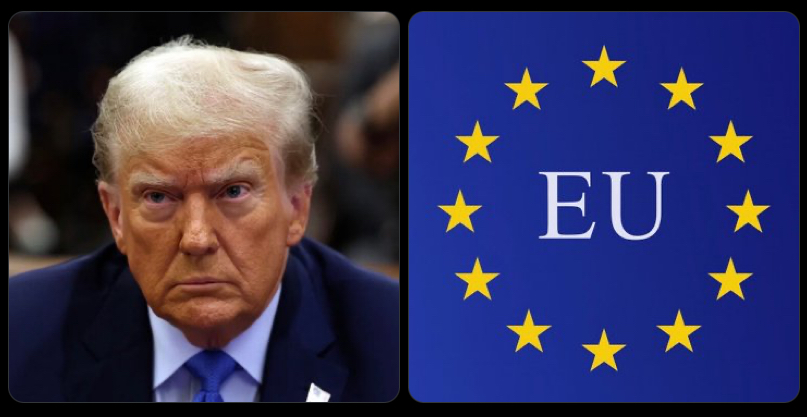
WASHINGTON — United States President Donald Trump has threatened to impose "substantial" retaliatory tariffs on the European Union following a series of high-profile regulatory fines levied by Brussels against major American technology conglomerates.
Characterizing European regulatory oversight as a targeted economic extraction strategy, President Trump declared that the United States would no longer tolerate the financial penalization of its leading corporate entities.
Writing in a series of direct communications published on his Truth Social platform, the U.S. President warned European leaders that Washington would immediately initiate formal trade investigations into Brussels' regulatory practices, promising swift countermeasures.
"The United States of America is not a 'PIGGYBANK' for Europe, nor will we allow it to be!" President Trump posted. He went on to assert that the European Union would "pay a very big price" for what he described as the systematic "ROBBING" of American companies and, by extension, the American taxpayer.
The Catalyst: EU Regulatory Enforcement and the €890M Google Fine
The President's aggressive trade warning comes in the immediate aftermath of a decisive regulatory ruling issued by the European Commission against Google.
European regulators hit the mountain View-based technology giant with a fresh €890 million ($1 billion) antitrust fine after an extensive investigation concluded that Google had breached continental digital competition laws. According to official findings released by European Commission antitrust regulators, Google abused its market dominance by affording "preferential treatment to its own services, including shopping, hotels, transport, and sports results" across its ubiquitous search engine and app marketplace.
The latest enforcement action against Google is not an isolated incident. Over recent months, the European Union's regulatory apparatus has aggressively deployed its landmark Digital Markets Act (DMA) to police digital platforms:
1. Meta Platforms: Targeted with major regulatory fines over data privacy structures, forced user bundling, and targeted advertising protocols across Facebook and Instagram.
2. Apple: Penalized following prolonged disputes regarding App Store commission fees, anti-steering policies, and third-party developer access restrictions.
3. Amazon: Subjected to continuous antitrust scrutiny regarding marketplace seller data usage and self-preferencing logistics algorithms.
From the perspective of Brussels, these legal actions represent necessary consumer protection measures designed to foster fair competition, prevent market monopolization, and protect European user data. However, from the perspective of the White House, the repeated multi-billion-dollar penalties represent a protectionist regulatory framework designed to extract capital from market-leading American innovators.
Tech Sector Response and Administration Strategy
In a notable development, major Silicon Valley entities welcomed the White House’s intervention against European regulatory pressure.
Google officially expressed appreciation for the U.S. administration's willingness to challenge European regulatory decisions. In a public statement addressing the trade dispute, Google spokesperson Jose Castaneda emphasized that the corporation had engaged extensively with European authorities to comply with complex DMA mandates while raising concerns about regulatory overreach.
"We appreciate the engagement by the administration and U.S. government," Castaneda stated, noting that Google continues to harbour significant concerns regarding the long-term impact of European Commission enforcement on technological innovation and cross-border digital services.
The alignment between the Trump administration and Silicon Valley tech leaders marks a strategic convergence. While domestic antitrust scrutiny remains a debate within Washington, the administration has consistently maintained that foreign governments should not be permitted to use administrative regulatory fines as revenue-generating mechanisms at the expense of American economic sovereignty.
Broader Economic Landscape: Tariffs as Retaliatory Trade Tools
President Trump's threat of targeted tariffs over tech fines coincides with a broader, highly aggressive restructuring of U.S. trade policy.
Just one day prior to his statement regarding European tech fines, the Trump administration enacted a sweeping round of baseline import tariffs affecting more than 80 nations globally. That package included a baseline 10 percent levy on goods imported from the European Union, which the administration framed as a necessary measure to address trade imbalances and offset foreign labor advantages.
Throughout his presidency, Donald Trump has repeatedly utilized import tariffs and the strategic threat of trade barriers as leverage to achieve diplomatic, border security, and economic objectives:
-
Border and Security Negotiations: Utilizing tariff threats against trade partners like Mexico and Canada to force bilateral policy concessions regarding cross-border movement and law enforcement cooperation.
-
Manufacturing Protectionism: Implementing global steel, aluminum, and manufacturing duties to incentivize domestic production and protect industrial supply chains inside the United States.
-
Retaliatory Commercial Measures: Deploying tariff threats as a direct counter-weight against foreign tax policies, digital service taxes, and administrative fines that disproportionately impact U.S. corporate earnings.
Despite legal challenges and economic debates surrounding global supply chain disruptions, the administration maintains that tariffs remain the most effective tool to defend American economic interests on the global stage.
Transatlantic Impact and Future Trade Trajectory
While the European Commission did not issue an immediate formal response to President Trump’s latest tariff threats, the potential escalation poses severe challenges for transatlantic commerce.
If the White House executes "substantial" secondary tariffs specifically tied to European regulatory enforcement, European exporters ranging from automotive manufacturers and industrial machinery producers to luxury goods brands could face prohibitive import duties entering the U.S. market.
Conversely, trade analysts warn that a tit-for-tat escalation could compel the European Union to enact retaliatory duties against key American agricultural and industrial exports, further fracturing transatlantic trade relations.
As legal teams in Brussels review the enforcement mechanisms of the Digital Markets Act and officials in Washington draft retaliatory trade options, the conflict highlights a fundamental ideological divide: European regulators remain committed to aggressive market intervention, while the U.S. administration stands ready to weaponize global trade policy to protect its corporate technology sector.