ABUJA — Federal authorities are confronting a dual challenge to national infrastructure and public sector stability, following the breakthrough arrest of a principal suspect involved in the strategic vandalism of six major electricity transmission towers, alongside explicit cabinet assurances that delayed civil service wage awards and promotion arrears will be disbursed before mid-August.
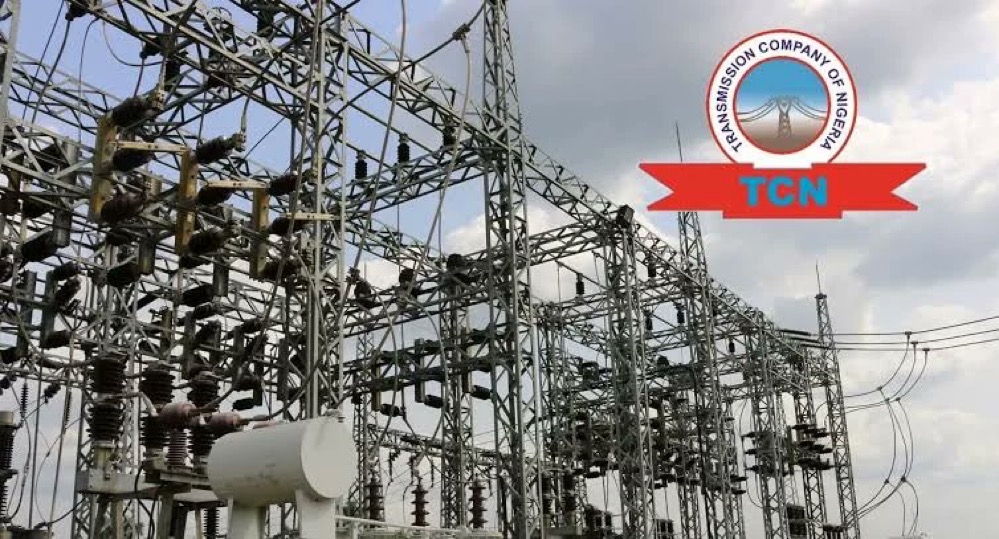
The Transmission Company of Nigeria confirmed that a joint tactical operation with the Nigeria Police Force successfully apprehended a core operative behind the deliberate dismantling of towers T995, T998, T999, T1002, T1003, and T1004 along the vital Yola-Jalingo 330kV transmission line.
Simultaneously, the Minister of Finance and Coordinating Minister of the Economy, Taiwo Oyedele, convened high-level talks with organised labour leaders in Abuja, offering firm executive commitments that long-standing financial arrears owed to federal public servants will be cleared within days, defusing a brewing industrial action across the civil service.
Infrastructure Under Siege: The Yola-Jalingo Transmission Line Breakdown
The industrial sabotage along the Yola-Jalingo 330kV transmission line highlights the systemic physical vulnerabilities threatening Nigeria's centralized electricity grid.
The security breach was initially uncovered on July 29, 2026, during a routine infrastructure inspection conducted by TCN engineering teams. Inspections revealed that organized criminal elements had systematically unbolted and stripped critical structural bracing members across six massive steel lattice towers, carting away an estimated 130 structural steel pieces.
By removing these structural load-bearing members, the perpetrators compromised the mechanical equilibrium of the towers, leaving the high-voltage bulk electricity corridor at imminent risk of total structural collapse under high wind conditions or heavy line tension.
Following the discovery, TCN executives launched a coordinated security response alongside operatives of the Nigeria Police Force on July 30, 2026. Security forces executed a targeted joint raid within the host community, holding emergency consultations with local village heads and youth leadership to demand cooperation.
The security offensive yielded immediate results on August 1, 2026, when law enforcement notified TCN that a principal suspect linked to the theft had been taken into custody and a significant portion of the stolen structural steel members had been successfully recovered from a concealment site. TCN officials visited the recovery location to verify the assets, urging full criminal prosecution while police detectives continue tracking remaining members of the criminal syndicate.
Federal Financial Reassurances: Clearing Public Sector Wage Arrears and Peculiar Allowances
While security agencies acted to secure grid infrastructure, the Federal Ministry of Finance moved decisively to avert a national public sector strike by addressing delayed welfare disbursements owed to federal workers.
During a bilateral meeting with the leadership of the Joint Public Service Negotiating Council, led by National President Kabiru Ado Minjibir, Finance Minister Taiwo Oyedele assured organized labor that the release of funds for outstanding provisional wage awards had reached its final stage, guaranteeing that eligible workers will receive payments before the middle of August.
The financial commitments resolve months of growing tension surrounding the provisional thirty-five thousand Naira monthly wage award originally instituted by President Bola Tinubu in October 2023 to cushion the immediate economic shock of petrol subsidy removal and inflationary pressures.
Furthermore, ministry officials confirmed that administrative processing for Batch 7 promotion arrears—which experienced technical omissions during previous disbursement cycles—has been consolidated alongside Batch 9 for immediate payment.
The ministry's executive team, supported by Permanent Secretary Raymond Omachi, Permanent Secretary for Special Duties Mohammed Sanusi Danjuma, and Director of Cash Management Christiana Osho, confirmed that financial reconciliations are complete, paving the way for the simultaneous processing of outstanding Peculiar Allowance claims and salary relativity adjustments for public health sector employees.
High-Voltage Transmission Engineering and Public Sector Liquidity Mechanics
To grasp the magnitude of these twin developments, it is essential to examine both the structural mechanics of high-voltage transmission engineering and the fiscal frameworks governing federal public sector payrolls.
-
Structural Bracing Members: High-voltage transmission towers are engineered using high-tensile steel lattice structures designed to withstand massive physical forces, including line conductor weight, thermal expansion, and extreme lateral wind pressure. Structural bracing members distribute these loads evenly down to the concrete foundation. Removing these braces creates localized structural fatigue, causing the tower to twist under load and triggering catastrophic cascading failures where collapsing towers pull adjacent line structures down like dominoes.
-
Provisional Wage Award Frameworks: Designed as short-term, off-grid cash transfers, provisional wage awards provide temporary liquidity directly to public sector employees during macroeconomic structural adjustments without altering permanent pensionable salary structures. However, disbursing these awards requires complex reconciliation between the Office of the Accountant-General of the Federation, the Integrated Personnel and Payroll Information System, and commercial banking channels to prevent ghost worker exploitation.
-
Reconciliation and Cash Management: The financial process through which audited claims from various Ministries, Departments, and Agencies are cross-referenced against treasury accounts before funds release. Completing reconciliation ensures that capital allocations for promotion arrears and peculiar allowances match verified civil service employee records.
From Grid Sabotage Patterns to Subvention Dispute Triggers
The dual developments in infrastructure security and civil service compensation represent the culmination of multi-year operational and socio-economic trends across Nigeria.
-
October 2023: President Bola Tinubu approves a provisional thirty-five thousand Naira monthly wage award for federal employees for an initial six-month period to mitigate fuel subsidy removal impacts.
-
April 2025: The Office of the Accountant-General of the Federation announces a phased installment schedule to clear five outstanding months of delayed wage awards following irregular initial payments.
-
May–August 2025: The federal government successfully disburses the first and second tranches of wage arrears, leaving subsequent installments subject to administrative processing delays.
-
July 2026: TCN engineers on routine patrol along the Yola-Jalingo 330kV corridor discover that six transmission towers (T995 through T1004) have been stripped of 130 structural bracing members.
-
August 1, 2026: Police apprehend a principal suspect involved in the grid vandalism and recover stolen components, while obtaining actionable intelligence on the broader syndicate.
-
August 5, 2026: The Joint Public Service Negotiating Council issues an ultimatum seeking an urgent meeting before August 11, prompting Finance Minister Taiwo Oyedele to guarantee wage award payments before mid-August.
National Energy Security, Industrial Harmony, and Macroeconomic Stability
The convergence of transmission infrastructure defense and public service labor negotiations carries immense consequences for Nigeria's broader economic stability and institutional governance.
Vandalism targeting high-voltage transmission lines like the Yola-Jalingo 330kV corridor directly jeopardizes regional economic activity across the North-East geopolitical zone.
When bulk transmission towers collapse, entire state capitals, healthcare facilities, water treatment infrastructure, and commercial enterprises are plunged into extended blackouts lasting weeks or months.
Repairing high-voltage lattice towers requires diverting scarce capital reserves from network expansion to emergency reconstruction, while manufacturing industries are forced to rely on expensive, diesel-powered captive generation, driving up production costs and consumer prices.
On the labor front, maintaining industrial peace within the federal civil service is vital to sustaining basic governmental operations, regulatory enforcement, and public administration.
Protracted delays in implementing signed labor agreements undermine civil service morale, reduce administrative productivity, and increase the risk of nationwide industrial action.
By committing to settle outstanding wage awards and promotion arrears before mid-August, the federal government restores credibility in public sector bargaining mechanisms, stabilizes household purchasing power for hundreds of thousands of public servants, and mitigates short-term industrial friction.
Critical Asset Protection and Public Sector Labor Dynamics
The structural challenges faced by Nigeria's energy and public sectors mirror broader trends across emerging markets and developing economies in Sub-Saharan Africa.
Across the African continent, critical national infrastructure—including high-voltage power lines, railway tracks, telecommunications towers, and oil pipelines—faces increasing threats from organized metallic scrap syndicates and local vandal networks.
Nations such as South Africa, Kenya, and Ghana have similarly intensified legislative penalties and deployed specialized paramilitary units to guard power corridors, recognizing that critical infrastructure sabotage represents a direct threat to national security and regional economic integration.
Simultaneously, the challenges of managing public sector wage bills during periods of aggressive fiscal reform resonate across many developing economies adjusting to currency floats and subsidy reductions.
As central governments implement structural macroeconomic policies recommended by international financial institutions, managing public sector labor expectations through transparent, timely compensation adjustments remains a critical imperative for preserving social cohesion and economic stability across the West African sub-region.