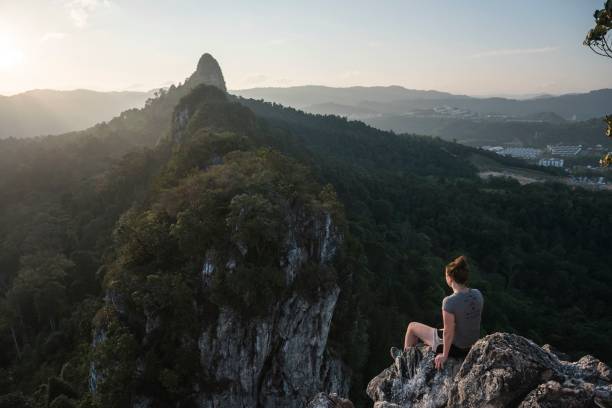
KUALA LUMPUR — A comprehensive regulatory response to a surge in high-risk search and rescue operations across its tropical rainforests, the Malaysian government has implemented stringent new safety directives for wilderness trekking. The nationwide initiative, spearheaded by the Ministry of Natural Resources and Environmental Sustainability, directly targets the growing social media trend of "compressed hiking"—an extreme discipline where outdoor enthusiasts and digital influencers attempt to complete multi-day wilderness climbs within drastically shortened timeframes to generate online content.
The newly unveiled national framework establishes mandatory certified guide requirements across 189 designated high-risk wilderness zones spanning both Peninsular Malaysia and Malaysian Borneo. Furthermore, the regulations mandate standardized pre-climb health screenings, physical assessment protocols, and compulsory emergency insurance coverage before permits are issued for hazardous routes.
By intervening against reckless wilderness behaviors fueled by digital content creation, Malaysian authorities aim to protect human life while curtailing the heavy public expenditure and logistical burdens associated with complex jungle rescue missions.
The Danger of Compressed Hikes: Social Media Trends versus Jungle Survival
The rapid expansion of Malaysia's eco-tourism sector has collided with a dangerous digital culture where online validation frequently overshadows fundamental backcountry safety.
Malaysia’s geographical landscape presents extreme environmental challenges for outdoor recreation. Approximately half of the nation's total land area remains carpeted in dense tropical rainforests characterized by intense heat, extreme relative humidity, and unpredictable equatorial rainstorms. In remote jungle terrain, dense canopy coverage frequently renders satellite navigation unreliable, while rapid vegetation growth can obscure marked trails within days, making disorienting side-paths a constant hazard for inexperienced trekkers.
Despite these environmental hazards, the surge of social media platforms has popularized the practice of compressed hiking or express trekking. Driven by the desire to capture viral video footage and accumulate online followers, an increasing number of hikers are attempting to complete long-distance routes in a fraction of the recommended time.
For instance, weekly expeditions up the 2,187-meter Mount Tahan in Pahang—traditionally requiring a rigorous seven-day trek through deep jungle—are increasingly being attempted in ultra-condensed formats by under-equipped hikers. To maintain a fast pace and project an image of effortless athleticism for social media feeds, many express hikers deliberately discard essential survival gear, emergency shelters, multi-day rations, and primary first-aid kits, dramatically increasing their vulnerability to severe heat exhaustion, sudden injury, and total disorientation.
Mandatory Guides and Pre-Climb Screenings: The Operational Framework
To counter the rise in preventable wilderness emergencies, the Ministry of Natural Resources and Environmental Sustainability, in coordination with state forestry departments and the Department of Wildlife and National Parks, has established a rigorous multi-tiered compliance system.
Under the new administrative rules, access to 189 high-risk trails across the country is strictly conditional on hiring licensed local mountain guides registered with official forestry boards. These certified guides are trained in wilderness first aid, jungle navigation, emergency communications, and localized weather forecasting, providing crucial oversight for groups venturing into deep canopy environments.
Additionally, state forestry authorities, particularly in regions like Perak state where fatalities linked to extreme hiking attempts occurred in recent seasons, have officially banned unauthorized compressed hiking events on public forestry reserves.
Complementing the guide mandate is a compulsory pre-climb screening procedure designed to filter out ill-prepared individuals before they step onto the trail. Hikers are now required to submit formal medical health declarations, disclose pre-existing cardiovascular or respiratory conditions, and provide verified proof of emergency medical rescue insurance.
By establishing these administrative checkpoints, park rangers and forestry officials can identify high-risk individuals early, verify that essential equipment is present, and deny access to under-prepared climbers attempting unauthorized or accelerated routes.
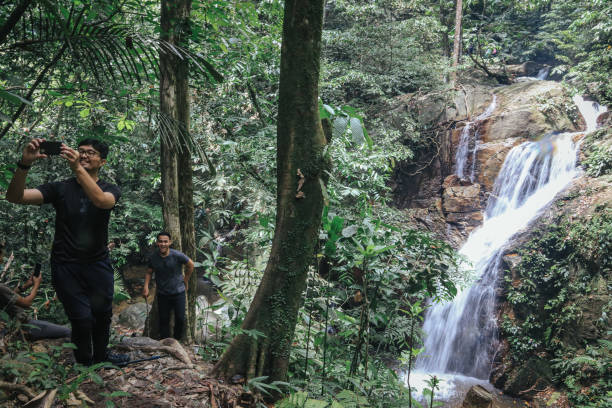
Compressed Hiking Dynamics, Heat Illness Kinetics, and SAR Fiscal Costs
Evaluating the necessity of Malaysia’s new wilderness regulations requires an understanding of extreme sports physiology, environmental medicine, and public resource allocation.
Compressed Hiking Mechanics and Margin for Error refer to the mathematical reduction in safety margins when a trekker shortens an itinerary schedule. In conventional expedition planning, a schedule incorporates deliberate buffer time for rest, hydration, weather delays, and route navigation checks. When an itinerary is compressed to one-third of its standard duration, physical exertion rises exponentially while resting recovery windows disappear. Under these high-strain conditions, minor logistical oversights—such as missing a trail marker or miscalculating water consumption—escalate rapidly into life-threatening emergencies because the hiker possesses neither the time nor the physical reserves to self-correct.
Exertional Heat Stroke and Tropical Dehydration represent severe medical risks encountered in dense equatorial ecosystems. High ambient temperatures combined with extreme humidity impair the body's ability to dissipate heat through sweat evaporation. When express hikers push through extreme terrain at rapid speeds without carrying sufficient water or electrolytes, core body temperature can rise rapidly above critical thresholds, triggering heat exhaustion, muscle breakdown, renal strain, and central nervous system dysfunction. Without immediate medical evacuation, exertional heat stroke in remote jungle settings carries a high mortality rate.
Search and Rescue (SAR) Resource Drain encompasses the immense financial, logistical, and human capital required to locate and evacuate lost individuals from deep wilderness environments. A single jungle rescue mission often demands the deployment of dozens of specialized military and police personnel, sniffer dog units, drone operators, and medical response teams, supported by high-cost helicopter operations. Beyond the immediate monetary expenditure funded by taxpayers, prolonged rescue operations divert critical emergency services away from urban centers and place the lives of first responders at grave risk in treacherous terrain.
From Eco-Tourism Boom to Regulatory Intervention
The evolution of trekking in Southeast Asia reflects a broader transition from traditional wilderness exploration to high-volume, media-driven eco-tourism.
During the late 1990s and early 2000s, hiking in Malaysia was largely confined to experienced mountaineers, indigenous guides, and dedicated scientific researchers. Iconic summits like Mount Kinabalu in Sabah and Mount Tahan in Pahang were managed through strict permit systems, with local authorities maintaining strong oversight over traditional multi-day itineraries.
By 2015, the global proliferation of smartphones and image-focused social networks began transforming outdoor recreation into a visual social currency. High-profile outdoor influencers began showcasing extreme trail running and speed-climbing achievements, inspiring amateur hikers to attempt similar feats without acquiring the necessary physical conditioning or survival knowledge.
Between 2020 and 2025, as post-pandemic interest in outdoor wellness surged, Malaysian forestry departments reported a sharp rise in lost hikers, medical evacuations, and fatal accidents on remote trails. High-profile incidents, including the tragic loss of a 34-year-old hiker in Perak state during a high-speed mountain attempt, highlighted systemic safety lapses across the sector.
In May 2026, mountain guide associations and forestry officials publicly called for immediate government intervention to curb unregulated express hiking trends. This culminated in August 2026 when the Ministry of Natural Resources and Environmental Sustainability officially announced the mandatory 189-location guide rule, compulsory pre-climb screenings, and restrictions on compressed hiking activities nationwide.
Protecting Eco-Tourism Sustainability and Public Treasury Security
The implementation of strict wilderness regulations carries significant long-term benefits for Malaysia’s eco-tourism sector, local indigenous economies, and national treasury management.
From an economic perspective, unmanaged wilderness accidents damage a nation's reputation as a safe international travel destination. By establishing clear safety standards, mandatory guide frameworks, and compulsory insurance requirements, Malaysia safeguards its multi-million-dollar eco-tourism industry, reassuring international travelers that its natural heritage sites operate under world-class safety protocols.
Furthermore, requiring guides at 189 designated sites creates sustainable, formal employment opportunities for local rural communities and indigenous Orang Asli guides, whose ancestral knowledge of rainforest navigation provides invaluable security for visiting trekkers.
From a public policy standpoint, curbing preventable wilderness rescues protects public financial resources. Search and rescue operations in remote rainforests are heavily subsidized by state and federal budgets, costing millions of ringgit annually.
By shifting accountability onto hikers through mandatory insurance and pre-screening declarations, the government ensures that individuals who choose to engage in high-risk outdoor activities carry personal financial responsibility, thereby shielding public funds and preventing the unnecessary diversion of national emergency response assets.
Alpine Restrictions across Asia and the Global Outdoor Reckoning
Malaysia’s crackdown on influencer-driven wilderness risks reflects a broader international trend across global adventure hubs struggling to manage the ecological and safety impacts of social media tourism.
Across Asia, popular trekking destinations are enacting similar administrative barriers to control crowd density and reduce accidents. In Japan, authorities on Mount Fuji recently implemented mandatory entry fees, daily climber caps, and physical barrier checkpoints to stop dangerous "bullet climbing"—a practice identical to Malaysia’s compressed hiking, where tourists attempt to ascend the summit overnight without proper rest or gear. Similarly, Nepal has progressively tightened permit rules and guide requirements across high-altitude Himalayan routes to curtail solo, under-equipped attempts by social media content creators.
On the international stage, the global outdoor industry is confronting an unprecedented culture shift driven by viral media. As outdoor recreation transforms from a practice grounded in wilderness education and environmental stewardship into a fast-paced backdrop for digital content, national parks and land management agencies worldwide are being forced to abandon passive management models.
Malaysia’s decisive regulatory stance signals a growing global consensus among governments that public safety and ecosystem preservation must take absolute priority over digital trend-seeking, establishing a firm administrative precedent for wilderness management across the developing world.