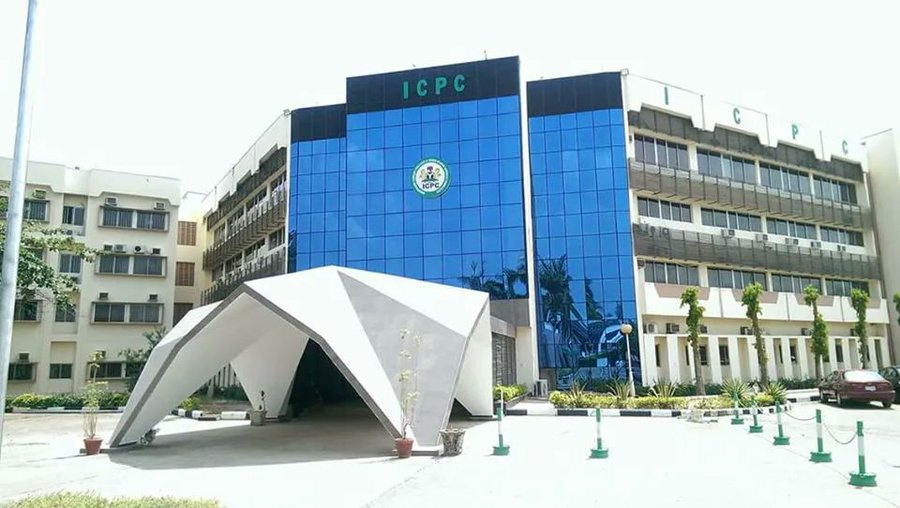
ABUJA — The Independent Corrupt Practices and Other Related Offences Commission (ICPC) has uncovered extensive public sector payroll fraud, recovering over N24 billion linked to fraudulent pensions and ghost workers. The anti-graft agency also secured judicial forfeiture orders affecting more than 900 bank accounts belonging to fictitious civil servants. Among the most glaring abuses identified by investigators were instances where a single government official successfully enrolled fourteen family members onto the federal payroll, while another fraudulent actor systematically drew thirteen distinct civil service salaries each month through manipulated payment channels.
The comprehensive disclosures were made public by the Chairman of the ICPC, Dr. Musa Adamu Aliyu (SAN), during his keynote address at the 4th Economic Confidential Lecture and 6th National Spokespersons Award ceremony held in Abuja. Addressing a gathering of policy experts, communications leaders, and public administrators, Aliyu explained that the commission has expanded its operational mandate beyond individual prosecutions toward identifying, plugging, and dismantling systemic financial leakages that sap national economic stability. The event was organized by Image Merchants Promotions Limited (IMPR), publishers of widely read policy journals including Economic Confidential and PRNigeria.
Anatomy of Payroll Corruption: Systemic Weaknesses and Fictitious Beneficiaries
Payroll fraud in the public sector—commonly referred to as the ghost worker phenomenon—involves the deliberate insertion of non-existent employees, deceased former staff, or unverified individuals into official government payment databases. Corrupt internal actors exploit procedural gaps within human resource systems to draw regular salaries, allowances, and pension benefits that are subsequently diverted into private bank accounts.
To execute these operations, syndicates often bypass standard administrative checks, such as biometrics and automated verification protocols, by creating multiple fake identity profiles linked to specific bank verification numbers. In the recent enforcement actions detailed by the ICPC chairman, targeted investigations into public sector pension administration yielded the recovery of over N24 billion in stolen public funds. Furthermore, the commission published a formal registry containing the names of roughly 900 suspected ghost workers, challenging any legitimate civil servant appearing on the list to present verified credentials and prove authentic government employment.
The Adeniyi Adeyemi Saga: Institutional Gaps and Fraudulent Agencies
Beyond routine payroll manipulation, the ICPC leadership pointed to high-profile cases demonstrating how weak institutional controls allow fraudulent actors to infiltrate formal state structures. A prominent example cited by Aliyu was the case involving Adeniyi Adeyemi, a fraudulent operative who established and operated a completely fake government entity known as the Presidential Foreign Investment Promotion Council.
Exploiting administrative complacency and inadequate verification procedures across various state organs, Adeyemi managed to synthesize official-looking documentation, issue administrative directives, and interface with official channels without triggering early warning systems. The ICPC chairman noted that this case illustrates a dangerous lack of due diligence—the legal and administrative obligation of state officials to independently verify the authenticity, authority, and legitimacy of documents or individuals before authorizing official requests or allocating public resources. When administrative officers act on unverified paperwork without conducting rigorous background checks, fraudulent actors can commandeer state authority and divert public funds with alarming ease.
Macroeconomic Strain, Fiscal Leakages, and Public Service Erosion
The economic and social ramifications of widespread payroll fraud extend far beyond immediate financial losses to the national treasury. In an economy facing fiscal pressures, high debt service obligations, and tight budgetary constraints, the siphon of billions of naira to fictitious workers severely undermines the government's capacity to deliver essential public services. Funds diverted into illicit bank accounts represent lost capital that could otherwise finance critical infrastructure development, expand healthcare access, upgrade public education facilities, and recruit legitimate civil servants.
Furthermore, systemic public sector corruption worsens structural unemployment and socioeconomic inequality. When public funds are continuously drained by entrenched internal syndicates, government agencies face hiring freezes and reduced operating budgets, directly limiting employment opportunities for qualified young citizens. From an international perspective, the revelation that unauthorized individuals can manufacture government agencies or draw multiple public salaries harms national credibility. International investors and foreign direct investment (FDI) partners require predictable, transparent, and secure administrative environments; institutional weaknesses that allow fraudulent agency creation raise risk premiums and deter foreign capital inflows.
Background and Evolution of Federal Anti-Corruption Measures
Nigeria’s battle against public sector payroll corruption has evolved significantly over the past two decades through the introduction of technological and financial management reforms. Central to these efforts was the rollout of the Integrated Personnel and Payroll Information System (IPPIS), launched by the Federal Government to centralize salary payments, eliminate duplicate records, and streamline civil service administration.
Complementing IPPIS was the introduction of the Government Integrated Financial Management Information System (GIFMIS) and the Treasury Single Account (TSA), designed to consolidate government revenues and provide real-time visibility into public expenditure. While these digital platforms succeeded in removing tens of thousands of fraudulent profiles over the years, sophisticated syndicates have continually sought new loopholes, utilizing compromised internal credentials, fraudulent pension allocations, and manual override mechanisms to evade automated detection. The recent enforcement actions by the ICPC represent a renewed forensic push to audit these digital systems and dismantle persistent internal rings.
National and Regional Context: Safeguarding State Resources Across West Africa
The challenge of securing public sector payment systems against administrative fraud is not unique to Nigeria; it remains a central policy hurdle across several West African economies striving to achieve fiscal consolidation. As regional governments implement structural economic adjustments to stabilize public finances, plugging waste in public sector wage bills has emerged as a primary governance objective.
Within Nigeria’s national borders, the ICPC’s aggressive recovery drive sends an unequivocal signal across federal ministries, departments, and agencies (MDAs), as well as state and local government administrations. By combining asset forfeiture mechanisms with public disclosure and system-wide audits, the commission aims to establish strong deterrence against internal payroll tampering. Addressing these administrative vulnerabilities is essential for restoring citizen trust, protecting state resources, and ensuring that public spending directly serves genuine national development.
The Road Ahead: Strengthening Institutional Audits and Digital Oversight
As the ICPC continues its enforcement operations across various government ministries, anti-corruption experts emphasize that permanent solutions require institutionalizing continuous, automated auditing frameworks. Relying solely on periodic post-facto investigations allows fraudulent entries to remain undetected for long durations, accumulating significant financial losses before discovery.
Modernizing public sector governance demands the integration of advanced data analytics, artificial intelligence monitoring, and strict cross-referencing between the National Identity Management Commission (NIMC), the Bank Verification Number (BVN) database, and public sector payroll registries. By establishing real-time fraud detection systems alongside mandatory due diligence protocols for all public officers, Nigeria can better safeguard its public finances, protect the integrity of its civil service, and ensure that national resources are directed toward productive economic growth.