ABUJA — The West African Examinations Council has officially withheld the results of 167,486 candidates who sat for the 2026 West African Senior School Certificate Examination for School Candidates due to reported involvement in examination malpractice.
The withheld credentials represent eight point five nine percent of the total cohort of one million, nine hundred and fifty thousand, seven hundred and twenty-six candidates who wrote the assessment across Nigeria and neighboring West African centers.
While the volume of withheld cases remains substantial, the council highlighted that the figure represents a noticeable statistical improvement from the nine point seven percent malpractice rate recorded during the 2025 examination cycle.
The official declaration was delivered at the examination body’s national headquarters in Lagos by the Head of the WAEC National Office in Nigeria, Dr. Amos Dangut.
Communicating during his final official briefing before completing his tenure at the helm of the national office, Dangut detailed the operational milestones, technological innovations, demographic distributions, and administrative challenges that characterized the 2026 examination cycle.
As the examination body moves to investigate affected candidate centers alongside state ministries of education, thousands of families across the sub-region await formal determination regarding the release or permanent cancellation of the flagged paper scores.
Malpractice Metrics and Enforcement: Dissecting the Misconduct Landscape
The decision to withhold nearly one hundred and sixty-eight thousand candidate results underscores an ongoing struggle against organized academic fraud, unauthorized technology deployment, and institutional compromises within secondary school examination centers.
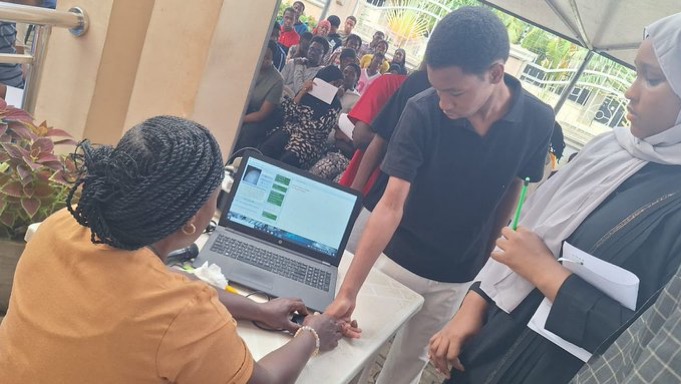
According to official disclosures provided by Dr. Dangut, examination misconduct during the 2026 assessment cycle manifested primarily through the illicit introduction of unauthorized digital devices into testing halls.
Despite an absolute, long-standing prohibition against telecommunication devices within testing centers, invigilators reported a persistent reliance on mobile phones and smart devices by candidates attempting to access unauthorized assistance or illegal online answer repositories during live testing sessions.
Beyond individual student infractions, the council identified cases of organized, institutional collusion facilitated by rogue school administrators, corrupt invigilators, and hired supervisors.
In response to invigilator collusion, the examination council collaborated with law enforcement agencies and state educational regulators to apprehend several supervisors caught actively assisting candidates or permitting unauthorized materials within examination rooms.
These apprehended individuals face criminal prosecution under relevant educational integrity statutes alongside administrative sanctions issued through their respective state ministries of education.
The council reaffirmed that all withheld results remain under active review by the National Committee on Examination Malpractice, which will evaluate evidence from individual centers before issuing final decisions regarding transcript cancellations or exonerations.
Educational Integrity, State Indebtedness, and University Entry Barriers
The withholding of over one hundred and sixty-seven thousand candidate results, alongside the broader performance metrics of the 2026 cohort, carries far-reaching consequences for tertiary educational planning, state government accountability, and the economic credibility of West Africa's academic qualifications.
From an academic mobility perspective, candidates whose results are caught in administrative withholding processes face immediate delays in pursuing higher education admissions.
With Nigerian public and private universities conducting post-UTME screening exercises and locking admission portals, affected candidates risk losing an entire academic year while waiting for the council's malpractice committees to conclude investigations.
Furthermore, the overall performance data revealed a slight, one point four two percentage point decline in the proportion of candidates securing credits across five core subjects including English Language and Mathematics compared to 2025, highlighting ongoing baseline challenges in foundational secondary instruction.
The economic dimensions of the announcement are equally severe, particularly concerning public finance and state government debt obligations.
Dr. Dangut issued a stern operational warning confirming that candidates whose examination registration fees were sponsored by state governments currently owing outstanding financial arrears to the council will not receive access to their results until their respective state treasuries liquidate their debts.
This financial policy places immense political pressure on indebted state administrations, as thousands of public school students remain unable to access verified transcripts needed for tertiary enrollment despite successfully sitting for their papers.
Read Also: WAEC Releases 2026 WASSCE Results
Digital Marking, Question Serialization, and CBT Migration Mechanics
To comprehend how the examination council detected widespread malpractice while processing millions of subject papers within a tight forty-five-day window, it is necessary to examine the underlying technological infrastructure deployed during the 2026 assessment cycle.
-
Digital Examiner Mark System: A centralized, software-driven grading architecture designed to digitize candidate answer scripts, encrypt physical identities, and distribute individual essay questions to accredited remote markers across eighty-eight designated marking centers. By decoupling student personal details from evaluation workflows and automating tallying procedures, the system dramatically accelerates result processing while minimizing human scoring bias and manual error.
-
Question Paper Serialization: An anti-cheating logistical strategy wherein multiple structural versions of an examination paper containing identical core questions in scrambled sequences are distributed within a single examination hall. Serialization prevents candidates sitting in close physical proximity from copying answers, as neighboring students encounter different question arrangements on their test papers or computer screens.
-
Computer-Based Testing Transition: The systematic shift from physical paper booklets to secure computer terminals for national examinations. Operating in its second official edition for school candidates in 2026, the computer-based format utilizes specialized locked-down testing environments that restrict local terminal access to local area network feeds, preventing candidates from accessing external internet resources or executing unauthorized application downloads during testing sessions.
Decades of Assessment Reform and the Digital Integrity Shift
The structural evolution of the West African Senior School Certificate Examination reflects a decades-long effort to balance expanding regional access to secondary education with the preservation of strict academic standards.
-
May 1952: The West African Examinations Council is formally established following legislative enactments across Anglophone West Africa, creating a unified regional body responsible for standardizing secondary school qualifications across Nigeria, Ghana, Sierra Leone, Liberia, and The Gambia.
-
1998–1999: WAEC transitions from local regional certification formats to the unified West African Senior School Certificate Examination structure, standardizing academic evaluation criteria across member countries.
-
2024–2025: Facing growing threats from online answer syndicates and illicit messaging groups, WAEC initiates trial deployments of computer-based testing models for private candidates before expanding the digital infrastructure to select school candidate centers in 2025.
-
April 24 – June 19, 2026: The official administration of the 2026 school candidate assessment takes place across twenty-four thousand, two hundred and seven secondary schools, incorporating digital marking tools and serialized test items.
-
August 2026: WAEC officially releases the 2026 examination results, confirming a sixty-one point five four percent pass rate in five core subjects including Mathematics and English Language, while holding back eight point five nine percent of candidate transcripts for malpractice investigations.
Transboundary Logistics and International Academic Recognition
The reach of the West African Senior School Certificate Examination extends far beyond Nigeria’s domestic borders, making the council's administrative integrity a matter of vital regional and international concern.
During the 2026 examination cycle, WAEC managed testing logistics across an international network of member and non-member sovereign states, administering examinations to candidates in Nigeria, the Benin Republic, Côte d’Ivoire, and Equatorial Guinea.
Managing synchronized paper distribution, secure data transmission, and standardized invigilation protocols across diverse Francophone and Hispanophone border regions highlights the council’s role as a primary engine of regional socio-economic integration within the Economic Community of West African States.
On the global stage, international university admissions boards across the United Kingdom, Canada, the United States, and Western Europe rely explicitly on the uncompromised authenticity of WAEC scorecards when evaluating West African applicant files.
By enforcing rigorous anti-malpractice measures, utilizing automated e-PIN verification portals, and imposing strict penalties against compromised centers, the council protects the global reputational standing of African secondary qualifications, ensuring that high-achieving West African students maintain unhindered access to international scholarship programs and global research universities.
Demographics, Special Needs Inclusivity, and Leadership Transitions
Beyond performance percentages and malpractice figures, the comprehensive data released by the council provides valuable insights into gender equity and inclusive education across West African secondary schools.
The demographic breakdown of the 2026 assessment reflects sustained progress in female educational participation, with female candidates accounting for nine hundred and ninety-seven thousand, two hundred and sixty-seven students, or fifty-one point one two percent of the total sitting cohort.
Male candidates totaled nine hundred and fifty-three thousand, four hundred and fifty-nine, representing forty-eight point eight eight percent.
In total, one million, eight hundred and thirty-four thousand, six hundred and ninety-five candidates, representing ninety-four point zero five percent of all test takers, had their results fully processed and released, while five point nine five percent remain undergoing final technical validation.
The council also demonstrated a strong commitment to educational inclusivity, facilitating specialized testing arrangements for one thousand, two hundred and thirteen candidates living with special needs.
This inclusive cohort comprised one hundred and thirty-seven visually impaired candidates, four hundred and ninety-one candidates with hearing impairments, fifty-five spastic and mentally challenged candidates, and forty-one physically challenged students who received customized examination materials, specialized invigilation, and extended timing allowances.
As Dr. Amos Dangut concluded his third and final official results briefing as Head of National Office, he called upon educational stakeholders, state governments, secondary school principals, and civil society organizations to unite against the scourge of academic dishonesty.
With over one hundred and two thousand examiners completing the marking exercise across eighty-eight centers nationwide, the release of the 2026 results marks both the end of an intensive assessment cycle and the beginning of a crucial period of institutional reflection for West Africa's educational ecosystem.