ABUJA — In an aggressive move to reshape Nigeria's tertiary education landscape and combat the ongoing youth admission crisis, the Federal Government has introduced a sweeping policy reform. Candidates seeking admission into any College of Education nationwide, alongside those opting for non-technology agricultural courses in polytechnics and monotechnics, are now officially exempt from sitting for the Unified Tertiary Matriculation Examination (UTME).
The Minister of Education, Dr. Morufu Tunji Alausa, revealed that this structural waiver is projected to expand nationwide tertiary intake capacity to an unprecedented 1.5 million students this year alone. Speaking as a guest on Channels Television’s Politics Today program, Alausa emphasized that the drastic policy change will nearly double the admission enrollment indices recorded two years ago, fundamentally lowering the barrier to entry for millions of high school graduates.
The Mathematical Surge: Doubling Opportunities for Youth
The bold policy shift represents a massive administrative pivot by the ministry to solve the annual structural bottleneck managed by the Joint Admissions and Matriculation Board (JAMB), where hundreds of thousands of qualified applicants are routinely denied tertiary entry due to fixed, rigid examinations.
"Guess what, this year alone, with the changes we are making through eliminating UTME requirements for colleges of education and UTME requirements for non-technology agricultural courses in our polytechnics and monotechnics, we would increase the number of people being admitted throughout our tertiary institutions to about 1.5 million," Alausa stated. "That is literally doubling it from two years ago. This has instantly created immense opportunities for young Nigerians who would have otherwise been left stranded on the streets."
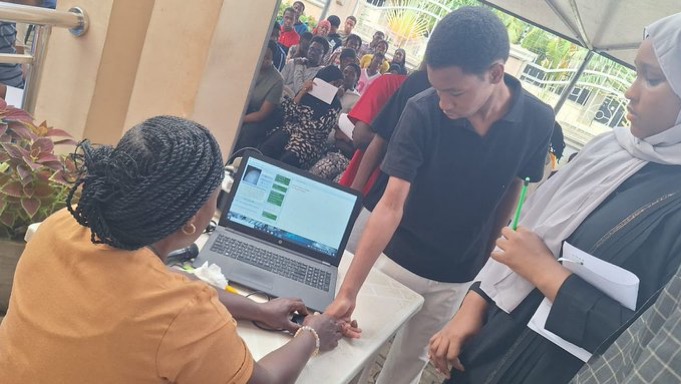
Under the newly ratified admission operational guidelines, which the Minister formally announced at the annual JAMB Policy Meeting in Abuja, the admission process for these specific programs will bypass central testing. Instead, prospective candidates will only be required to possess a minimum of four O-Level credits (including English and Mathematics) in their West African Senior School Certificate Examination (WASSCE) or National Examinations Council (NECO) results to secure direct institutional placement.
Feeding the Nation: Aligning Education with Food Security
Beyond merely expanding classroom capacity, Alausa explained that the structural exemptions are deeply tied to the economic survival of the state. By removing the UTME barrier specifically for non-technology agricultural courses, the administration is deliberately steering young human capital into agribusiness to support President Bola Ahmed Tinubu's national food security declaration.
"The exemptions are strategically tailored for individuals going into colleges of education and people going to monotechnics or polytechnics to study non-technology agriculture courses," the Minister explained. "There is a vital reason for that. We urgently need that influx of human capital to help drive and sustain food security in our country."
To ensure that this massive influx of new students translates into practical economic productivity, the Ministry of Education has commenced a comprehensive review and modernization of agricultural curricula across all universities, polytechnics, and colleges of education.
"We are overhauling the outdated, heavily theoretical syllabi that have governed agrarian studies for decades," Alausa disclosed. "Our focus is to align agricultural training with contemporary, 21st-century global practices, introducing intensive, hands-on modules in greenhouse farming, mechanized harvesting, hydroponics, and modern agribusiness management. Hopefully, by the end of this year, we will launch a brand-new agriculture curriculum that fully meets modern-day international standards."
The Backlash: Teachers' Union Raises Quality Control Concerns
Despite the government's optimistic outlook, the policy has triggered intense pushback from critical education stakeholders who fear that removing standardized entry examinations could dilute the professional value of the certificates produced.
The Nigeria Union of Teachers (NUT) has vocally expressed deep concern over the long-term implications of the waiver. Speaking at the 21st Century Teachers Workshop in Abuja organized in collaboration with the Teachers Registration Council of Nigeria (TRCN) the National President of the NUT, Comrade Titus Amba, warned that the policy could weaken the quality of teacher training and damage the public perception of the profession.
"When you announce that you’ve given a total waiver to students going to colleges of education, it gives the man walking on the street a highly negative impression regarding the seriousness attached to producing credible, professional teachers," Amba argued passionately. "We are deeply worried because policies affecting institutions that produce the educators of future generations must be handled with extreme institutional care."
Amba cautioned that teaching must never be degraded into an emergency employment dump for individuals who lack standard academic rigor.
"Today, we are already battling a situation where individuals graduate from universities without any foundational idea of pedagogy, only to pick up teaching jobs out of sheer desperation due to a lack of employment," the NUT boss noted. "A teaching job shouldn't be seen as an open floor for just anyone. It requires rigorous, structured screening. When admission into colleges of education is granted without standard entry evaluations like the UTME, the public will inevitably begin to question the credibility, capacity, and professionalism of the teachers being produced by our system."
As the debate intensifies between the ministry's drive for mass enrollment and the union's demand for strict quality control, institutions nationwide are already restructuring their portals to receive the massive wave of direct O-level applicants ahead of the upcoming academic session.