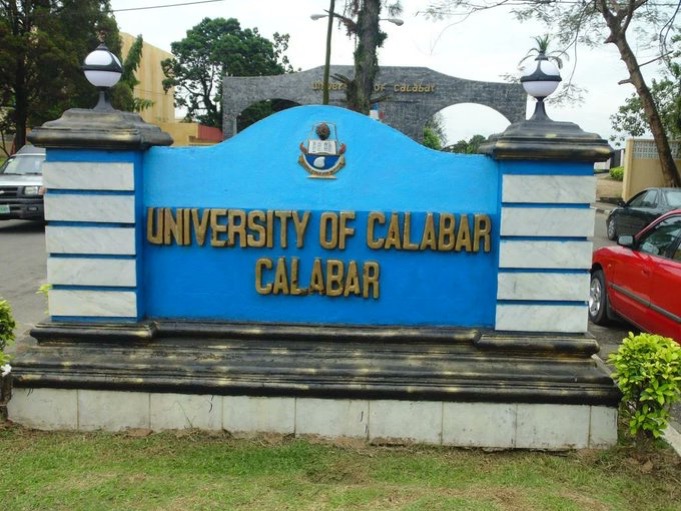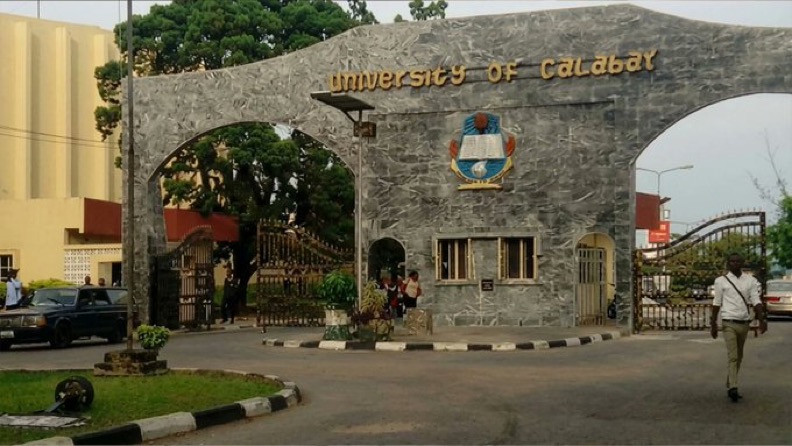
CALABAR — Prospective university applicants facing the 2026/2027 academic session have encountered a major regulatory shift, as the University of Calabar (UNICAL) officially announced the temporary suspension of admissions into three of its premier healthcare and medical science degree programs.
The decision affects undergraduate admissions into the Bachelor of Medicine and Bachelor of Surgery (MBBS), Bachelor of Dental Surgery (BDS), and Bachelor of Medical Laboratory Science (BMLS) programs for the upcoming academic cycle.
The directive was contained in a formal public release issued by the Registrar of the university, Dr. Mrs. Chukwuka Icha, and distributed to media correspondents in Calabar through the institution's Public Relations Unit.
The management advised all Joint Admissions and Matriculation Board (JAMB) candidates who previously selected UNICAL as their first-choice institution for any of the affected three programs to take immediate administrative action to safeguard their higher education prospects.
Urgent Directive to Prospective Applicants and JAMB Change of Institution Guidelines
In light of the admission pause, the university administration has urged all impacted UTME applicants to initiate a formal change of institution or course before the fast-approaching deadline.
To ensure candidates do not forfeit their admission chances for the 2026/2027 academic year, UNICAL management has directed affected individuals to visit any accredited JAMB CBT center or official JAMB state office to modify their institutional preferences.
Key operational guidelines issued by the university registrar include:
Immediate relocation of choice from UNICAL to alternative federal, state, or private universities offering accredited programs in Medicine and Surgery, Dentistry, or Medical Laboratory Science.
Strict compliance with the administrative deadline, which has been set for the end of July 2026, to allow JAMB to process candidate data for alternative institutions ahead of the national admission screening exercises.
Continuous verification of admission status through the official JAMB Central Admissions Processing System (CAPS) portal to monitor updates regarding institutional transfers.
University officials emphasized that failure to complete the change-of-institution process within the stipulated timeframe could result in candidates being automatically disqualified from consideration across participating tertiary institutions for the current cycle.
Sector-Wide Impact: Regulatory Quotas and Institutional Context
While the official university release did not explicitly detail the technical or administrative reasons behind the suspension, UNICAL management clarified that the development is part of a broader regulatory alignment affecting several Nigerian tertiary institutions.
The university statement disclosed that UNICAL is not acting in isolation, noting that at least three other public universities across the country are facing identical admission restrictions across their health science faculties for the 2026/2027 session.
In the Nigerian higher education ecosystem, admission suspensions into professional health disciplines are typically tied to periodic accreditation reviews, infrastructural audits, or quota adjustments mandated by professional regulatory bodies.
Entities such as the Medical and Dental Council of Nigeria (MDCN), the Medical Laboratory Science Council of Nigeria (MLSCN), and the National Universities Commission (NUC) conduct routine assessments to ensure that clinical facilities, laboratory equipment, faculty ratios, and teaching hospital capacities meet national safety and training standards.
When student enrollments exceed approved operational quotas or when clinical infrastructure undergoes mandatory upgrading, regulatory bodies frequently impose temporary admission moratoriums to allow institutions to resolve capacity bottlenecks and realign with standard practitioner-to-student ratios.
Institutional Advisory Against Misinformation and Unverified Reports
Addressing the surge of public interest and anxiety triggered by the announcement, the University of Calabar management cautioned candidates and parents against falling victim to fraudulent academic agents or speculative reports circulating on social media channels.
The Registrar emphasized that all official decisions regarding admissions, program accreditations, and academic calendars are communicated exclusively through authenticated university bulletins, national newspapers, and official JAMB correspondence.
The university urged the public to disregard unauthorized commentary suggesting permanent cancellation of the degree programs, clarifying that administrative suspensions are designed to maintain institutional compliance and protect the long-term professional validity of degrees issued by the university.
Prospective students are advised to maintain direct communication with official JAMB helpdesks and the UNICAL admissions unit for verified guidance regarding candidate relocation and administrative support.
Broader Implications for Healthcare Education and National Capacity
The temporary withdrawal of UNICAL's medical and laboratory science admission slots comes at a critical juncture for Nigeria's health education system, where demand for professional medical training consistently outstrips available university capacity.
With thousands of high-scoring UTME candidates competing annually for limited slots across certified medical schools, admission pauses at major federal institutions like the University of Calabar inevitably intensify competition at alternative receiving universities across the country.
Educational policy experts note that maintaining strict accreditation standards across medical faculties even when it necessitates temporary intake reductions is essential for safeguarding public health, preserving international medical qualifications, and ensuring that graduating doctors and laboratory scientists receive world-class clinical training.
As the end of July administrative deadline approaches, affected prospective students are encouraged to act swiftly, follow official JAMB procedures, and secure alternative academic pathways to avoid disruption to their higher education pursuits.