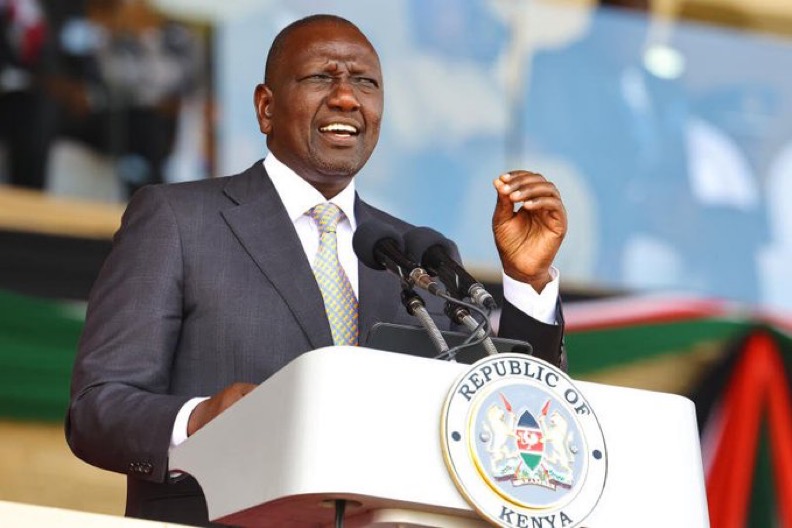
ABUJA — Confronting Nigeria's long-standing basic education emergency, the Minister of Education, Dr. Morufu Tunji Alausa, revealed that the Federal Government has successfully returned over one million out-of-school children from the streets into structured classrooms over the past 30 months.
Appearing on Channels Television’s flagship current affairs program, Politics Today, Alausa mounted a firm defense of the administration's aggressive policy shifts. He explicitly challenged the persistent, double-digit million estimates routinely published by international development organizations, arguing that global agencies are relying on outdated metrics that completely ignore current, data-driven interventions happening across the country.
Challenging the Stagnant 18.3 Million Narrative
The Minister's remarks were prompted by questions regarding recent reports from the United Nations Educational, Scientific and Cultural Organisation (UNESCO) and the United Nations Children’s Fund (UNICEF). Specifically, a widely circulated 2024 UNICEF report estimated that Nigeria holds one of the highest volumes of out-of-school children globally, calculating that 10.2 million primary school-age children and 8.1 million junior secondary school-age children—predominantly concentrated (66 percent) across the North-West and North-East geopolitical zones—remain outside the formal learning system.
Alausa countered that these blanket statistics have been repeated verbatim by international observers for nearly a decade without undergoing rigorous, localized verification.
“Talking about data, this UNESCO and UNICEF figure of 18.3 million is the exact same number that has been quoted for 10 years," Alausa stated. "We do not need to challenge it, and I do not need to get into empty rhetoric. What we are actually doing is executing an exhaustive, community-level data mapping of our out-of-school children while simultaneously continuing aggressive interventions to move these kids back to school. Today, I can tell you authoritatively that we have moved over one million children on the streets back into the classroom in the last 30 months.”
Geotagging the Crisis: The Precision Mapping Strategy
Under the structural framework of Pillar Three of the Nigeria Education Sector Renewal Initiative (NESRI), the Federal Ministry of Education is completely shifting away from broad external estimates in favor of granular, real-time tracking. The government has commenced an aggressive nationwide mapping and verification exercise across all 36 states to build the Nigerian Education Data Infrastructure (NEDI).
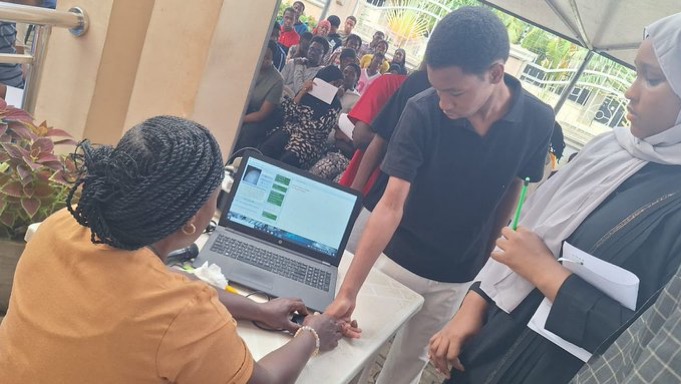
Instead of deploying statistical models, field officers are physically entering communities to identify, verify, and geotag individual out-of-school children by their exact home addresses and locations. To date, the comprehensive exercise has been completed across seven to eight states, yielding demographic results that sharply contradict international assertions.
The Minister pointed directly to the empirical data collected from Kaduna State as a clear proof of concept:
-
The Global Estimate: UNICEF datasets consistently stated that Kaduna State was burdened with roughly 1.8 million out-of-school children.
-
The Verified Reality: Following the completion of the ministry’s physical geotagging and mapping census across the state, the actual number of verified out-of-school children was found to be approximately 700,000.
"Is 700,000 still high? Yes," Alausa admitted. "But do we now possess a more realistic, actionable number to plan with? Absolutely. We have carried out the same exercise in Akwa Ibom State, where our field teams found it exceptionally difficult to even locate out-of-school children. We are going to continue mapping all 36 states and then formally present our verified national numbers. By the time this nationwide exercise is fully completed, we project that the true count will reveal fewer than eight million out-of-school children across Nigeria."
The Funding Deficit and Non-Formal Reintegration
While the minister maintains that the true scale of the crisis is significantly lower than international estimates suggest, the administrative task ahead remains immense. Alausa previously noted at an education breakfast convening that the country requires a massive, sustained annual investment of roughly $345 million to effectively re-integrate non-formal learners and equip them with essential 21st-century foundational skills.
To absorb this massive demographic cohort, the administration has pivoted heavily toward structural integration rather than building parallel learning networks. The National Commission for Almajiri and Out-of-School Children Education (NCAOOSCE) has successfully established 36 state offices and supervised the training of over 1,400 Tsangaya teachers. This initiative systematically infuses formal literacy, numeracy, and digital skills directly into traditional Islamic learning centers.
Furthermore, the ministry is deploying the Accelerated Basic Education Programme (ABEP), a compressed, highly specialized curriculum designed by the Nigerian Educational Research and Development Council (NERDC). ABEP allows older, out-of-school adolescents to compress foundational primary education and successfully transition into Junior Secondary School (JSS1) within a narrow three-year window.
To expand classroom carrying capacity immediately, the Ministry of Education has finalized a per-capita funding agreement with registered private schools. Under this public-private partnership, the Federal Government will directly pay private institutions on a per-child basis to absorb out-of-school children into their existing academic tracks, a policy scheduled to launch fully later this year.