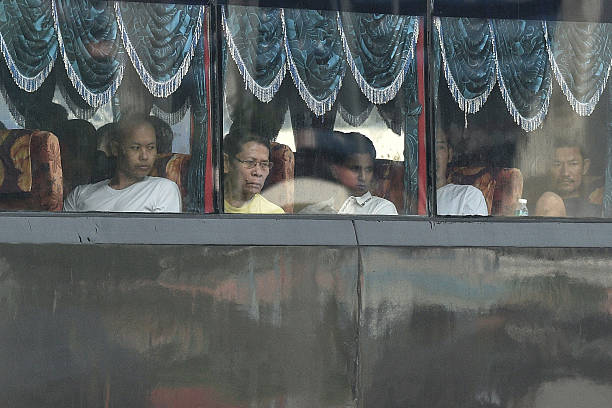
First group of 1,476 Myanmar nationals leaves Malaysia despite warnings from the UN and rights groups that conditions in Myanmar remain unsafe
Malaysia has begun repatriating Myanmar nationals detained in the country, launching a controversial programme that could eventually see about 5,000 people returned to Myanmar despite warnings from the United Nations refugee agency and human rights organizations.
The first group of 1,476 Myanmar nationals left Malaysia on Tuesday, September 29, in what Malaysian authorities described as the first phase of a voluntary repatriation programme. The group includes men, women and children and is being transported to Myanmar aboard three vessels, including two Myanmar naval ships and a hospital ship.
The operation has drawn international concern because Myanmar continues to face armed conflict and political instability following the military's seizure of power in 2021.
Human rights organizations have argued that returning people to Myanmar under current conditions could expose vulnerable individuals to persecution, violence, forced conscription and other serious risks.
1,476 people included in first phase
Malaysia's Home Ministry said the first group consists of 1,370 men, 79 women, 20 boys and seven girls, ranging in age from eight to 60.
The individuals were identified by the Myanmar government, with their names submitted to Malaysia through a diplomatic note dated August 13, according to Malaysian officials. They were being held in 14 immigration detention centres across the country.
Malaysian authorities have said the returnees agreed to go back voluntarily.
The government plans to carry out further repatriations once identity verification, documentation, logistics and coordination between Malaysia and Myanmar have been completed.
The Malaysian government has not publicly provided detailed information about the individual circumstances of those being returned, including whether members of the Rohingya Muslim minority are among the first group.
That uncertainty has become one of the central concerns surrounding the programme.
Human rights groups question safety of returns
The United Nations refugee agency, UNHCR, has warned that Myanmar remains unsafe for refugee returns because of ongoing conflict and violence.
UNHCR has said people fleeing Myanmar may require international refugee protection and has urged countries in the region to respect the principle of non-refoulement, which prohibits returning people to places where they face a real risk of persecution or serious human rights violations.
Human Rights Watch similarly warned in August that conditions for safe, dignified and voluntary returns to Myanmar did not currently exist.
The organization said Myanmar's military continues to be accused of war crimes and crimes against humanity, while armed conflict has displaced millions of people inside the country.
More than 160 civil society organizations also called on Malaysia last week to stop planned returns of Rohingya refugees, warning that people sent back could face violence and forced conscription.
Amnesty International and Asylum Access have separately urged Malaysia to halt the repatriation programme and restore UNHCR access to detention facilities so vulnerable people can be properly assessed.
Rohingya issue remains particularly sensitive
The possibility that Rohingya people could be among those returned has generated additional concern.
Rohingya Muslims have faced decades of persecution in Myanmar and are generally denied citizenship by Myanmar authorities. More than 100,000 Rohingya are among the refugees registered with UNHCR in Malaysia, according to UNHCR country data.
Human Rights Watch has previously warned that Rohingya returning to Myanmar could face particularly serious risks because of their lack of citizenship and the history of persecution against the community.
Malaysia has not confirmed how many Rohingya, if any, are included in Tuesday's group.
Myanmar officials have also said the programme is intended to involve its citizens and have indicated that it does not amount to a plan to bring Rohingya back to Myanmar.
The distinction is important because the status and treatment of Rohingya in Myanmar are fundamentally different from those of other Myanmar nationals who may have entered Malaysia as migrant workers or undocumented migrants.
Malaysia says the returns are voluntary
Malaysia's government has strongly defended the programme.
The Home Ministry says the individuals being repatriated have agreed to return and that the government is addressing what it describes as a long-running problem involving undocumented foreign nationals.
Home Minister Saifuddin Nasution Ismail said the government would deal with the issue in stages and according to Malaysian law and the country's constitutional framework.
The government has also argued that the continued presence of a large undocumented population creates financial, social and security challenges.
Malaysia does not have a national refugee law that formally recognizes refugees in the same way as countries that have incorporated the 1951 Refugee Convention into domestic law. Malaysia is also not a party to the convention.
As a result, refugees and asylum seekers can be treated as undocumented migrants under Malaysian immigration law.
UNHCR has historically played a major role in registering and assessing refugees in Malaysia, but the Malaysian government has been developing its own refugee registration system.
Anwar defends closer engagement with Myanmar
Malaysian Prime Minister Anwar Ibrahim has defended the repatriation policy as part of a broader diplomatic effort to address the country's long-running refugee and undocumented migrant problem.
Anwar has argued that Malaysia cannot host refugees indefinitely and that Myanmar should take responsibility for its citizens.
He has also indicated that he wants to engage directly with Myanmar's leadership over the issue.
Anwar said in September that he planned to invite Myanmar's military leader, Min Aung Hlaing, to Malaysia for discussions on the refugee and undocumented migrant situation. He described engagement as preferable to simply criticizing Myanmar.
The approach represents a diplomatic balancing act for Malaysia, which has maintained relations with Myanmar while also facing domestic pressure over the large number of Myanmar nationals living in the country.
Malaysia hosts a large Myanmar refugee population
Malaysia is home to one of Southeast Asia's largest refugee populations.
UNHCR's country profile says Malaysia hosts roughly 181,000 refugees and asylum seekers, with about 85% coming from Myanmar. More than 100,000 are Rohingya.
UNHCR's figures differ from Malaysian government figures because they cover registered refugees and asylum seekers, while Malaysian immigration authorities also track people detained under immigration laws.
The country's lack of a formal refugee protection system has made the status of Myanmar nationals particularly complicated.
Some are registered refugees, others are asylum seekers whose claims have not been resolved, while others are undocumented migrants or people held in immigration detention.
Human Rights Watch has argued that Malaysia's authorities should ensure that people who may need international protection are identified before any removal takes place.
Myanmar's conflict continues
The repatriation programme comes while Myanmar remains embroiled in a conflict that began after the military seized power in February 2021 and removed the elected government.
The military takeover triggered widespread protests and resistance, which later developed into a nationwide armed conflict involving the military, ethnic armed organizations and anti-junta groups.
The conflict has displaced millions of people.
UNHCR says the conflict has increased internal displacement and refugee movements across Myanmar's borders. Its Myanmar emergency information has warned that the humanitarian and protection situation remains extremely serious.
For organizations opposing the Malaysian repatriation programme, those conditions make it difficult to establish that returns can currently be considered safe and sustainable.
The Malaysian government, however, maintains that the individuals in the programme have agreed to return and that arrangements with Myanmar are being handled through diplomatic channels.
More returns expected
Tuesday's operation is only the beginning of the programme.
Malaysia says approximately 5,000 Myanmar nationals are expected to be repatriated in stages after their identities are verified and logistical arrangements are completed.
The first group was transferred from immigration detention facilities to a stadium in Manjung before being taken to the nearby naval base at Lumut.
The vessels then departed for Myanmar.
The programme is likely to remain under international scrutiny, particularly over the treatment of people who may have refugee or asylum claims and whether the government can demonstrate that returns are genuinely voluntary and safe.
For Malaysia, the policy is part of a broader attempt to take greater control of refugee registration and undocumented migration.
For the UN and rights organizations, the central question is whether people fleeing conflict and persecution can safely be returned to a country where armed conflict and serious human rights concerns remain.
The answer could have significant consequences for thousands of Myanmar nationals still in Malaysia and for the wider debate over refugee protection in Southeast Asia.