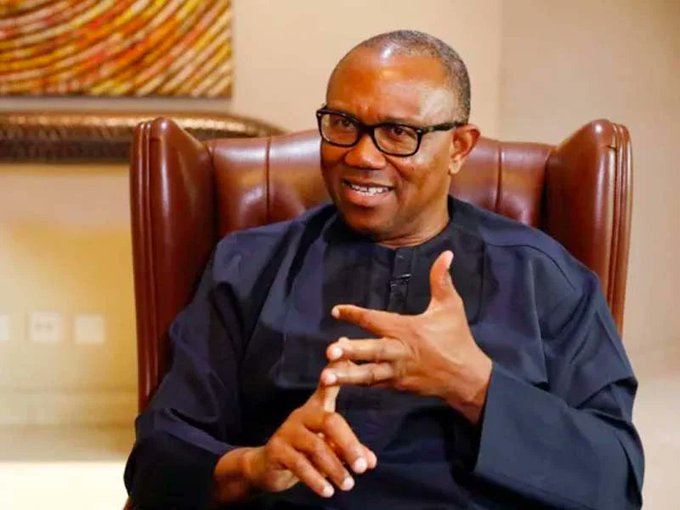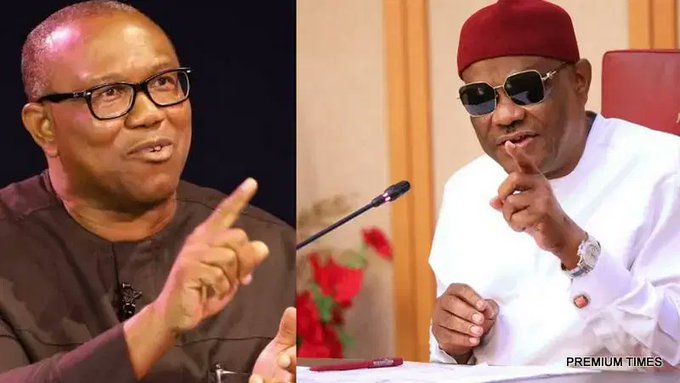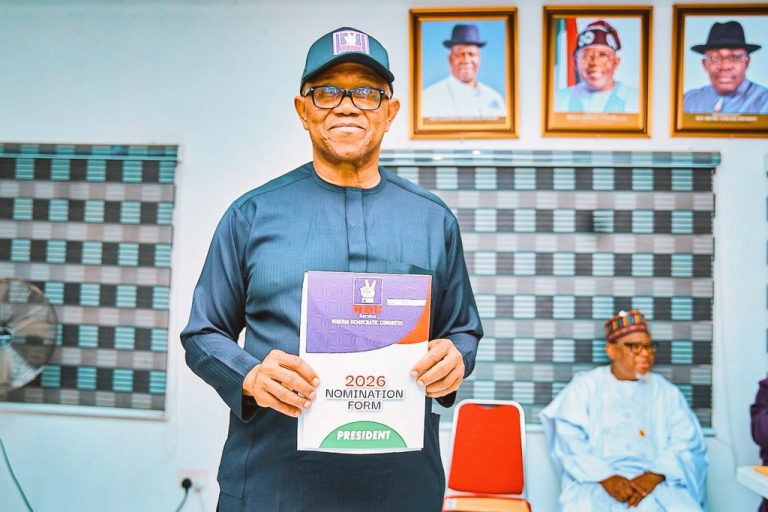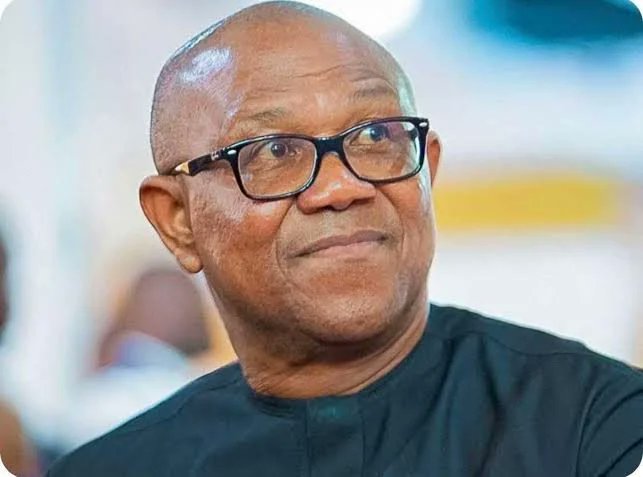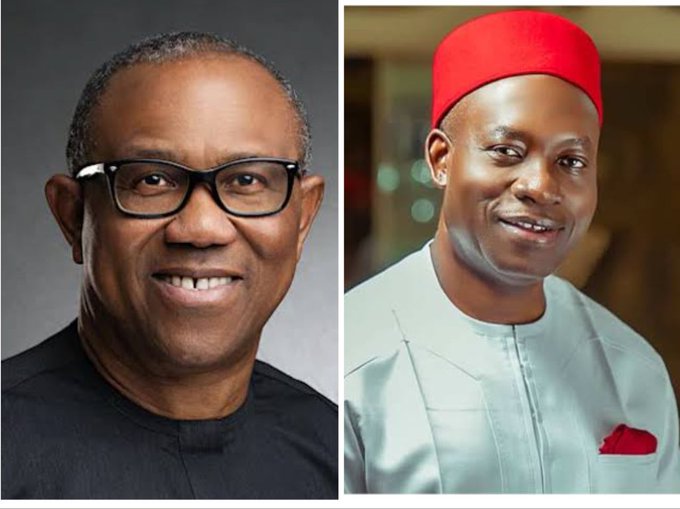
Former Anambra governor Peter Obi has rejected claims that his administration left unpaid obligations, challenging Governor Chukwuma Soludo’s government to identify anyone owed salaries, pensions, suppliers or contractors when he left office.
Former Anambra State Governor and 2027 presidential candidate Peter Obi has challenged Governor Chukwuma Soludo to provide evidence that his administration left unpaid obligations when he handed over power in 2014.
Obi made the challenge while responding to comments by Anambra State Commissioner for Finance Izuchukwu Okafor, who said the state is still servicing loans inherited from previous administrations, including those of Obi and his successor, Willie Obiano.
Obi said he left office without owing salaries, pensions, gratuities, suppliers or contractors whose work had been completed and whose documents had been processed.
He went further, saying he would end his 2027 presidential campaign if anyone could be identified as having been owed by his administration when he left office.
Obi’s Challenge to the Anambra Government
In a video circulated on Monday, Obi said he had left office nearly 13 years earlier without outstanding obligations of the type being attributed to his administration.
“On the day I left the office, I was not owing any pension, salaries and gratuities,” Obi said.
He also maintained that his administration did not owe money to suppliers or contractors who had completed their jobs and had their documentation processed.
“If you find even one person I owed, I will end my 2027 campaign today,” Obi said.
The statement was made in response to the Anambra government's explanation of deductions being made from the state's federal allocation to service inherited loans.
The dispute has quickly become part of a broader political argument over the financial record of successive administrations in Anambra.
What the Soludo Government Said
The controversy began after Finance Commissioner Izuchukwu Okafor discussed the state's finances on the Voice of Ndi Anambra Podcast.
Okafor said Anambra's monthly allocation from the Federation Account is still subject to deductions arising from loans obtained by previous administrations.
According to the commissioner, the deductions are visible in the state's monthly Federation Account Allocation Committee, or FAAC, schedules.
He specifically named the administrations of Peter Obi and Willie Obiano among those that borrowed funds being repaid by the state.
“Every month during our FAAC meetings,” Okafor said, there are “substantial, significant deductions” from Anambra's allocation because of loans previously borrowed by past administrations.
Okafor also said the Soludo administration has not borrowed from any commercial bank since assuming office.
He claimed the government had reduced the state's debt by more than 83 per cent, while its domestic debt was now close to zero.
The commissioner added that Anambra was still servicing external obligations, including loans from the World Bank and other financial institutions.
He also said the state had recently repaid a loan obtained from the Central Bank of Nigeria under the Commercial Agriculture Credit Scheme.
Obi Distinguishes Loans From Unpaid Bills
Obi's response appears to focus on a distinction between loans contracted by a government and unpaid liabilities owed to workers, suppliers and contractors.
The former governor did not accept the existence of loans being repaid by Anambra as proof that his administration left unpaid bills.
Instead, he challenged the state government to identify a specific person, contractor, supplier or worker who was owed money when he handed over power.
He said that as of his final day in office, his administration had paid what was due.
“I did not owe any supplier or contractor that had executed his job and had his documents processed,” Obi said.
That distinction is important in assessing the competing claims.
A government can contract a loan with a repayment period extending beyond its time in office without necessarily owing unpaid salaries, pensions or completed contracts when it leaves power.
Consequently, the existence of inherited loan repayments alone does not establish that an administration defaulted on its financial obligations.
The central question is therefore which loans were contracted during each administration, what they financed, how their repayment schedules were structured and how much remains outstanding.
Obi Says He Left About ₦2.1 Billion for Erosion Project
Obi also used his response to discuss money he said remained in an Anambra State Government account when he handed over power.
According to the former governor, approximately ₦2.1 billion was held in an ecological fund account at First Bank's branch at Nnamdi Azikiwe University.
He said the money had been received from the Federal Government approximately three months before he left office and was specifically designated for an erosion-control project.
Obi said members of his administration had suggested spending the money before the handover, but he rejected the idea because he believed government should be treated as a continuing institution.
“My people were saying, ‘let’s expend this money’. But I kept telling them, government is a continuity and I want the person coming after me to succeed,” he said.
He challenged anyone who disputes the account to examine the relevant bank records.
Obi said he was prepared to provide the bank and account details and would stop his campaign if the records showed something different from what he claimed.
The Dispute Is Bigger Than One Loan
The disagreement between Obi and the Soludo administration is not simply about whether Anambra currently has outstanding debt.
It is about how the state's financial obligations should be attributed to successive governments.
Obi served as governor from 2006 to 2014, handing over to Willie Obiano in March 2014. Obiano subsequently governed the state until Soludo took office in March 2022.
A loan contracted during one administration can therefore continue to be repaid by another administration years after the original borrowing.
This is common in government because loans used to finance infrastructure and development projects may have repayment periods extending beyond a governor's tenure.
However, the political significance changes when such repayments are presented as evidence of the financial performance of a former governor.
That is why Obi is challenging Soludo's government to provide specific evidence of unpaid obligations rather than simply pointing to inherited loans.
Soludo Government Says It Has Reduced Debt
The current administration, for its part, says it inherited a significant financial burden and has spent considerable resources reducing it.
Okafor said Soludo's government had paid off numerous debts inherited from earlier administrations and had created more fiscal space for government spending.
He said the state had reduced its debt by more than 83 per cent and had brought domestic debt close to zero.
The commissioner argued that paying down inherited obligations has allowed the government to direct more resources towards development projects.
He also maintained that Soludo's government has not taken a commercial bank loan since coming into office.
These claims, like Obi's response, ultimately require examination against official financial records to establish the precise debt position at different points in time.
The ₦2.1 Billion Claim Also Raises Questions
Obi's reference to the ecological fund introduces another issue that could potentially be verified through documentary evidence.
The former governor gave a specific bank, branch and approximate amount and said the money had been reserved for a particular erosion project.
He argued that the money should not have been spent simply to make the outgoing administration appear to have exhausted available funds.
His explanation was based on the principle that government is continuous and that funds meant for a specific project should remain available for the incoming administration.
The former governor also challenged anyone who finds evidence contradicting his account to make it public.
If independently verified, such records could help clarify what financial resources were available to the state at the point of transition in 2014.
Obi Also Addresses the 2027 Election
The dispute comes as Obi campaigns for the 2027 presidential election.
He also used his response to discuss the political support being expressed by governors ahead of the election.
Obi said governors have the right to support whichever presidential candidate they choose, but argued that the election itself should be free, fair and credible.
He said the ultimate decision should rest with voters rather than governors.
According to Obi, his presidential campaign in 2023 did not depend on having governors or elected officials supporting him, and he said he intends to continue appealing directly to Nigerian voters.
His latest comments therefore combine a defence of his record as Anambra governor with a broader argument about the credibility of the 2027 electoral process.
What the Records Would Show
The competing claims can potentially be tested through financial and administrative records.
Among the documents that would provide clarity are Anambra's audited accounts, loan agreements, FAAC deduction schedules, debt-service records, payroll records and outstanding contractor and supplier liabilities around the 2014 transition.
Such records could help establish:
• Which loans were contracted under each administration.
• The amounts originally borrowed.
• The projects or programmes financed by the loans.
• The repayment periods and interest obligations.
• How much had been repaid by the time each governor left office.
• How much remains outstanding today.
• Whether salaries, pensions, gratuities and verified contractor obligations were outstanding at the point of each handover.
That evidence would provide a clearer picture than political statements from either side.
Political Implications Ahead of 2027
The dispute is likely to attract greater attention as Nigeria moves closer to the 2027 general election.
Obi remains one of the prominent opposition figures seeking the presidency, while Soludo is the incumbent governor of Anambra.
Financial records from Obi's eight-year tenure are therefore likely to remain a subject of political scrutiny.
For Obi, demonstrating that he left Anambra without unpaid obligations supports his broader argument about financial discipline and governance.
For the Soludo administration, demonstrating that it inherited and successfully reduced substantial financial obligations supports its own narrative about fiscal management.
Neither position, however, can be conclusively established simply by the existence or absence of current loan deductions.
The critical issue is the specific nature and history of the obligations.
Obi Puts His Campaign on the Line
For now, Obi has made his position unusually explicit.
He says anyone who was owed by his administration when he left office should be identified and the evidence produced.
He has also challenged scrutiny of the approximately ₦2.1 billion ecological fund he says remained in a First Bank account at the end of his tenure.
His promise to end his 2027 campaign if evidence contradicting his account is found has raised the political stakes of the dispute.
The Soludo administration, meanwhile, maintains that Anambra is still repaying loans inherited from previous governments, including those contracted under Obi and Obiano.
The two claims are not necessarily mutually exclusive: a government can inherit long-term loan obligations while its predecessor leaves office without unpaid salaries, pensions or completed contractor bills.
What remains to be established is the detailed financial record behind the loans and liabilities.
Until those records are made available and independently examined, the dispute remains a contest between competing accounts of Anambra's financial history.
What is clear is that Peter Obi has publicly challenged Governor Soludo to produce evidence of anyone his administration owed when he left office in 2014—and has attached his 2027 presidential campaign to that challenge.