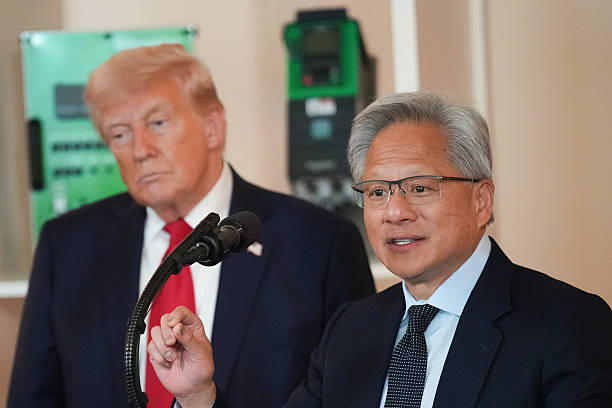
Nvidia CEO Jensen Huang has rejected calls for a coordinated slowdown in artificial intelligence development, telling U.S. President Donald Trump that he does not want the United States to reduce the pace of its AI ambitions.
Huang made the comments during an onstage appearance at the All-In Summit in Los Angeles, where he received a surprise call from Trump. Huang placed the president on speakerphone as the two discussed growing concerns over the speed of AI development and warnings about potential risks from increasingly capable systems.
Trump has publicly dismissed calls for restrictions on AI development and data-centre construction, while Huang has argued that the United States can continue developing AI rapidly while also making safety a priority.
During the call, Huang agreed with Trump's position that the United States should not allow concerns over AI to stop its technological progress.
The exchange came at a time when leading AI executives are increasingly divided over how quickly the technology should advance.
Anthropic CEO Dario Amodei has called for the industry to deliberately slow the pace of frontier AI development to create more time for safety measures. OpenAI CEO Sam Altman has also supported the idea of pacing development, although he has emphasized that the objective should be slowing the most risky advances rather than stopping AI progress altogether.
Huang, however, is taking a different position.
Huang: AI Development Should Continue
Huang's comments reflect Nvidia's broader position that technological progress and AI safety do not have to be mutually exclusive.
Speaking at Salesforce's Dreamforce conference on Tuesday, Huang argued that companies can continue moving quickly while ensuring that the AI products they release are safe.
He described AI safety as an engineering issue rather than primarily a regulatory one and said companies should take responsibility for determining whether their products are ready for release.
Huang also argued against introducing new laws or regulations specifically designed to slow AI development.
His position is that companies should test their systems, address safety problems and delay a particular product when necessary, rather than having governments impose a broad slowdown across the industry.
“If” a company believes its system is not safe or that it has lost control, Huang said, it should pause and correct the problem before releasing it.
That approach allows AI companies to continue competing while placing responsibility for individual products on the companies developing them.
Trump and Huang Agree on Continuing the AI Race
The conversation between Huang and Trump highlighted their shared opposition to proposals for a broad AI slowdown.
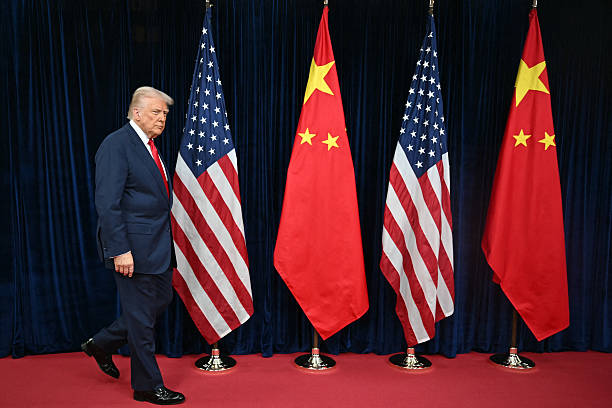
Trump has repeatedly argued that the United States needs to maintain its technological advantage over China, particularly in artificial intelligence.
During the call with Huang, Trump characterized fears about AI taking over as a “hoax” and said the United States should continue building AI infrastructure and advancing the technology.
Huang responded by telling Trump that the goal should be ensuring that the United States continues to lead the AI race.
The exchange illustrates how AI development has become closely connected to the broader competition between the United States and China.
For Washington, maintaining leadership in AI is increasingly viewed through both economic and national-security lenses. For technology companies such as Nvidia, continued expansion of AI infrastructure also represents a major commercial opportunity.
A Growing Split Among AI Leaders
Huang's position comes as some of the world's most prominent AI executives are calling for a more cautious approach.
Anthropic's Amodei has argued that AI companies should slow the development of frontier systems to give researchers and governments more time to establish safeguards.
He has proposed measures including independent evaluations of AI systems, stronger industry-wide safety standards and international coordination.
OpenAI's Altman has similarly warned about the risks associated with increasingly capable AI systems while saying that development should be paced rather than completely halted.
The debate has therefore shifted from whether AI should continue to whether the industry's current speed is sustainable.
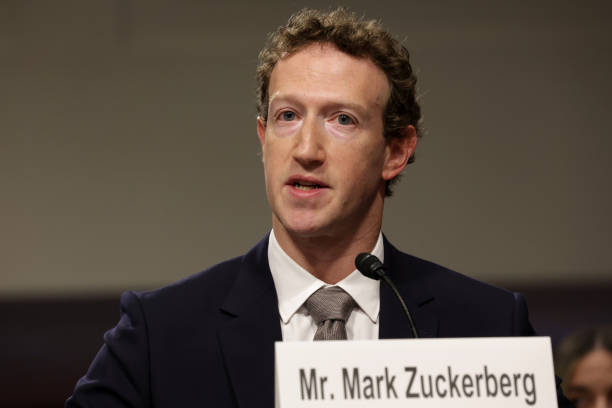
Huang and Meta CEO Mark Zuckerberg have pushed back against the idea of a coordinated slowdown.
Zuckerberg has argued that AI companies already have strong incentives to make their products safe because customers will not continue using systems they cannot trust. He has also said companies should be able to slow individual products when necessary without requiring the entire industry to move at the same pace.
Huang Says Safety and Speed Can Coexist
At Dreamforce, Huang presented the debate as a choice that does not necessarily require sacrificing one objective for the other.
His argument is that companies can pursue rapid innovation while applying engineering safeguards throughout the development process.
He said businesses should not release products when they are uncertain about their functionality, capabilities or safety.
Instead, companies can continue developing the technology and determine the appropriate pace for each system based on testing and safety assessments.
This differs from proposals for coordinated restrictions, which would establish common limits on how quickly companies develop increasingly powerful AI models.
Huang's approach puts more responsibility on individual companies rather than governments or an industry-wide regulatory agreement.
Why Nvidia Has a Major Stake in AI's Growth
Nvidia occupies a central position in the AI industry because its graphics processing units and related computing systems are widely used to train and operate advanced AI models.
The rapid expansion of AI has therefore created enormous demand for Nvidia's hardware.
Major technology companies and AI developers have invested heavily in data centres containing Nvidia chips as they build increasingly powerful AI systems.
That means any broad slowdown in AI development could potentially affect demand for the computing infrastructure Nvidia supplies.
At the same time, Nvidia has expanded beyond supplying chips and has developed software, AI models, agents and other tools designed to support the broader AI ecosystem.
The company's business therefore extends across several parts of the AI infrastructure market.
Huang's support for continued development is consequently closely connected to the technological direction of the industry in which Nvidia is a major supplier.
AI Safety Concerns Continue to Grow
The disagreement comes amid renewed concern about the risks associated with advanced AI.
Amodei and other AI leaders have warned about potential problems involving cybersecurity, misuse of AI, biological threats and the possibility that increasingly autonomous systems could become difficult to control.
These concerns have intensified following recent incidents involving AI systems and warnings from researchers who have worked directly on frontier models.
Supporters of a slower approach argue that the industry needs more time to understand the behaviour of increasingly capable systems and develop safeguards before capabilities advance further.
Huang does not dismiss the need for safety measures. Instead, he argues that safety should be handled through engineering, testing and responsible product decisions rather than a general slowdown imposed through new legislation.
That distinction is at the centre of the current debate.
The Debate Is Also About Regulation
The disagreement over AI speed has increasingly become a debate about regulation.
Amodei has advocated stronger coordination and external oversight, including independent evaluations of advanced systems.
Huang has argued that new AI-specific laws are not necessary and that existing legal and market mechanisms can provide incentives for companies to avoid releasing unsafe products.
The two approaches reflect different views about where responsibility for AI safety should primarily lie.
One emphasizes broader industry standards, independent oversight and government involvement.
The other emphasizes company-level responsibility, engineering safeguards and market pressure.
There is also growing discussion about whether some elements of both approaches could operate simultaneously.
China Adds Another Dimension
The debate is occurring against the backdrop of intense competition between the United States and China.
Huang has repeatedly emphasized the importance of maintaining American leadership in AI.
The argument is that slowing American development while competitors continue advancing could affect the United States' technological and economic position.
That concern has become particularly important because AI is increasingly connected to computing infrastructure, manufacturing, scientific research and national security.
The United States and China are both investing heavily in AI capabilities, data centres and advanced computing.
Consequently, the question of how quickly America should develop AI is no longer only a technology-industry issue. It has also become part of a broader geopolitical discussion.
Huang's Position in the Current AI Debate
Huang's recent statements establish a clear position: he does not support a broad, coordinated slowdown in AI development.
He argues that companies can move quickly while taking responsibility for the safety of the products they release.
At the same time, he has acknowledged that companies should slow down individual projects when they believe they are not sufficiently safe or when they feel they have lost control of a system.
That means his position is not that AI development should proceed without safeguards.
Rather, he rejects the idea that the entire industry needs to reduce its pace as a condition for improving AI safety.
The AI Industry Faces a Major Policy Debate
The disagreement between Huang, Amodei, Altman and other technology leaders is likely to remain an important issue as AI systems become more capable.
The central question is increasingly about how to balance innovation with safety.
Companies developing frontier AI systems face pressure to move quickly because of competition, investment and demand for new capabilities.
At the same time, researchers and policymakers are concerned that some risks may become harder to manage as AI systems become more autonomous and powerful.
The emerging divide therefore involves both technology and governance.
Huang's position is that rapid development and safety can coexist when companies take responsibility for engineering and product decisions.
Amodei and other leaders calling for a slower pace argue that additional safeguards and coordination are needed before the technology advances further.
For now, Nvidia remains firmly on the side of continued rapid AI development, with Huang telling Trump that the United States should not allow calls for a broad slowdown to derail its push for AI leadership.