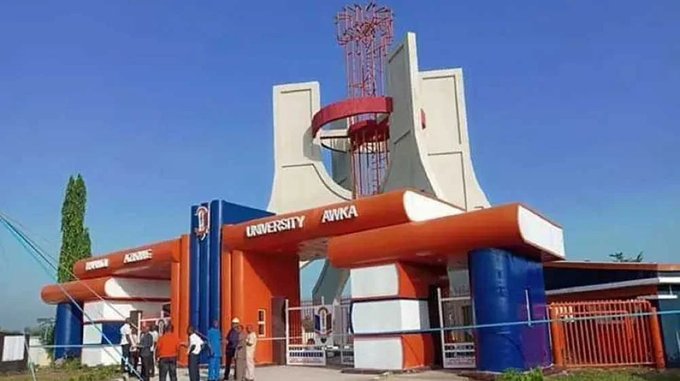
Lecturers at Nnamdi Azikiwe University (UNIZIK), Awka, have commenced an indefinite strike over the non-payment of their full August 2026 salaries.
The Academic Staff Union of Universities (ASUU), UNIZIK chapter, announced the industrial action after its congress on Monday, September 7, resolved that members should withdraw their academic and administrative services until the outstanding portion of their salaries is fully paid.
The development has immediately raised concerns about the effect of the salary dispute on teaching, examinations, administrative activities and other operations at the university.
The union said its decision was based solely on the failure of the university to pay the complete August salary to its members.
ASUU activates ‘no pay, no work’ position
In a statement signed by the ASUU-UNIZIK Chairperson, Innocent Nnubia, and Secretary, Osita Nnajiofor, the lecturers said their decision was taken in accordance with a standing resolution of the union's National Executive Council.
According to the branch, the ASUU-NEC resolution empowers university branches to withdraw their services when salaries remain unpaid after the third day of the following month.
The union said that by September 7, the university had still not paid the complete August salary owed to its academic staff.
ASUU-UNIZIK said the situation had become particularly frustrating because members had experienced similar salary-payment problems more than three times.
The branch therefore decided that lecturers would immediately stop providing both academic and administrative services.
The action is open-ended, meaning there is currently no announced date for lecturers to return to work.
Instead, the union said the strike would continue until all affected members receive their full August salaries.
Lecturers demand immediate payment
The union called on the university authorities to urgently resolve the salary issue.
It also appealed directly to President Bola Tinubu, who is the Visitor to the university, to intervene and ensure that the outstanding salaries are paid.
ASUU-UNIZIK further requested measures to prevent similar delays from occurring in the future.
The union's position is that payment of the outstanding August salaries is the condition for ending the industrial action.
The branch congress consequently directed all members to withdraw their academic and administrative services immediately.
This means the strike is not limited to classroom teaching.
Administrative responsibilities handled by affected academic staff are also covered by the directive, potentially affecting a wider range of university activities.
University management gives no comment
When contacted by Punch for a response, UNIZIK's Director of Information and Public Relations, Aloysius Attah, declined to comment on the development.
The university had therefore not publicly provided an explanation for the incomplete payment of August salaries at the time of the report.
This leaves the immediate cause of the salary shortfall from the university's side unclear.
While ASUU has identified the incomplete payment as the sole reason for its action, the university management has not publicly stated why the affected lecturers have not received their full August salaries.
Strike follows salary-payment deadline
The timing of the action is connected directly to the ASUU-NEC position cited by the UNIZIK branch.
The union said its national resolution permits branches to withdraw their services when salaries have not been paid by the third day of the succeeding month.
September 7 was the seventh day of the new month, meaning the deadline referenced by the union had already passed when the branch congress took its decision.
ASUU-UNIZIK therefore considered the continued non-payment of the complete August salary sufficient grounds to activate the resolution.
The branch said it was not seeking other concessions through the strike and repeatedly emphasised that the immediate issue was the payment of the outstanding salary.
Why the development matters
The strike is significant because UNIZIK is a major federal university in Anambra State with a large student and academic population.
An indefinite withdrawal of academic services can affect lectures, supervision, assessments, research-related activities and other responsibilities normally carried out by university lecturers.
The precise extent of disruption will depend on how long the dispute lasts.
If the outstanding salaries are paid quickly, the industrial action could be resolved without a prolonged interruption.
However, if the disagreement continues, students could face disruptions to scheduled academic activities and other university processes.
At present, ASUU-UNIZIK has not announced a separate timetable for affected academic activities, instead making full payment of the August salaries the condition for ending the action.
ASUU says the problem has happened repeatedly
One of the concerns raised by the UNIZIK branch is that the incomplete salary payment is not an isolated experience.
The union said members had gone through what it described as the same "ugly and frustrating experience" more than three times.
That assertion adds another dimension to the dispute.
Beyond resolving the immediate August salary issue, the lecturers are also asking the university authorities and the Visitor to ensure that similar salary-payment problems do not continue.
The union's request therefore has both an immediate and a longer-term component: full payment of the outstanding August salary and measures to prevent another recurrence.
No indication yet of when lecturers will return
Unlike a warning strike with a fixed duration, the action announced by ASUU-UNIZIK is indefinite.
The branch has tied the end of the strike directly to the payment of the outstanding August salaries.
This means the duration of the disruption will largely depend on how quickly the university authorities resolve the salary issue.
There has been no public announcement of a scheduled negotiation or meeting between the university management and the ASUU branch in the reports available as of September 8.
The university's Director of Information and Public Relations also declined to comment when contacted by Punch.
Students await resolution
For students, the immediate concern will be how the industrial action affects academic activities.
Because the union has directed members to withdraw both academic and administrative services, the consequences could extend beyond lectures alone if the dispute continues.
Students may therefore have to wait for further communication from the university and the lecturers' union regarding the resumption of academic activities.
The situation also places pressure on the university authorities to reach a resolution quickly, particularly because the union has stated that the dispute is related specifically to salary payment.
A wider issue for Nigerian universities
The UNIZIK dispute also highlights the importance of regular salary payments in Nigeria's public university system.
Academic staff unions have historically made salary payment and workers' welfare important parts of their negotiations with government and university authorities.
In this case, however, ASUU-UNIZIK has presented the current action as a branch-level implementation of an existing national resolution concerning unpaid salaries.
The immediate dispute is therefore narrower than a nationwide ASUU strike.
There is currently no indication from the reports that ASUU has declared a nationwide industrial action over the UNIZIK salary issue.
Instead, the action is being taken by the UNIZIK branch against the backdrop of the national union's standing resolution.
That distinction is important because the development affects UNIZIK directly, rather than representing a new nationwide shutdown of Nigerian public universities.
What happens next
The next major development is likely to depend on whether the university authorities can pay the outstanding portion of the August salary and engage the union over its concerns about repeated delays.
If the full salary is paid, ASUU-UNIZIK's stated condition for ending the strike would have been met.
The union has also asked for steps to ensure that the problem does not happen again, suggesting that resolving the immediate payment may not be the only issue under discussion.
For now, lecturers remain directed to stay away from academic and administrative duties.
The branch's position is that the withdrawal of services will remain in force until every affected member receives the complete August 2026 salary.
The university management has yet to publicly respond to the lecturers' allegations or provide an explanation for the incomplete salary payment.
As students and staff await further developments, the dispute leaves academic activities at UNIZIK facing an indefinite interruption.
The immediate focus is now on the university authorities, the ASUU branch and the Visitor to the institution to find a resolution that will allow lecturers to return to their duties while addressing the union's demand for reliable salary payments.