BEIJING — As United States President Donald Trump and Chinese President Xi Jinping convene for their high-stakes bilateral summit in Beijing, international foreign policy observers are closely analyzing the complex web of issues defining this crucial meeting. While the volatile military conflict involving Iran and its severe disruption to global energy security undisputedly dominate the immediate diplomatic agenda, the summit's underlying current is shaped by long-standing flashpoints, trade maneuverings, and a fragmented balance of leverage where neither superpower holds an absolute upper hand.
The three-day state visit marking Trump’s first return to China since 2017 is widely viewed by geopolitical experts as a critical litmus test. It will determine whether Washington and Beijing can forge an emergency framework for crisis management despite their deepening, multi-theater strategic rivalry. However, with structural trust between the world's two largest economies at a historic low, expectations for a meaningful, long-term reset in Sino-US relations remain highly tempered.
The Energy Crisis: Iran as a Deliverable vs. a Complication
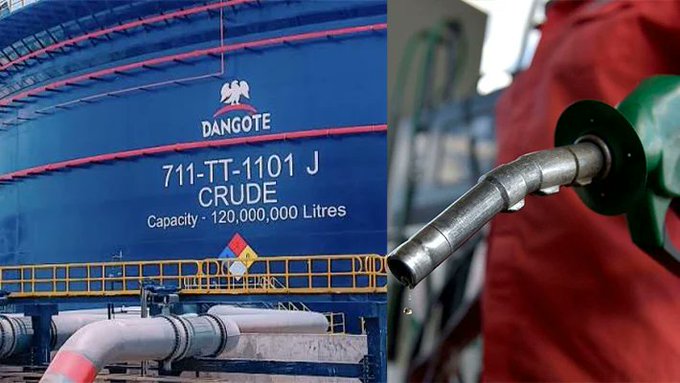
The conflict involving Iran, now entering its third consecutive month following targeted US and Israeli military strikes, has escalated from a localized Middle Eastern crisis into a systemic threat to global maritime commerce. The continuous instability has severely throttled commercial shipping traffic through the Strait of Hormuz, a critical maritime chokepoint responsible for transiting approximately one-fifth of the global supply of petroleum and liquefied natural gas.
According to energy market intelligence, this maritime disruption impacts the two superpowers with sharp asymmetry:
-
The Chinese Dependency: Beijing is profoundly vulnerable to Middle Eastern energy disruptions, with an estimated 40 to 50 percent of its total crude oil imports transiting directly through the Strait of Hormuz.
-
The American Insulation: In contrast, the United States has achieved substantial domestic energy independence, with Middle Eastern crude transiting the strait accounting for a mere 7 percent of its total oil and condensate imports.
Sun Chenghao, a senior fellow at the Center for International Security and Strategy at Tsinghua University, notes that the Trump administration is actively weaponizing this energy dependency to exert intense diplomatic pressure on the Chinese state. Washington is publicly demanding that Beijing leverage its immense economic influence and crude-purchasing power with Tehran to force a stabilization of the waterway.
While both superpowers share a foundational macroeconomic interest in preventing a total global market collapse, their strategic approaches are fundamentally incompatible. Washington continues to double down on its signature framework of "maximum pressure," unilateral sanctions, and military deterrence. Beijing, conversely, remains unyielding in its opposition to unilateral trade penalties, instead advocating for localized political solutions and non-interventionalist diplomacy.
This divergence exposes a stark contrast in fundamental priorities. For President Trump, securing a visible, high-profile commitment from Xi to restrain Tehran represents a vital foreign policy deliverable that he can market to American voters as a triumph of his strongman crisis management. For President Xi, however, the Iran situation is a dangerous, unwanted complication that threatens to disrupt China's manufacturing supply chains while complicating its carefully cultivated diplomatic alignment with the Islamic Republic.
The Taiwan Fault Line: Transactional Diplomacy and Signaling
While Iran provides the immediate urgency, the self-governed island of Taiwan remains the most sensitive, enduring structural fault line in Sino-US relations. Ahead of the summit, Beijing systematically signaled that the Taiwan question constitutes its ultimate, non-negotiable "core interest." In a high-level preparatory phone call with US Secretary of State Marco Rubio, China’s top diplomat, Wang Yi, explicitly warned that Washington’s actions regarding Taipei represent the single greatest risk to bilateral peace.
Though the US maintains a policy of strategic ambiguity and lacks formal diplomatic recognition of Taipei, Washington remains bound under the Taiwan Relations Act to ensure the island possesses the military capability to defend itself against a potential cross-strait invasion.
Trump’s historical, highly transactional approach to international statecraft has fueled intense speculation among regional analysts that the White House might attempt an audacious, behind-the-scenes diplomatic trade-off—offering concessions on Taiwan in exchange for sweeping Chinese concessions on Iran or trade access. However, institutional experts, including Associate Professor Chong Ja Ian from the National University of Singapore (NUS) and a non-resident scholar at Carnegie China, argue that an explicit, formal quid pro quo remains highly improbable.
A formal betrayal of Taiwan would trigger immediate, fierce bipartisan resistance from the US Congress and the broader defense establishment. Furthermore, Trump is acutely aware of his historical legacy and handles the matter carefully, as he does not want to be remembered as the American president who surrendered Taiwan to Chinese dominance.
Instead of an outright deal, experts project a subtler, more plausible scenario defined by "cumulative accommodation through ambiguity." This framework could manifest as quiet, incremental adjustments by the US executive branch designed to signal flexibility to Beijing without technically violating statutory American laws. Such maneuvers could include:
-
Softening the public rhetoric used by high-ranking White House officials regarding cross-strait security.
-
Implementing strategic delays in the administrative processing and delivery schedules of major foreign military sales to Taipei.
-
Weakening high-level diplomatic signaling during regional security summits.
As Li Yaqi, a specialized international relations research assistant at the S. Rajaratnam School of International Studies (RSIS) in Singapore, notes: "Beijing does not require Trump to stand up and announce a formal Taiwan concession. It only seeks language, sequencing, and administrative timing that the Communist Party can later cite internally as definitive evidence of US accommodation on China's core interests."
The Balance of Leverage: Fragmented Superpower Strength
Rather than leaning decisively toward Washington or Beijing, the actual balance of leverage heading into the negotiating rooms is highly fragmented, shifting fluidly across individual agenda items.
On the immediate crisis in Iran, the upper hand arguably belongs to Beijing. Because the Trump administration is navigating domestic inflationary pressures aggravated by the Middle East conflict, Washington has a much more urgent, asymmetrical need for a visible diplomatic breakthrough. In the realm of international diplomacy, the psychological advantage frequently favors the side that can afford to exhibit greater strategic patience.
Conversely, on the Taiwan front, the leverage dynamics favor the United States. While Beijing has exploited Washington's caution ahead of the summit—pointing to reports that the White House quietly paused a multibillion-dollar advanced arms package for Taiwan to avoid spoiling the Beijing meetings—the deep institutional support for Taipei within the US Congress provides Trump with a powerful defensive bargaining position. Trump can effectively present himself to Xi as a stabilizing moderator, warning his Chinese counterpart that if Beijing refuses to cooperate on global energy flows, the White House will lift its administrative dampeners and allow an unrestrained, highly hawkish US Congress to accelerate massive weapon transfers to Taiwan.
Simultaneously, the leaders will wrestle over a complex economic agenda. While the aggressive tariff wars of the previous year have settled into a tense, tactical truce, deep-seated frictions regarding aggressive US export controls, semiconductor chip bans, and Chinese industrial policy remain entirely unresolved.
The Trump administration is attempting to shift the economic dialogue by proposing a permanent, bilateral "Board of Trade" and a corresponding "Board of Investment." This administrative shift signals that Washington is moving away from its historical, largely futile demands for deep structural reforms within China’s state-capitalist model, choosing instead to pragmatically negotiate the managed terms of trade, volume purchases of American agricultural goods, and high-value energy exports.
Furthermore, the fast-moving arena of artificial intelligence (AI) safety will form a vital component of the technological security talks. US officials have expressed growing alarm over the rapid, unregulated deployment of military-grade AI models within China's domestic tech clusters. Washington is pushing for the establishment of an emergency, direct military-to-military communications hotline dedicated exclusively to AI risks, aiming to prevent automated algorithmic errors from accidentally triggering a kinetic military escalation in the South China Sea.
Ultimately, the dramatic optics of the Beijing summit will capture global headlines, but the underlying reality remains a rigid, unyielding exercise in competitive risk management between two superpowers deeply entrenched in a generational struggle for global hegemony.