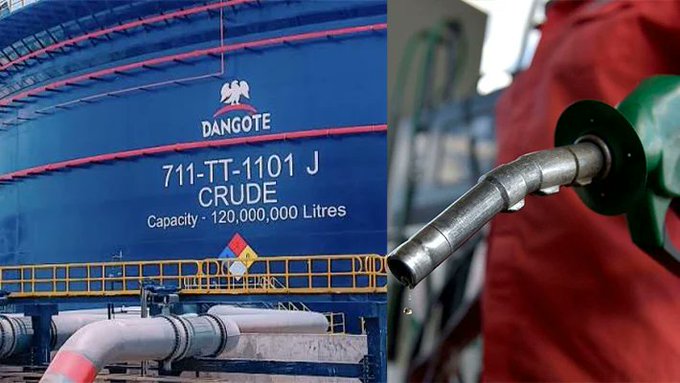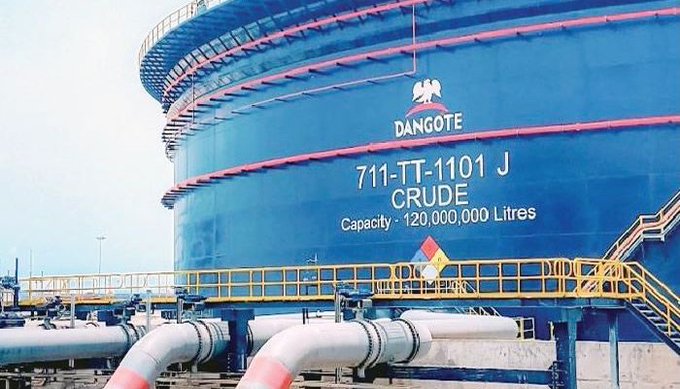
LAGOS — Escalating the fierce battle for dominance over Nigeria's multi-billion-dollar downstream energy sector, the Dangote Petroleum Refinery has dragged the Federal Government to court. The multi-billion-dollar energy firm has filed a comprehensive new lawsuit against the Attorney General of the Federation (AGF) in an aggressive bid to completely overturn and nullify premium motor spirit (petrol) import licences issued to independent oil marketers and the Nigerian National Petroleum Company Limited (NNPC).
The structural filing, submitted before the Federal High Court in Lagos, explicitly requests the judiciary to set aside all import permits recently issued or renewed by the Nigerian Midstream and Downstream Petroleum Regulatory Authority (NMDPRA). The legal maneuver marks a dramatic return to the courts, coming roughly a year after the President of the Dangote Group, Alhaji Aliko Dangote, had withdrawn a similar lawsuit in 2025 following high-level political interventions by the Federal Government.
The Legal Friction: Violating the Status Quo
According to court documents seen by Reuters, Dangote's legal team argues that the newly minted import permits directly breach an earlier subsisting judicial order to maintain the status quo. Furthermore, the refinery contends that the administrative issuance of these licences violates statutory provisions, which dictate that petroleum product imports should strictly only be authorized when domestic refining capacity falls critically short of national demand.
The legal challenge directly opposes the current stance of the NMDPRA, which recently granted official clearance to six prominent independent marketing firms to import a combined 720,000 metric tonnes of petrol. The regulatory agency maintains that imported fuel volumes remain necessary to complement domestic production, stabilize national reserves, and prevent artificial fuel scarcity or logistical supply bottlenecks across the country.
The 720,000MT Petrol Import Allocation Matrix
| Approved Oil Marketer / Trader | Allocated Import Volume (Metric Tonnes) |
| AA Rano | 150,000 MT |
| Matrix Energy | 150,000 MT |
| NIPCO | 120,000 MT |
| Shafa Energy | 120,000 MT |
| Pinnacle Oil & Gas | 120,000 MT |
| Bono Energy | 60,000 MT |
The regulatory push to bring in foreign fuel has sparked intense frustration within the Dangote Group, particularly since internal NMDPRA data confirms that the Dangote Petroleum Refinery has successfully scaled operations to supply over 90 per cent of Nigeria’s daily petrol consumption.
Operating Beyond Capacity and Taking on the 'Subsidy Mafia'
In a recent global corporate interview with Nicolai Tangen, the Chief Executive Officer of the Norwegian Sovereign Wealth Fund, Alhaji Aliko Dangote revealed that the mega-refinery has shattered its initial technical expectations. The facility is currently operating at a massive 661,000 barrels per day (bpd) officially pushing above its engineered nameplate capacity.
Dangote detailed the massive scale of the facility's crude procurement infrastructure, explaining that the plant requires a staggering 21 crude oil cargoes every single month to sustain its current refining throughput.
"The refinery has been tested. We have now processed even crude at 661,000 barrels a day. So we have demonstrated that capability," Dangote boasted, noting that this proven operational success has secured deep trust with global financial institutions. "We source about 56 per cent from Nigeria and some from Angola. We buy quite a bit from Angola, from Libya, and from the US... But we’re getting more of Nigeria’s crude now. And we’re more than doubling the refinery. In the next 30 months, we will be at 1.4 million barrels per day, which is huge."
Addressing the systemic resistance his project has faced, the billionaire industrialist did not mince words, pointing directly at a entrenched category of saboteurs he labeled the "Subsidy Mafia."
"The Mafia are the people who are actually benefiting because Nigeria was giving out almost $10 billion every year as a subsidy," Dangote fired back. "There are shippers who are making tonnes of money. There are traders who are making a lot of money buying crude and sending us refined products. There are also the local people, because it was subsidised, very few people are getting allocations. So they are making billions of naira. These are the people that did not want us to settle down because they believed that we were coming here to displace them, and of course, that’s what we have done now."
As the legal proceedings gear up in Lagos, the outcome of the lawsuit will carry massive structural consequences for the future of Nigeria’s energy liberalization policy, the pricing structure of domestic petrol, and the operational boundaries between local refining monopolies and independent trading cartels.