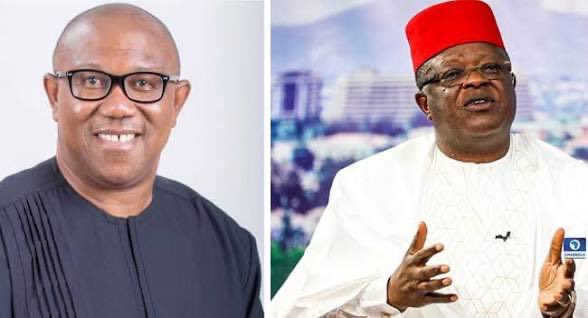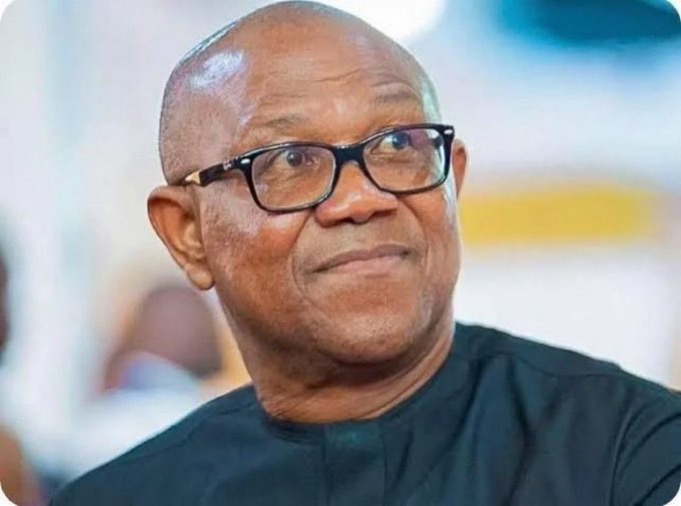
ABUJA — Former Labour Party presidential candidate and prominent opposition figure Peter Obi has strongly reaffirmed his commitment to serving a single term of four years if elected President of Nigeria in the 2027 general elections.
Speaking during a featured appearance on Channels Television's Sunday Politics, the former Anambra State governor dismissed suggestions from critics that his one-term proposal is merely a political strategy designed to secure electoral support across regional divides.
Obi emphasized that his stance is anchored on a firm political understanding reached with key opposition figures, including former Kano State governor and leader of the New Nigeria People's Party (NNPP), Senator Rabiu Musa Kwankwaso. He insisted that personal integrity and political honor dictate that all parties uphold the terms of such agreements.
"It was an agreement, and as gentlemen, we must respect it," Obi stated during the broadcast. "I don’t need more than four years to show the path Nigeria will take. It’s a simple thing. And I say it again: I will serve for four years—full stop. If you want me, it’s four years, full stop—not a day more."
Coalition Dynamics and the Strategic Power-Sharing Framework
The single-term declaration comes amidst ongoing consultations among leading opposition stakeholders seeking to forge a unified electoral alliance capable of challenging the ruling All Progressives Congress (APC) in the 2027 presidential contest.
A major hurdle in constructing a multi-regional opposition coalition in Nigeria has historically been the sensitive issue of geopolitical power balance between the Northern and Southern regions of the country. By publicly committing to a single four-year term, Obi seeks to address regional concerns regarding power rotation, offering a clear timeline that could facilitate a smooth transition of power to a Northern successor by 2031.
Political analysts note that the formal arrangement between Obi and Kwankwaso represents a calculated attempt to align major opposition voting blocks in both the South and the North. Under the proposed consensus framework, a single-term Southern presidency is viewed by coalition proponents as an effective mechanism to stabilize national political dynamics while focusing immediately on economic recovery.
Governance Philosophy: Prioritizing Immediate Structural Reform
Addressing questions regarding whether four years would provide adequate time to address Nigeria's complex socio-economic challenges, Obi maintained that effective governance depends on decisive leadership rather than extended tenure.
The former governor argued that prolonging time in office often shifts executive focus toward re-election politics rather than urgent national development. He asserted that a determined administration can lay a solid, irreversible foundation for economic transformation within a single presidential term.
According to Obi, national political discourse leading into the 2027 elections should move away from personalities and political patronage, focusing instead on critical policy areas:
Agricultural productivity and rural development aimed at converting northern arable land into a key driver of export revenue and national food security.
Comprehensive economic restructuring designed to curb inflation, stabilize the national currency, and streamline public expenditure.
Targeted national security interventions to safeguard agricultural corridors, restore investor confidence, and protect vulnerable communities across all geopolitical zones.
Human capital development through strategic investments in education, technology, and youth entrepreneurship.
Political Reactions and Electoral Outlook Ahead of 2027
Obi’s definitive pledge has drawn varied reactions across Nigeria's political landscape, reflecting deep divisions over electoral strategy and constitutional norms.
Supporters of the opposition movement view the commitment as a refreshing departure from conventional political ambition, praising Obi for prioritizing institutional reform over personal longevity in office. Proponents argue that a focused four-year administration free from the distractions of a second-term campaign could implement necessary, albeit difficult, structural reforms more efficiently.
Conversely, representatives from the ruling party and independent political commentators have raised questions regarding the practical enforceability of informal one term agreements. Critics point out that the Nigerian Constitution permits a two-term executive tenure, noting that past political figures who made similar single-term pledges eventually sought re-election once in power.
Despite the skepticism from political opponents, Obi’s reiteration of his four-year commitment signals an intensifying campaign strategy aimed at building a broad-based, cross-regional coalition. As political parties refine their platforms ahead of the 2027 electoral cycle, discussions surrounding power rotation, executive accountability, and governance efficiency are expected to remain central to the national debate.