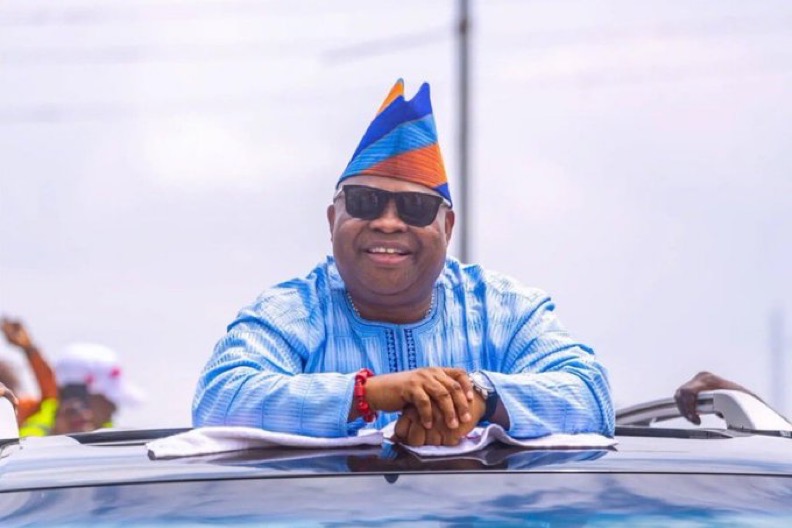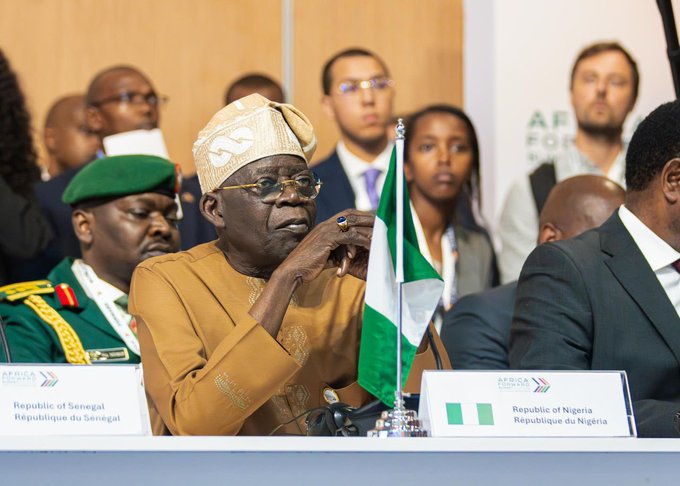
NAIROBI — Delivering a fierce, uncompromising critique of the international economic order, President Bola Ahmed Tinubu has called for an immediate, systemic reform of the global financial architecture. Speaking before an audience of world leaders at the Africa Forward Summit inside the Kenyatta International Convention Centre (KICC) in Nairobi, Kenya, Tinubu warned that the current international banking and credit frameworks operate as an "instrument of industrial disarmament" against the African continent.
The high-level Africa/France bilateral summit, co-hosted by Kenyan President William Ruto and French President Emmanuel Macron, gathered heads of state, diplomatic corps, and top officials from over 30 countries. The opening plenary featured addresses from United Nations Secretary-General António Guterres and the newly minted Chairman of the African Union Commission, Mahamoud Ali Youssouf. President Tinubu led a powerful Nigerian delegation comprising senior cabinet ministers and billionaires from the private sector to push for a complete restructuring of Afro-global economic relations based on parity, fair credit access, and sovereign respect.
The Punitive Cost of Capital: De-industrializing a Reforming Nation
President Tinubu flatly rejected the traditional dynamic of African nations arriving at international summits as vulnerable supplicants begging for foreign aid. Instead, he presented Nigeria as a model of aggressive, self-directed fiscal discipline that has taken painful, homegrown structural decisions to stabilize its macroeconomy.
He highlighted Nigeria's sweeping domestic overhauls, which include the elimination of costly fuel subsidies, the unification of the foreign exchange window, the successful exit from the FATF grey list, and a massive $3.4 billion recapitalisation of the domestic banking sector. These painful reforms are projected to stabilize Nigeria’s debt-to-GDP ratio at a healthy 32.3 percent alongside robust external reserves of $45.5 billion.
Despite these stellar fiscal achievements, Tinubu noted that the international financial system continues to actively punish African progress through biased credit rating methodologies and predatory interest rates.
"In 2026, Nigeria will spend approximately $11.6 billion on debt servicing an amount representing nearly half of our total projected federal revenue," Tinubu revealed to the assembly. "Every single dollar that leaves our treasury to pay punitive interest rates is a dollar that did not go into our steel sector, our textile mills, our agro-processing plants, or our digital industries. It is a dollar that did not train a young Nigerian engineer or provide affordable power for our factories."
The President lambasted the institutional double standards of global lenders, pointing out that Western nations built their industrial foundations using cheap, long-term capital while denying those exact tools to Africa.
"How can an African manufacturer compete with a competitor in Europe, Asia, or North America when our cost of borrowing is five to ten times higher?" he asked. "The evidence is before us. Despite decades of independence, Africa’s share of global manufacturing value-added remains stuck below a dismal 2 percent. We export raw minerals, crude oil, and agricultural commodities, and we import processed goods at a premium. This pattern is not an accident."
From Sea Blindness to Sovereignty: The Gulf of Guinea Data Hub
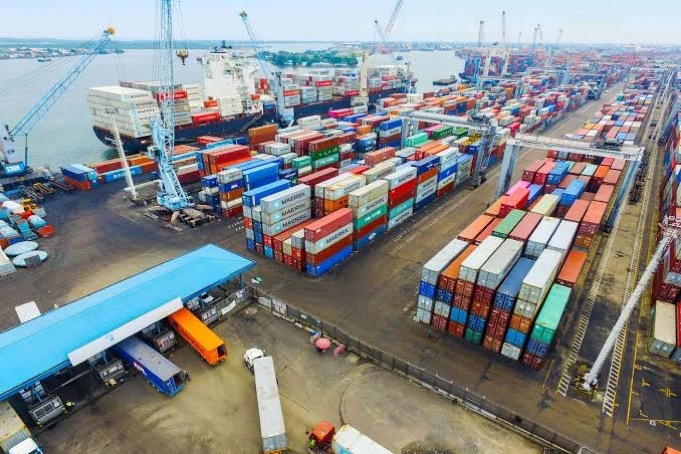
Turning to the continent's untapped geographic advantages, President Tinubu identified ocean governance as a non-negotiable foundation for economic survival. He announced that Nigeria is expanding its maritime security operations to jumpstart Africa’s broader Blue Economy transformation.
To combat piracy, illegal fishing, and resource theft, Tinubu made an explicit sovereign commitment to export Nigeria's advanced maritime security assets to neighboring West African countries. He offered the state-of-the-art infrastructure of Nigeria’s Deep Blue Project to serve as a centralized, regional maritime intelligence data hub for willing states across the Gulf of Guinea.
"Interoperable systems, harmonized laws, and seamless joint enforcement must become the daily reality, not an aspiration on paper," Tinubu declared. "Let no one misunderstand: maritime sovereignty does not repel investment—it attracts it. Secure sea lanes, predictable regulation, and functional courts are the preconditions that unlock private capital. Governance has completely de-risked Nigeria’s maritime proposition."
Addressing Migration via Economic Root Causes
On the sidelines of the central summit, President Tinubu engaged in a series of high-stakes bilateral meetings, including closed-door discussions with Madagascar’s President, Michael Randrianirina. He also met with the President of the Confederation of African Football (CAF), Dr. Patrice Motsepe, formally declaring Nigeria's infrastructural readiness to host the upcoming edition of the CAF Awards.
Addressing the thorny issue of irregular migration to Europe, Tinubu urged Western partners to pivot away from border militarization and move toward productive economic ring-fencing. He argued that human capital flight cannot be solved at borders, but must be addressed by generating viable economic livelihoods in the countries of origin.
"People who have jobs, security, and hope at home do not typically risk their lives in the back of a smuggler’s truck," the President noted. He urged international development partners to match their political rhetoric with genuine funding, calling for a dedicated portion of Official Development Assistance (ODA) to be ring-fenced exclusively for programs that stimulate youth employment, digital skills acquisition, and climate change adaptation within Africa.
A Unified Front of State and Private Capital
Demonstrating a highly unified national strategy, the federal government's delegation featured an unprecedented gathering of Nigeria's most powerful industrial titans, including:
-
Aliko Dangote (Chairman of the Dangote Group)
-
Tony Elumelu (Chairman of the UBA Group)
-
Abdulsamad Rabiu (Chairman of the BUA Group)
-
Aigboje Aig-Imoukhuede (Chairman of Access Holdings Plc)
The ministerial cabinet accompanied the business elite to negotiate separate sector-specific agreements. Foreign Affairs Minister Bianca Odumegwu-Ojukwu led diplomatic plenaries, while Finance Minister Taiwo Oyedele held talks on structured trade financing. Concurrently, Marine and Blue Economy Minister Adegboyega Oyetola, Industry Minister Dr. Jumoke Oduwole, and Communications Minister Bosun Tijani participated in specialized sessions at Nairobi University, focusing on integrating Artificial Intelligence, expanding the African Continental Free Trade Area (AfCFTA), and capturing Africa’s massive demographic dividend.