Musk Sets Six-Month Target for SpaceX AI
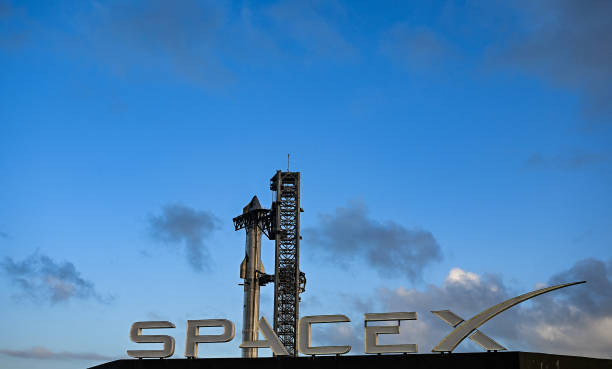
Elon Musk has predicted that SpaceX could move into the leading position in artificial intelligence within roughly six months if the company's current rate of progress continues.
Musk made the prediction on September 24 in a series of posts discussing SpaceX's developing AI capabilities and its position relative to established AI companies including OpenAI and Anthropic.
The billionaire said he was "cautiously optimistic" that SpaceX could have a model at the level of Fable or GPT-6 within two to three months. He then said that if the company's rate of improvement remains strong, SpaceX could reach what he described as "pole position" in AI in about six months.
The prediction would represent a significant shift in the AI landscape if realised, given the head start enjoyed by companies such as OpenAI and Anthropic.
SpaceX's AI Effort Is Relatively Young
Musk acknowledged that SpaceX's AI operation is much younger than those of its two major competitors.
He said SpaceX's AI efforts are about three years old, compared with approximately six years for Anthropic and 10 years for OpenAI. His argument is that the company's rate of improvement could allow it to close that experience gap rapidly.
Musk referred to the "second derivative" of SpaceX's progress, essentially arguing that the rate at which its AI capabilities are improving could itself be accelerating.
That distinction is central to his six-month prediction.
Rather than claiming SpaceX is already ahead of OpenAI or Anthropic, Musk is forecasting that continued acceleration could allow it to overtake them in the near future.
Hardware and Computing Power Could Be Critical
Musk also identified computing infrastructure as a major factor in the AI competition.
He argued that bringing large amounts of computing power online quickly is extremely difficult and said SpaceX had demonstrated strong capabilities in this area.
The availability of computing resources has become one of the central constraints in the development of increasingly capable AI systems, as companies require enormous amounts of processing capacity to train and operate frontier models.
SpaceX's broader infrastructure could therefore become an important part of Musk's strategy for competing in AI.
The company has already been involved in providing computing infrastructure to AI businesses. Reuters reported earlier this year that Anthropic agreed to use SpaceX's Colossus data-centre capacity, with the arrangement initially structured as a 180-day lease with provisions for cancellation.
Musk Previously Acknowledged Anthropic's Strength
Musk's latest prediction comes after he previously acknowledged Anthropic's position in the AI industry.
In July, Musk said he had been wrong about Anthropic and described the company as the current AI leader, while also praising its models. TechCrunch reported that Anthropic had become one of SpaceX's major customers following an agreement involving computing capacity.
That makes the latest six-month forecast notable.
Musk is effectively arguing that SpaceX can move from being a younger participant in the AI field to potentially leading it despite competitors having substantially longer-running AI programmes.
SpaceX and xAI's AI Strategy
The development also reflects the increasingly close relationship between SpaceX's infrastructure and Musk's wider AI ambitions.
Musk's AI operations have been associated with xAI, the company behind the Grok family of models. Reporting in July said Musk's xAI had merged with SpaceX, bringing AI development and SpaceX's broader infrastructure under the same corporate structure.
That combination gives Musk access to a large technology and infrastructure ecosystem spanning computing, engineering and space technology.
Musk has also discussed using SpaceX engineering data to improve future AI systems, particularly in areas involving physical-world reasoning.
The strategy is based on the idea that AI systems could benefit from information generated by companies operating in complex real-world environments rather than relying exclusively on conventional internet and text-based training data.
What Musk's Prediction Actually Means
Musk's statement is a forecast, not evidence that SpaceX has already surpassed OpenAI or Anthropic.
His six-month timeline depends on the company's current pace of improvement continuing at a similar or greater rate.
The first test of the prediction could come within the next few months, when Musk expects SpaceX to have a model comparable to what he described as Fable or GPT-6 level.
Whether such comparisons are meaningful will also depend on the benchmarks used.
AI models can perform differently across coding, reasoning, mathematics, multimodal tasks, agentic work and other evaluations. Being ahead on one benchmark does not necessarily establish overall leadership across the industry.
For that reason, Musk's "pole position" claim will ultimately depend on how SpaceX's systems perform against competing models when independently evaluated.
OpenAI and Anthropic Remain Major Players
SpaceX is entering a field already dominated by companies with substantial AI research, computing infrastructure and commercial deployments.
OpenAI and Anthropic are both continuing to develop new frontier models, meaning SpaceX would not be competing against static targets.
Reuters reported this month that Anthropic was considering another model release in response to developments involving OpenAI's latest model, highlighting how quickly the competitive landscape is changing.
That means Musk's six-month prediction effectively assumes that SpaceX can improve faster than competitors that are themselves continuing to advance.
A Major Test for Musk's AI Ambitions
If SpaceX does achieve the level of performance Musk is predicting, it would represent a major development in the AI industry.
The company would have moved from a relatively young AI operation to a potential competitor at the frontier within a short period.
For now, however, the six-month timeline remains Musk's forecast.
His immediate target is for SpaceX to produce a Fable/GPT-6-level model within two to three months. From there, he believes continued acceleration could put SpaceX at the front of the AI race roughly six months from now.
The coming months will therefore provide a measurable test of one of Musk's latest predictions about the rapidly changing artificial-intelligence industry.