Shettima delivers Nigeria’s statement at UNGA 81
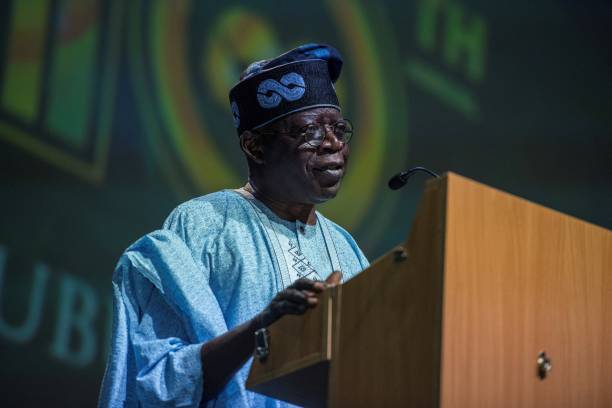
Vice President Kashim Shettima has delivered Nigeria’s national statement at the 81st United Nations General Assembly in New York, representing President Bola Ahmed Tinubu at the high-level General Debate.
Shettima addressed the Assembly on Thursday, September 24, after Nigeria was listed as the fourth speaker in the afternoon session. The provisional schedule had placed his appearance at approximately 4:00–4:30 p.m. New York time, equivalent to 9:00–9:30 p.m. Nigerian time.
The General Debate is being held from September 22 to 28 under the theme “Restoring trust, managing transformation: A United Nations that delivers for all.”
Shettima's appearance marked the third consecutive year he has represented Tinubu at the UN General Debate, following his addresses on behalf of the president in 2024 and 2025.
Nigeria renews demand for permanent African seats
A central issue in Nigeria's statement was reform of the United Nations Security Council.
Shettima said Nigeria believes the current structure of the Council does not adequately reflect the realities of the modern international system.
Nigeria called for at least two permanent seats for Africa, with the rights and responsibilities attached to permanent membership, including veto rights for as long as the veto remains part of the Council's structure.
The country also called for five non-permanent African seats.
The demand is consistent with Nigeria's longstanding position that Africa should have greater representation in the UN's most powerful decision-making body.
Nigeria calls for stronger multilateral cooperation
In his address, Shettima presented Nigeria's position in favour of diplomacy, international cooperation and respect for international law.
He argued that global institutions must adapt to current realities and restore confidence among member states.
Nigeria also reaffirmed its commitment to multilateral institutions and said international disputes should be addressed through dialogue and peaceful means.
The statement comes at a time when conflicts in different parts of the world have placed renewed pressure on international institutions to improve their capacity to prevent and resolve crises.
AI should serve humanity, Shettima says
Artificial intelligence was another major subject in Nigeria's statement.
Shettima said AI could be used either for harmful purposes or to improve areas such as healthcare, agriculture, governance and economic productivity.
Nigeria highlighted its investments in digital public infrastructure, broadband connectivity, innovation systems, research institutions and technology entrepreneurship.
The vice president also invited international partners to work with Nigeria's young population and technology ecosystem to ensure that AI contributes to development rather than destruction.
The remarks come as governments around the world continue debating how to manage the opportunities and risks associated with increasingly advanced AI systems.
Nigeria seeks climate finance and energy development
Climate change and energy transition also featured prominently in Nigeria's position.
Shettima reaffirmed Nigeria's commitment to its 2060 net-zero target, while stressing the need for developing countries to expand access to affordable and reliable energy.
Nigeria's energy transition approach includes renewable energy, clean cooking, gas as a transition fuel, climate-smart agriculture and nature-based solutions.
The vice president argued that developing countries should receive greater access to technology, capacity building and predictable climate financing so that climate action does not undermine their development objectives.
Nigeria also argued that Africa's relatively low contribution to global greenhouse-gas emissions should be considered when international climate policies and financing mechanisms are designed.
Shettima highlights Nigeria's security challenges
Security was another major component of the address.
Shettima pointed to Nigeria's prolonged fight against Boko Haram, ISWAP and other armed groups, arguing that military operations alone cannot provide lasting solutions to insecurity.
He called for stronger international cooperation on intelligence sharing, counter-terrorism financing and the prevention of illicit arms flows.
The vice president also linked security with development, education, economic opportunity and accountable governance.
Nigeria further highlighted insecurity across the Sahel and its potential consequences for neighbouring countries, regional integration and democratic governance.
Nigeria calls for action on Sudan and other conflicts
The Nigerian delegation also called for urgent diplomatic efforts to address conflicts including the war in Sudan.
Shettima urged parties to conflicts to respect international humanitarian and human rights law, protect civilians and allow humanitarian assistance to reach affected populations.
Nigeria reiterated its support for peaceful settlements and argued that long-term peace requires diplomacy, reconciliation and inclusive political processes rather than military victories alone.
Reform of international financial institutions
Nigeria also used the UN platform to call for changes to the international financial system.
Shettima said high debt-servicing costs continue to constrain many developing countries' ability to invest in education, healthcare and infrastructure.
Nigeria therefore called for greater access to concessional financing and debt-sustainability frameworks that take development needs into account.
The country also backed blended finance, private capital, South-South cooperation and strategic partnerships as potential tools for financing development and climate adaptation.
Nigeria promotes AfCFTA and local value addition
Shettima also highlighted the African Continental Free Trade Area (AfCFTA) as an important opportunity for economic transformation.
Nigeria said deeper regional integration could strengthen African value chains, increase intra-African trade and promote industrialisation.
The vice president argued that African countries should move beyond exporting raw materials and instead expand manufacturing, processing and technology-driven industries.
This position is also consistent with remarks Shettima made during a high-level Africa Minerals Strategy Group meeting in New York, where he called for greater processing and value addition around Africa's mineral resources.
Shettima leads a high-level Nigerian delegation
Shettima travelled to New York with a senior Nigerian delegation that included governors, ministers and other government officials.
Among those accompanying him were Rivers State Governor Siminalayi Fubara, Zamfara State Governor Dauda Lawal and Kwara State Governor AbdulRahman AbdulRazaq, as well as Defence Minister Christopher Musa, Foreign Affairs Minister Bianca Odumegwu-Ojukwu and Nigeria's UN representative Jimoh Ibrahim.
The vice president was also scheduled to hold bilateral meetings with foreign leaders, international organisations and development partners during the UNGA week.
According to the Federal Ministry of Information and National Orientation, Nigeria's participation is focused on advancing national interests and strengthening international cooperation.
Third consecutive UNGA appearance for Shettima
Shettima's latest appearance means he has now delivered Nigeria's national statement at the UN General Debate for three consecutive years.
He represented Tinubu at the 79th session in 2024 and again at the 80th session in 2025.
Tinubu personally addressed the General Assembly in 2023, shortly after assuming office.
At the 81st session, Shettima's address placed Nigeria's priorities on Security Council reform, international cooperation, climate action, economic development, technology, security and reforms to global financial institutions.
The UN General Assembly's high-level week continues through September 28, with additional meetings and debates scheduled at the United Nations Headquarters in New York.