OpenAI has banned two covert influence operations linked to Russia and Iran after investigators found the groups were using ChatGPT to support deceptive campaigns designed to influence audiences and disguise the true origins of political messaging.
In a report published October 8, OpenAI said the two operations used artificial intelligence alongside traditional influence tactics to create “false front” entities that could present geopolitical messaging as coming from apparently independent organizations or journalists.
The Russian operation, dubbed “Dark Clark,” targeted audiences across Latin America, while the Iranian campaign, called “Bogus Bylines,” used fabricated journalist identities to place articles in online publications.
Russian Operation Targeted Latin America
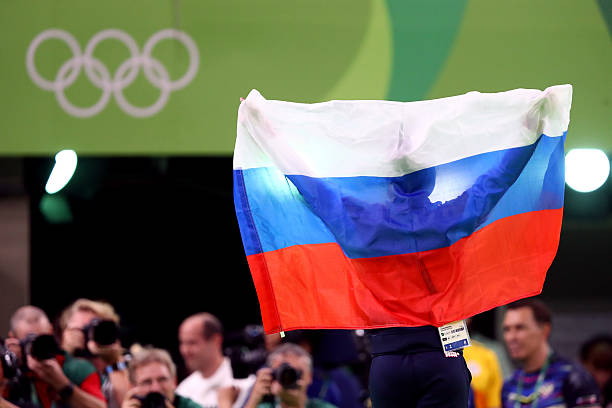
OpenAI said it banned a cluster of ChatGPT accounts originating in Russia that were involved in an influence campaign across Latin America.
Because OpenAI does not permit access to its services from Russia, the operators reportedly used VPNs to connect to ChatGPT.
The campaign appeared to focus on undermining Ukraine's reputation in the region and influencing domestic political discussions in countries including Argentina and Bolivia. Some of its activities also targeted political figures in Argentina, Bolivia and Ecuador.
OpenAI said the operators used ChatGPT primarily to prepare internal reports about their activities, create campaign content and produce reports about a supposed research organization called the Social Research Center (SRC).
The group allegedly controlled the SRC through a fake persona named “Mia Clark,” giving the operation its Dark Clark nickname.
Unwitting Latin Americans Were Allegedly Recruited
One of the most significant aspects of the Russian operation was its apparent use of people in Latin America who did not know they were working for a Russian influence campaign.
According to OpenAI, the operators appeared to control decisions involving the SRC, including hiring, firing, salaries and research projects.
The people working for the organization reportedly conducted interviews and produced research in good faith, unaware that the organization was allegedly controlled by Russian operators.
OpenAI described this as its most complex attempt to operate a false-front identity among the influence campaigns it has disrupted during the past two and a half years.
The SRC reportedly produced more than 60 articles covering issues including public opinion on BRICS and economic comparisons involving Brazil.
Fake Documents and Political Content
The Russian campaign also used ChatGPT to help create deceptive material.
OpenAI identified examples in which operators asked the model to translate or refine fake documents, adapt language to specific Latin American countries and prepare scripts for fabricated audio content.
One operation involved a fake letter allegedly implicating Ukraine's honorary consul to Panama in corruption. The material was translated into Spanish and accompanied by an audio script before appearing on TikTok under the branding of a real Panamanian television news organization.
Another fabricated document was used to support claims involving Ecuadorian President Daniel Noboa and alleged recruitment of Ecuadorians to fight in Ukraine.
The document was later fact-checked and found to contain claims that could not be substantiated.
OpenAI cautioned that the operators' own reports exaggerated some of their achievements, meaning their claims about the scale of the campaigns could not simply be taken at face value.
Nevertheless, investigators found examples of content that spread widely enough to trigger fact checks and official government denials.
OpenAI classified Dark Clark as Category 5 on its six-level influence-operation scale, making it the first Category 5 operation the company says it has disrupted.
Iranian Operation Used Fake Journalists
The second operation originated in Iran and used seven fabricated journalist identities to distribute political articles online.
OpenAI called the campaign “Bogus Bylines.”
The operators used ChatGPT to refine long-form articles, prepare pitches to editors, generate social media comments and polish internal reports.
The articles primarily focused on the US-Iran conflict, with some also addressing American politics.
OpenAI identified almost 100 articles published or syndicated under the fake bylines across roughly a dozen online outlets.
The fabricated identities presented themselves as Western journalists, with biographies claiming American or New Zealand backgrounds and expertise in international affairs, human rights, politics and Middle Eastern conflicts.
The operation reportedly became more active after the outbreak of the US-Iran conflict.
AI Used to Scale Traditional Influence Tactics
OpenAI said the two campaigns illustrate an important characteristic of AI-assisted influence operations.
Rather than replacing traditional propaganda techniques, artificial intelligence can make existing operations faster and easier to scale.
The Russian and Iranian groups still relied on fabricated identities, deceptive documents, fake organizations and attempts to place material in legitimate media outlets. ChatGPT was used as a supporting tool for writing, translation, research and internal reporting.
OpenAI said the campaigns closely resembled influence operations that existed before generative AI, but AI simplified parts of their workflows.
The company said both operations managed to get some of their content into mainstream or established online media, rather than relying exclusively on fake social-media accounts.
That made the campaigns potentially more significant because information appearing in legitimate publications can reach audiences that might otherwise be skeptical of anonymous social-media propaganda.
OpenAI Continues to Target AI Misuse
The latest bans form part of OpenAI's broader effort to identify and disrupt covert influence operations using its models.
The company has previously reported Russia-linked campaigns involving fabricated research organizations and AI-generated social-media content. In August, OpenAI said it had banned Russian accounts connected to the International Burke Institute, which it described as an elaborate operation designed to manufacture credibility around pro-Russian narratives.
The latest investigation demonstrates that the threat is evolving beyond simple AI-generated posts.
Instead, operators are increasingly attempting to build apparently legitimate organizations, recruit unwitting participants and use real media outlets to distribute their messaging.
OpenAI said it has disrupted 30 covert influence operations over the past two and a half years and continues to share information about identified campaigns with authorities and other organizations.
The cases also highlight a broader challenge surrounding generative AI: even when an AI system is not independently conducting an influence campaign, its ability to produce large volumes of polished text, translations, reports and communications can make sophisticated deception easier to organize.