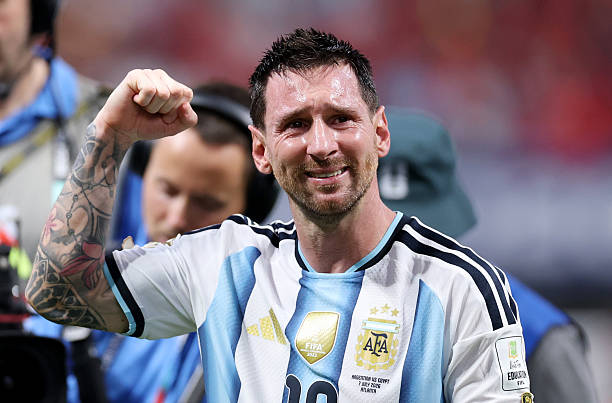
Lionel Messi has officially announced his retirement from the Argentina national team. The 39-year-old captain confirmed his departure through a handwritten personal statement published on social media, acknowledging that while the choice brings deep emotional pain, he leaves knowing he has given everything possible to his country and leaves behind an unmatched international legacy. The eight-time Ballon d'Or winner steps away as La Albiceleste's all-time leading goalscorer with 125 goals and its most-capped player in history with 207 appearances, drawing the curtain on a legendary two-decade international journey that reshaped modern football.
Addressing the nation and his global fanbase directly, Messi explained that time was running short and that a definitive chapter had come to an end, emphasizing that he leaves with complete peace of mind and pride after delivering moments to the Argentine people that had once lived only in their collective dreams. He noted that he loved, has loved, and will always love being a part of the national team, but stressed that he has nothing left to give on the international pitch. Furthermore, Messi highlighted the importance of stepping aside to clear the path for an exceptionally talented new generation of young players who are rising through the ranks and fully deserve their own opportunity to represent the blue and white shirt.
The timeline leading to the captain's announcement was shaped by a combination of intense sporting pressure, international disappointment, and profound personal grief. Messi revealed that he originally drafted his emotional retirement message on July 21, just two days after Argentina suffered a heartbreaking 1-0 extra-time defeat to Spain in the World Cup final. His resolve to step away from international football was further solidified in August following the death of his father and longtime confidant, Jorge Messi, who passed away at the age of 68 following a long illness. Reflecting on that loss, Messi stated that the passing of his father made him feel even more convinced than before that the right moment had arrived to conclude his storied chapter with Argentina.
Though his final campaign ended in a silver medal, Messi’s individual performance during his last international tournament demonstrated the enduring brilliance that defined his prime years. The Argentine captain scored eight goals and provided four assists across the competition, bringing his total career World Cup assist tally to 12. A record ten of those assists were delivered specifically during high-stakes knockout round matches, establishing an all-time record unmatched by any other player since statistical tracking began. His final career tally of 125 international goals leaves him second on the all-time men's international scoring list behind his long-time contemporary and rival, Portugal's Cristiano Ronaldo (146), while his 21 career World Cup goals rank second only to France's Kylian Mbappé (22).
The broader significance of Messi’s retirement extends deep into the historical identity of Argentine football, serving as the culmination of an extraordinary journey marked by initial heartbreak, intense public scrutiny, and eventual total redemption. His senior international debut in August 2005 as a 63rd-minute substitute against Hungary lasted less than sixty seconds after he was shown a straight red card following a collision with full-back Vilmos Vanczak. Over the next decade, despite reaching major finals, Messi faced persistent and sharp criticism from domestic commentators and fans who questioned whether he could replicate his astonishing club success with Barcelona on the international stage.
That burden peaked during a painful stretch wherein Argentina lost four major tournament finals in nine years, including the 2014 World Cup final to Germany and consecutive Copa América finals to Chile. Following a missed penalty in the 2016 Copa América final shootout defeat to Chile, an overwhelmed Messi announced his first international retirement, stating at the time that the national team was over for him. However, driven by a deep commitment to his country, he reversed that decision shortly after, embarking on a second tenure that would forever alter the history of South American football.
The modern era of Argentine football will be remembered for the golden age that followed Messi's return. He captained Argentina to a historic 2021 Copa América victory against Brazil at the Maracanã stadium, ending a 28-year major trophy drought for the country. That success was followed by a second consecutive continental title and the pinnacle of his career at the 2022 FIFA World Cup in Qatar, where Messi led his nation to its first world title in 36 years, cementing his status alongside Diego Maradona in the pantheon of sporting icons.
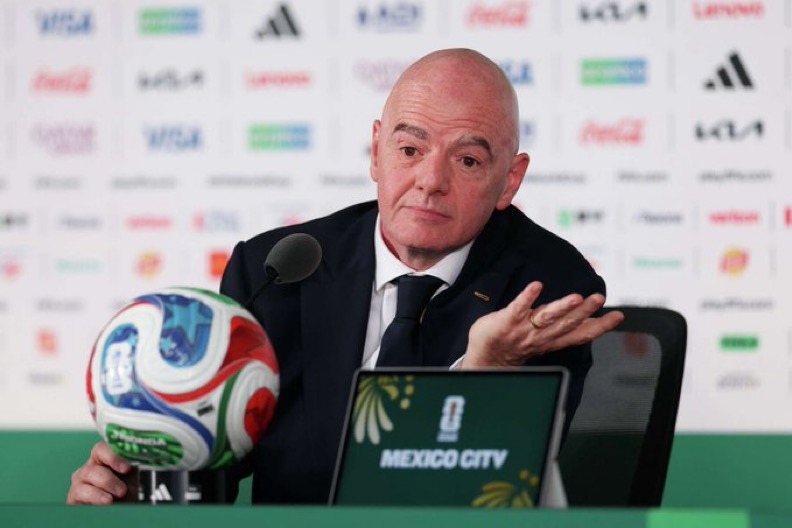
Following the announcement, tributes flooded in from across the globe, reflecting his vast influence on international sport. FIFA President Gianni Infantino praised Messi as one of the greatest players the sport has ever seen, thanking him for bringing joy to millions of supporters around the world. Argentine President Javier Milei publicly thanked Messi on social media for his extraordinary service to the nation. Longtime international teammate Angel Di Maria expressed profound gratitude to Messi for consistently choosing to represent Argentina throughout his career, while former teammates Cristian Romero and Giovani Lo Celso shared poignant messages honoring the captain's mentorship and leadership inside the dressing room.
While his international career has officially closed, Messi will continue his professional football career at the club level in Major League Soccer with Inter Miami, where he holds a contract that runs through the conclusion of the 2028 season. Though romantic speculation among fans has frequently suggested a potential return to his childhood club, Newell's Old Boys, concerns regarding regional security in Rosario and the need for personal family stability make a domestic return in Argentina highly unlikely. Consequently, Inter Miami will serve as the primary stage for the remaining years of his playing career. As Messi transitions from captaining his country on the pitch to supporting the team from the stands as a fan, the global football community bids farewell to one of the most magnificent international careers ever witnessed.
HIS MESSAGE
After this time that has passed since the final, and after thinking it over a lot, I want to tell everyone that I am retiring from the national team… It was a decision that hurt — and still hurts — deep in the soul, but I understand that the time has come. I swear to you that I always gave everything, not only in these last years when we won everything, but before that as well. I always fought and left everything on the field for this shirt, to give you joy and make you feel proud to be Argentine through football. Time is running short and chapters are closing, and this is one that hurts me a lot. I love, I have loved, and I will always love being part of the national team. I emptied myself; I have nothing left to give, and besides, there are some very talented young players coming through who deserve to be here. Thank you for all the love over these 20 years. I am going to miss hearing you from inside the pitch so much. Now I will be one of you, always cheering and supporting from the outside (in the good times and in the bad times — even more so then). Thank you to my family for always being there, for accompanying me on this beautiful but difficult journey. Thank you to every coach, teammate and official I had the chance to share this with. I take with me unforgettable memories and moments we lived. I leave with the peace of mind and the pride of having given you, together with my teammates, moments we once only dreamed of. It was crazy to have lived it with all of you. I love you! Thank you, God, for making me Argentine. Let’s go, Argentina! I wrote these words on July 21, two days after the final. Today, after what happened with my dad, I am even more convinced than before. —— LEO MESSI via INSTAGRAM POST.