The Nigeria Football Federation’s planned leadership election has been thrown into further uncertainty after FIFA and the Confederation of African Football directed the federation to suspend its ongoing electoral process pending a joint assessment of the crisis engulfing Nigerian football.
The directive was contained in a letter dated September 7, 2026, signed by FIFA Chief Member Associations Officer Elkhan Mammadov and addressed to NFF Acting Deputy General Secretary Emmanuel Ikpeme.
FIFA and CAF said they are examining the legal, governance, administrative and electoral implications arising from recent developments within the NFF. The international football bodies also announced plans to send a joint assessment mission to Abuja to meet key stakeholders and gather information before deciding on possible next steps.
The intervention places the future of the NFF's electoral process directly under international scrutiny and means the federation's planned September 27 elective congress in Lafia, Nasarawa State, will not proceed for now.
FIFA and CAF halt electoral process
In the letter, FIFA and CAF instructed the NFF administration not to take any further steps or decisions connected to the electoral process until their assessment is completed.
The directive is intended to preserve the existing situation while FIFA and CAF examine the circumstances surrounding the leadership crisis.
The NFF has also been asked to communicate the instruction to all relevant stakeholders, including its electoral bodies.
The September 27 election had been scheduled to determine the federation's next leadership, but preparations had already been disrupted by the crisis that followed the resignation of several senior NFF officials.
The latest FIFA-CAF intervention effectively places the election on hold until further notice.
Importantly, FIFA and CAF have not declared that the election is cancelled permanently. Their directive is tied to the ongoing assessment, meaning the eventual status of the election will depend on what the international bodies determine after examining the situation.
FIFA says no final decision has been made
While FIFA and CAF have stepped into the dispute, they have made clear that they have not reached a final conclusion on the issues under review.
The bodies said they are examining the relevant facts, the NFF's regulatory framework and the positions presented by the different stakeholders.
They also cautioned against assuming what action they will eventually take.
This means the Abuja mission is primarily a fact-finding and assessment exercise rather than an announcement of a predetermined reform plan or leadership structure.
The distinction could become important as different groups within Nigerian football present competing positions on how the NFF should be governed.
FIFA and CAF are expected to consider those positions alongside the federation's statutes and applicable international regulations before determining whether recommendations should be sent to their respective decision-making bodies.
Joint FIFA-CAF delegation coming to Abuja
FIFA and CAF said their joint assessment mission would travel to Abuja at the earliest possible opportunity.
The delegation is expected to meet representatives of the NFF administration, NFF members, the federation's electoral bodies and the National Sports Commission.
The objective is to gather information directly from the stakeholders and develop a comprehensive understanding of the situation before deciding what should happen next.
Emmanuel Ikpeme has been asked to coordinate the logistics of the visit and facilitate meetings with the relevant stakeholders.
The mission could therefore become a crucial stage in the ongoing battle over the direction of Nigerian football administration.
Rather than relying solely on correspondence and reports received from individual parties, FIFA and CAF will have the opportunity to hear directly from those involved.
NFF leadership crisis triggered international intervention
The FIFA and CAF action follows a major leadership shake-up within the NFF.
NFF President Ibrahim Musa Gusau resigned on August 27, just 34 days before the scheduled end of his four-year tenure.
NFF General Secretary Mohammed Sanusi and members of the federation's Executive Committee also resigned, creating a leadership vacuum at the organisation.
The NFF subsequently appointed Emmanuel Ikpeme to oversee its secretariat as Acting General Secretary, while Ademola Olajire was appointed Acting Deputy General Secretary.
The federation also suspended its electoral process and introduced interim administrative measures affecting the country's major domestic competitions.
Those developments created uncertainty over both the immediate administration of Nigerian football and the process for electing a new NFF leadership.
The involvement of FIFA and CAF now adds an international dimension to the crisis.
Tinubu had ordered football reforms
The crisis also coincided with President Bola Tinubu's call for comprehensive reforms in Nigerian football.
Following Gusau's resignation, the President directed that reforms should address several areas, including governance, administration, stakeholder representation, football development pathways, domestic competitions and accountability.
The National Sports Commission was directed to work with the NFF and other football stakeholders while engaging with FIFA and CAF.
The latest FIFA-CAF directive means the international football bodies will now play a more direct role in assessing the proposed changes and the circumstances surrounding the NFF's leadership crisis.
The Abuja mission is therefore expected to be important not only for the immediate electoral process but also for the broader reform conversation.
Zurich meeting preceded the Abuja mission
The latest development follows a September 1 meeting at FIFA House in Zurich involving FIFA, CAF, the NFF administration and representatives of the Nigerian government.
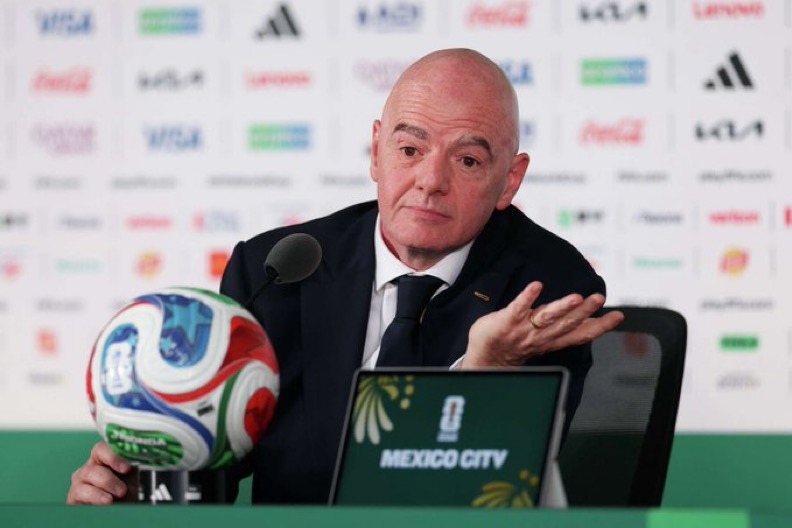
FIFA President Gianni Infantino also met a Nigerian delegation led by National Sports Commission Chairman Shehu Dikko.
According to Premium Times, the discussions focused on institutional governance, football development and ways FIFA could support stronger structures and development pathways for Nigerian football.
The Zurich meeting provided an opportunity for the Nigerian side to discuss the country's football situation with international football authorities.
The planned Abuja mission will now allow FIFA and CAF to widen that engagement by meeting stakeholders within Nigeria and hearing their respective positions.
The crisis comes after difficult results for Nigerian football
The governance dispute comes during a difficult period for Nigeria's national teams.
The Super Eagles failed to qualify for the 2026 FIFA World Cup, while the Super Falcons also missed out on qualification for the 2027 Women's World Cup.
Those failures have intensified scrutiny of football administration and development in the country.
The NFF's leadership crisis has consequently unfolded against a backdrop of broader concerns about the organisation of Nigerian football, its development structures and the performance of its national teams.
However, the FIFA and CAF assessment is focused specifically on the legal, governance, administrative and electoral circumstances surrounding the NFF rather than simply on the sporting results of the national teams.
What happens to the September 27 election?
For now, the answer is straightforward: the election is on hold.
The NFF elective congress had been scheduled for September 27 in Lafia, Nasarawa State, but FIFA and CAF have instructed that no further steps be taken in the electoral process until their assessment is completed.
The international bodies have not announced a replacement date.
They have also not stated whether the existing electoral arrangements will eventually continue, be modified or be replaced.
That decision will come only after the assessment process.
The international bodies said they would determine whether recommendations or proposals should be submitted to their respective competent decision-making bodies after completing the review.
Consequently, the immediate priority for FIFA and CAF is to establish the facts and understand the competing positions within Nigerian football.
What FIFA and CAF could decide
The outcome of the assessment remains open.
FIFA and CAF could eventually recommend changes to aspects of the electoral process or governance structure if they identify issues requiring attention.
They could also determine that further consultations or additional steps are necessary before the NFF election can resume.
At this stage, however, it would be premature to predict a specific outcome.
FIFA and CAF themselves have warned stakeholders against making assumptions about what action they will take.
That position also means reports suggesting that a particular reform arrangement has already been approved by FIFA or CAF should be treated cautiously until the international bodies formally announce their conclusions.
Why the Abuja mission matters
The joint mission could prove to be one of the most consequential developments in Nigerian football administration in recent years.
The NFF is responsible for governing football in Nigeria, while FIFA and CAF provide the international regulatory framework within which national football associations operate.
A prolonged leadership dispute can therefore create uncertainty around elections, domestic competitions, national teams and the federation's relationship with international football authorities.
By travelling to Abuja, FIFA and CAF will have the opportunity to assess the situation first-hand and engage directly with the different parties.
The mission could also help establish whether there is sufficient agreement among Nigerian football stakeholders to move forward with reforms and an eventual election.
NFF faces a period of uncertainty
Until FIFA and CAF complete their review, the NFF faces another period of uncertainty.
The planned September 27 election remains suspended, the federation continues to operate under interim arrangements, and the future structure of its leadership has yet to be determined.
At the same time, the Federal Government's broader reform agenda remains in play.
The international assessment will therefore have implications beyond the immediate election. Its findings could influence how Nigeria approaches football governance, administration and development in the coming years.
For now, FIFA and CAF have made one thing clear: they have not reached a final conclusion.
Their joint Abuja mission will be used to gather information, hear from stakeholders and assess the circumstances before any recommendations are considered.
Until that process is completed, the NFF election remains on hold and the next chapter of Nigerian football's leadership will remain uncertain.