Nigeria’s electricity generation plunged sharply from about 3,840 megawatts (MW) at 7am to 476.70MW by 1pm on Monday, October 19, 2026, triggering widespread concerns over electricity supply across parts of the country.
The dramatic decline represented a loss of 3,363.30MW, or approximately 87.6 per cent, in about six hours. The drop coincided with reports of outages and reduced supply in parts of Lagos, Abuja, Ogun and other locations.
Data published on the Nigerian Independent System Operator (NISO) monitoring platform showed that generation remained relatively stable during the morning before falling abruptly at about 12:40pm. By 1pm, several major generating stations were reporting zero output.
The incident immediately raised concerns about another possible national grid collapse. However, NISO later clarified that the event was not a complete national grid collapse, describing it instead as a disturbance affecting a section of the transmission network.
Power generation falls by more than 3,300MW
The scale of the decline was significant.
At 7am, the national grid was receiving approximately 3,840MW from generating stations. By 1pm, the figure had fallen to just 476.70MW.
In percentage terms, the reduction was about 87.6 per cent, leaving less than 13 per cent of the morning's generation available on the grid at the time of the sharpest decline.
The decline was particularly striking because generation had reportedly remained relatively steady for much of the morning. The sudden change began at around 12:40pm, when multiple generating facilities stopped contributing electricity to the grid.
Among the major plants that recorded zero output during the disruption were Egbin, Jebba, Shiroro and Kainji, while several gas-fired generating facilities also recorded no generation.
Only a small number of plants continued supplying electricity, with Odukpani NIPP, Omotosho and Sapele among those still recording output around the time of the incident.
The sudden loss of generation had an immediate effect on electricity available to distribution companies and, consequently, consumers.
Electricity supply disrupted across several areas
As generation fell, electricity consumers in different parts of the country began reporting outages and reduced supply.
Reports indicated disruptions in parts of Lagos, Abuja and Ogun State, among other areas. Consumers began reporting interruptions from around 12:45pm, shortly after the sharp decline in generation became visible on the national grid monitoring platform.
Ikeja Electric, which distributes electricity across parts of Lagos, attributed reduced supply hours on its network to a shortfall in the amount of electricity allocated to it from the national grid.
The distribution company said it was engaging relevant stakeholders to improve the available supply and assured customers that it would continue distributing the power received from the grid as efficiently and equitably as possible.
In Abuja, the Abuja Electricity Distribution Company also reported disruptions, while reports from Ogun indicated restrictions affecting parts of the transmission network serving communities around Ota, Ifo and Abeokuta.
The developments highlighted how quickly a disturbance affecting the transmission network can translate into reduced electricity availability for households, businesses and industries.
NISO says it was a partial grid disturbance, not total collapse
While the sharp reduction in generation led to speculation that Nigeria's national grid had collapsed, NISO rejected that description.
In a statement issued on Monday, the system operator said the national grid experienced multiple trippings on the 330-kilovolt (330kV) transmission network at approximately 12:40pm.
NISO said it worked with the Transmission Company of Nigeria (TCN) to implement corrective measures designed to stabilise the power system and restore normal operations.
The operator subsequently announced that restoration efforts had been completed and that the national grid had returned to normal operation.
NISO also stressed that the incident affected only a section of the grid, rather than the entire national electricity network.
That distinction is important because a grid disturbance or partial system event is not necessarily the same as a total national grid collapse. Nigeria's interconnected power system can experience equipment trips or failures on specific transmission corridors without the entire network shutting down.
Nevertheless, the scale of Monday's generation loss meant that the impact was felt by consumers even though NISO said the entire national grid had not collapsed.
What are “trippings” on the transmission network?
In electricity systems, a “trip” generally occurs when protective equipment automatically disconnects part of the network after detecting a condition that could threaten equipment or system stability.
Transmission lines and other high-voltage infrastructure are equipped with protection systems designed to isolate faults and prevent them from causing wider damage.
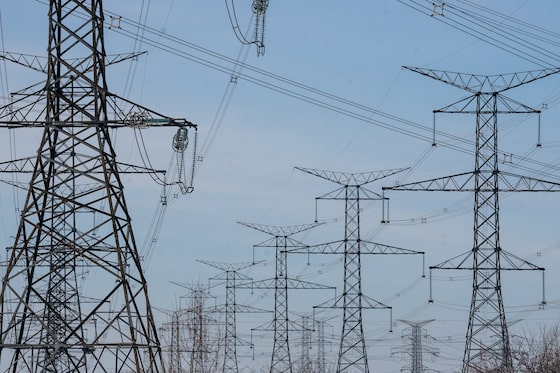
The 330kV network is an important part of Nigeria's electricity transmission infrastructure. It transports large quantities of electricity across the country between generation sources and distribution networks.
When multiple sections of such a network trip within a short period, generating plants and other parts of the power system can be affected.
That can result in a sudden reduction in the amount of electricity available to the grid, even where the generating plants themselves have not necessarily experienced permanent physical damage.
In Monday's incident, NISO attributed the disruption to multiple trippings but did not publicly provide a detailed explanation of the underlying technical cause of those trippings in its initial statement.
Major power stations were temporarily affected
The fact that several of Nigeria's major generating stations showed zero output during the incident underscores the interconnected nature of the country's electricity system.
Egbin, one of Nigeria's largest power stations, was among the facilities that recorded no generation during the disruption. Jebba, Shiroro and Kainji were also listed among major stations with zero output at the time.
The shutdown of multiple facilities meant that the electricity available to distribution companies was severely restricted.
At the height of the disruption, only a handful of generating companies were producing electricity according to the real-time dashboard.
This also illustrates why Nigeria's electricity challenges cannot be measured simply by the installed capacity of its generating plants.
A generating plant may have significant installed capacity but still contribute little or no electricity to the grid at a particular time because of transmission constraints, gas availability, maintenance, equipment faults, operational restrictions or wider system disturbances.
Generation recovery remained a key concern
Although NISO announced that the grid had returned to normal operation, subsequent readings reported by local media showed that generation remained significantly below the morning level for some time.
The Guardian reported that the NISO dashboard showed generation at 567.10MW around 7pm on Monday, while 29 of 33 generating stations listed on the real-time dashboard were reportedly recording zero output at one point. The report said only a small number of generating companies were still producing electricity.
The figures demonstrate the difference between restoring the stability of a transmission network and immediately returning every generating plant to its earlier level of output.
Even after a disturbance has been contained, generating units may require time to reconnect, synchronise with the grid and resume normal operations.
Consequently, consumers can continue experiencing poor supply even after the system operator has declared that the network itself has been stabilised.
Businesses and households bear the immediate impact
The latest incident has again highlighted the economic consequences of instability in Nigeria's electricity supply system.
For households, sudden outages can interrupt basic activities, including refrigeration, water pumping, communication and home-based work.
For businesses, the consequences can be considerably more expensive.
Small businesses such as barbershops, restaurants, supermarkets, tailoring businesses, printing shops and internet-based enterprises often depend on electricity for daily operations. When grid supply becomes unreliable, many turn to petrol or diesel-powered generators and alternative energy systems.
Manufacturing companies face an even more complex challenge because interruptions can affect production schedules, machinery and operating costs.
Nigeria's long-running electricity supply problems have therefore remained closely linked to the broader cost of doing business in the country.
Monday's incident did not create all of those challenges, but the sudden loss of more than 3,300MW demonstrated how vulnerable consumers can be when a major disturbance affects the interconnected power system.
NISO says normal operation was restored
Despite the severity of the temporary decline, NISO said corrective measures were successfully implemented in cooperation with TCN and that normal grid operation had been restored.
The operator urged Nigerians to rely on its official communication channels for verified information about the condition of the electricity network, particularly amid reports circulating on social media about a supposed nationwide grid collapse.
The incident therefore ended with two different realities: a massive temporary fall in electricity generation that caused real disruptions for consumers, and an official position that the country did not experience a complete national grid collapse.
For electricity users, however, the distinction offered little immediate relief while power was unavailable.
The episode has once again placed attention on the resilience of Nigeria's transmission infrastructure and the need to reduce the frequency and severity of system disturbances.
As the country works to improve electricity availability, stability will remain just as important as generation capacity. More power plants alone cannot solve the problem if electricity cannot be reliably transmitted across the network and delivered to homes and businesses.
Monday's plunge from 3,840MW to 476.70MW was therefore more than a temporary statistic on a monitoring dashboard. It provided another illustration of how a disruption on critical transmission infrastructure can rapidly affect millions of electricity consumers and expose the wider vulnerabilities of Nigeria's power sector.