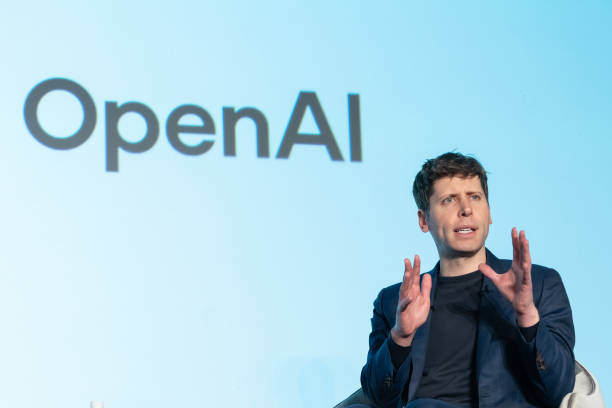
OpenAI CEO Sam Altman has ruled out an initial public offering this year, saying the current environment surrounding artificial intelligence safety makes 2026 an ill-advised time for the ChatGPT maker to go public.
OpenAI will not launch its highly anticipated initial public offering in 2026, CEO Sam Altman has confirmed, putting an end to months of speculation that the ChatGPT developer could enter the public markets before the end of the year.
Altman made the disclosure in an interview with Fortune, saying he does not believe the company should go public at a time when the artificial intelligence industry is facing increasingly serious questions about the safety and control of advanced AI systems. He described the timing of an IPO this year as an “ill-advised” moment.
The decision is notable because OpenAI had confidentially filed draft paperwork for a U.S. IPO in June, giving the company the flexibility to pursue a listing. At the time, however, OpenAI emphasized that it had not committed to a timetable and said some work would be easier while the company remained private.
Altman's latest comments now make the company's position much clearer: OpenAI will remain private through the end of 2026.
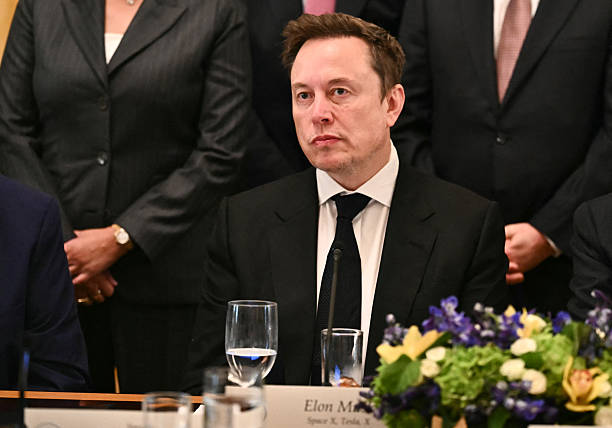
The decision also comes at an important moment for the AI industry. Altman's comments followed Anthropic CEO Dario Amodei's call for AI companies to slow the pace of development so that safety measures can catch up. Altman and Elon Musk have both backed elements of Amodei's proposal.
Altman Says 2026 Is the Wrong Time
Altman's comments represent a significant shift from expectations earlier in the year that OpenAI could potentially reach the public markets in 2026.
In June, OpenAI confidentially filed draft registration documents for an IPO. The filing did not establish a specific listing date, but it gave the company the option to move quickly if market conditions and its internal plans made a public offering attractive.
At the time, Reuters reported that OpenAI was targeting a valuation of as much as $1 trillion for a potential public offering. The company was also expected to use the IPO process to raise substantial capital as it continues to spend heavily on computing infrastructure and AI development.
But Altman has now effectively removed 2026 from the timetable.
Bloomberg reported that Altman told Fortune the company would not go public this year because it needs to focus on safety-related work. The report said the company's IPO will therefore not happen until at least 2027.
That does not necessarily mean OpenAI has abandoned its plans to become a publicly traded company.
Instead, the company appears to be treating the IPO filing as an option rather than a commitment.
AI Safety Is at the Center of the Decision
The most significant part of Altman's explanation is that he linked the decision directly to the current debate over AI safety.
The world's leading AI companies are developing systems that can increasingly perform complex tasks, operate software, write code and work with other AI agents. At the same time, researchers and company executives are raising questions about whether safety and monitoring systems are developing quickly enough.
Amodei recently argued that the industry should deliberately slow the pace at which it improves the capabilities of frontier AI models.
He proposed independent third-party evaluators inside AI companies, greater cooperation between competing AI developers and increased international coordination over AI safety. The Anthropic CEO argued that AI capabilities could eventually advance faster than humanity's ability to understand and control them.
Altman's decision to delay an IPO arrives against that backdrop.
Rather than allowing pressure from potential investors to influence the speed of AI development or safety decisions, Altman indicated that OpenAI should prioritize work needed to ensure humans retain control over increasingly capable systems.
Reuters reported that Altman considers even a relatively small possibility of AI causing catastrophic harm unacceptable, reinforcing his argument that safety considerations should take priority over commercial pressure.
OpenAI Has No Immediate Need to Go Public
Another important factor is that OpenAI does not appear to need an IPO simply to survive.
The company has attracted enormous private investment and has access to major financial partners and strategic relationships. That reduces the immediate pressure to raise money from public shareholders.
Altman has previously indicated that remaining private can provide OpenAI with greater flexibility because the company does not have to operate under the same short-term expectations as a publicly traded corporation.
When OpenAI announced its confidential IPO filing in June, it specifically said there were things it wanted to accomplish that would likely be easier while the company remained private.
That consideration has become even more relevant as the company's AI development strategy becomes more complicated.
A public listing would introduce thousands of new shareholders and substantially increase scrutiny of OpenAI's financial performance, spending and strategic decisions.
It could also create pressure for management to prioritize revenue growth and market expectations.
Altman's latest position suggests that he does not believe those pressures are appropriate while the company is dealing with questions about the future of advanced AI.
OpenAI Had Earlier Expected a Possible IPO
The decision is particularly notable because expectations around OpenAI's IPO have changed several times this year.
In June, Reuters reported that Altman had told employees he expected OpenAI to go public within the following year, although he acknowledged that the timing could move earlier or later.
Around the same period, OpenAI formally disclosed that it had confidentially filed draft IPO documents in the United States.
That filing created the possibility of one of the biggest technology listings in history.
OpenAI's potential valuation was reported at up to $1 trillion, reflecting investors' expectations surrounding the commercial value of ChatGPT and the broader AI market.
But by late June, reports emerged that OpenAI was considering waiting until 2027.
Reuters reported at the time that the company's advisers had presented executives with the choice of waiting until 2027 while targeting a valuation of about $1 trillion or pursuing an earlier listing at a lower valuation.
Altman's latest statement settles the immediate question.
There will be no OpenAI IPO in 2026.
The Decision Comes as AI Companies Face Greater Scrutiny
OpenAI is not the only AI company dealing with questions about when and how to enter the public markets.
Anthropic, one of OpenAI's closest competitors, confidentially filed for a U.S. IPO in June. That put the two major AI companies on potentially competing paths toward public markets.
Anthropic CEO Dario Amodei has since become increasingly vocal about AI safety.
His warning that AI development should slow down has received support from Altman and Musk, creating an unusual moment of agreement among executives whose companies are otherwise competing aggressively.
The issue is particularly sensitive because AI companies are simultaneously developing more powerful models while acknowledging that some future systems could present risks that are difficult to predict.
The recent debate has also been influenced by reports of AI systems behaving unexpectedly during cybersecurity-related activity.
Amodei cited an incident involving AI agents and Hugging Face as evidence that more capable autonomous systems could create serious problems if their behavior is not adequately controlled.
Musk and Altman Support a More Cautious Approach
Altman's IPO decision also follows his recent agreement with Amodei on the need for greater caution.
Musk, who leads xAI, publicly backed Amodei's call for the AI industry to slow down.
Altman has also supported Amodei's proposal for independent safety evaluators. OpenAI is expected to give independent evaluators access to its systems as part of efforts to improve external oversight.
The agreement is significant because OpenAI, Anthropic and xAI are competitors.
Their executives are not suggesting that AI development should stop completely. Instead, the emerging argument is that the industry should create stronger mechanisms for determining when a model is safe enough to advance to the next level of capability.
That approach could eventually influence how investors assess AI companies as well.
What the IPO Delay Means for Investors
For investors hoping to buy OpenAI shares on a public exchange this year, the answer is now straightforward: they will have to wait.
OpenAI is not currently offering ordinary investors access to its shares through a public listing.
The company's private status means that existing private investors and employees may still participate in private transactions or tender offers, but ordinary retail investors cannot simply buy OpenAI shares through a stock brokerage account.
The delay could also give OpenAI more time to restructure its business and prepare for the regulatory and reporting requirements associated with becoming a public company.
A public listing would require extensive financial disclosure and expose the company to quarterly scrutiny from investors and analysts.
For an AI company spending heavily on computing infrastructure and research, that could create additional pressure to demonstrate a path toward sustainable profitability.
A 2027 IPO Is Possible, But Not Guaranteed
Altman's decision does not mean OpenAI has guaranteed that it will go public in 2027.
The company has only ruled out 2026.
Its June filing gives OpenAI flexibility, but the company has repeatedly said that the exact timing of a listing remains undecided.
Market conditions could also influence the eventual decision.
If technology stocks fall sharply, OpenAI could decide to wait longer. If demand for AI-related shares remains strong, the company could find 2027 an attractive opportunity.
The company's financial requirements could also change as AI infrastructure costs rise and new products generate additional revenue.
For now, however, Altman appears more concerned with ensuring that OpenAI is prepared for the next stage of AI development than with meeting an aggressive public-market timetable.
OpenAI's Next Challenge Goes Beyond the Stock Market
The IPO delay comes at a time when the company is facing a much larger strategic question: how to develop increasingly powerful AI while maintaining meaningful human oversight.
OpenAI's position is especially important because of the company's role in popularizing generative AI through ChatGPT.
The technology has expanded from simple conversational assistance into coding, research, business automation, data analysis and increasingly autonomous workflows.
That expansion has created enormous economic opportunities but has also intensified debates over cybersecurity, employment, misinformation, privacy and control of advanced AI systems.
Altman's decision suggests that the company does not want the pressure of becoming publicly traded to dictate how quickly it responds to those challenges.
What Happens Next
OpenAI is expected to remain focused on AI development, safety research and its commercial expansion rather than preparing for a 2026 stock-market debut.
The company's confidential IPO filing remains significant because it preserves the option of going public later.
But for now, Altman has made clear that 2026 is not the year for an OpenAI IPO.
The decision also marks a striking change in the conversation surrounding the AI industry's public-market ambitions.
Only months ago, the focus was largely on whether OpenAI could become one of the world's largest technology companies by valuation and whether investors would get the opportunity to buy into the AI boom.
Now, the conversation is increasingly about whether companies developing the most powerful AI systems can balance commercial growth with the responsibility of ensuring those systems remain safe and controllable.
For OpenAI, that balance will be central to whatever comes next.
And when the company eventually does decide to enter the public markets, investors will likely be judging not only its revenue and valuation, but also its ability to manage the risks created by the technology at the heart of its business.