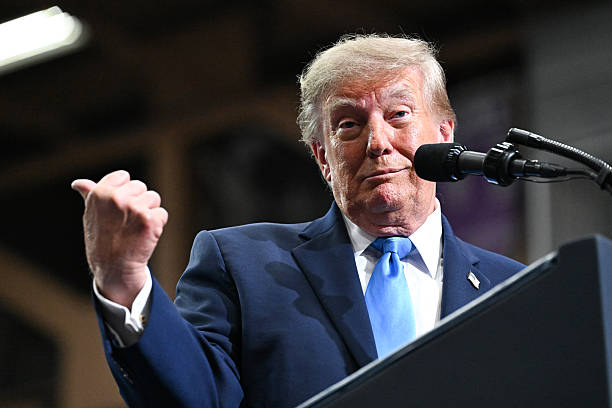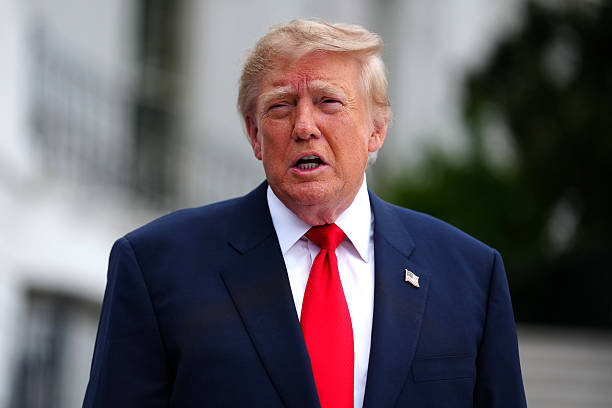
US President Donald Trump has claimed that Russia and Ukraine have agreed to an immediate “energy ceasefire,” under which the two sides would stop attacking each other’s energy infrastructure.
Trump made the announcement on Sunday, October 11, saying the agreement was already taking effect. However, neither Kyiv nor Moscow initially confirmed that they had formally agreed to the arrangement, leaving questions over its terms and whether it had actually taken effect.
Trump Announces Energy Ceasefire
Trump said the agreement would cover the war’s energy infrastructure, but he did not provide detailed terms or explain exactly how the ceasefire had been negotiated.
The announcement came as Trump has been pushing for measures to reduce energy prices and prevent further attacks on facilities that affect fuel and power supplies.
The proposed ceasefire would be narrower than a general halt to fighting because it would focus specifically on energy-related targets rather than ending military operations across the front.
Zelenskyy Says Russia Continued Attacks
Ukrainian President Volodymyr Zelenskyy said the announcement came as a surprise to Kyiv and that Russian forces continued attacking Ukrainian energy infrastructure.
According to Zelenskyy, Russian strikes hit several energy facilities, including a power plant in Kyiv and the CHP-5 power plant in Kharkiv. He also said Russian attacks targeted gas production facilities operated by Ukraine's state energy company Naftogaz.
Zelenskyy said Ukraine was prepared to observe an energy ceasefire if Russia did the same. He indicated that Kyiv had refrained from attacking Russian energy facilities while waiting for Moscow to reciprocate.
Reuters reported that Zelenskyy said at least six Russian attacks had struck energy targets during the night and morning of October 12, raising doubts about whether the ceasefire announced by Trump had been implemented.
Kremlin Has Not Confirmed a Formal Agreement
Moscow has also stopped short of publicly confirming Trump's claim that Russia and Ukraine had reached a formal energy ceasefire.
Kremlin spokesman Dmitry Peskov said contacts were continuing, but did not confirm that President Vladimir Putin had agreed to the arrangement announced by Trump.
The lack of confirmation from Moscow and Kyiv has therefore created uncertainty over whether Trump's announcement represents a completed agreement or a proposal that remains under negotiation.
Announcement Follows Russian Diesel Deal
Trump's energy ceasefire announcement came only days after he announced an agreement involving Russian diesel supplies.
On October 9, the US Treasury Department issued General License 135, authorizing transactions involving the sale, delivery, offloading and importation of Russian-origin diesel fuel through April 7, 2027, subject to the license's restrictions.
Trump said Russia would supply more than 300,000 metric tons of diesel to US and global markets initially. Reuters reported that the amount is equivalent to about 2.25 million barrels, while additional supplies could follow depending on Russian refinery capacity.
The diesel arrangement has attracted criticism from some US lawmakers and concern from Ukraine and European allies because Russian energy revenues have been a major focus of Western sanctions since Russia's full-scale invasion of Ukraine.
US Says Diesel Deal Could Support Diplomacy
The diesel agreement is also being viewed in the context of Trump's broader attempts to bring Russia back to negotiations over the war.
Reuters reported that Trump's envoys told Ukrainian officials that allowing Russian diesel exports was part of an effort to encourage Putin to return to negotiations after previous attempts to launch sustained talks failed.
The sequence of the announcements has therefore linked energy policy and diplomacy, with the administration seeking to address fuel prices while also using economic arrangements as part of its approach to the conflict.
Ceasefire Remains Uncertain
For now, the central question is whether Russia and Ukraine will actually stop targeting energy infrastructure.
European officials have expressed support for the concept of protecting energy infrastructure but have also noted that the reported attacks indicate the proposed ceasefire has not clearly taken effect. French President Emmanuel Macron said he had not observed an energy ceasefire from the Russian side in the preceding 48 hours.
The developments come as Russia and Ukraine continue their broader military conflict, meaning an energy ceasefire would represent only a limited pause rather than an end to the war.