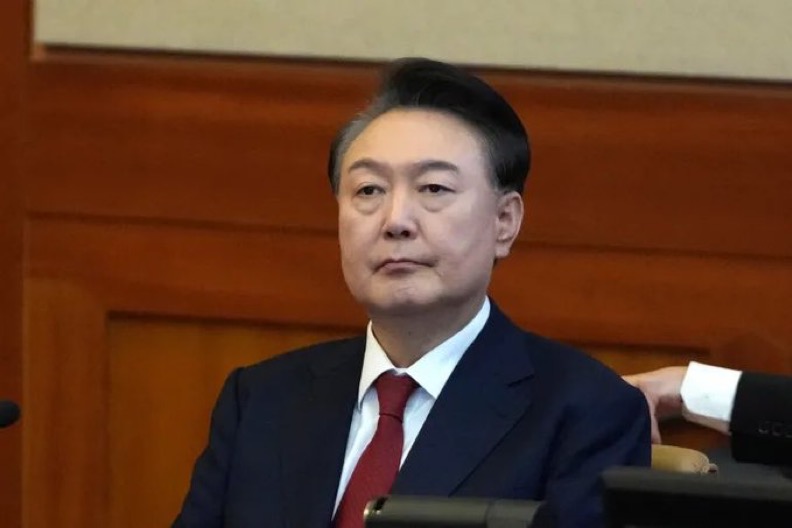
SEOUL — The Seoul Central District Court delivered a monumental verdict on Friday, June 12, 2026, sentencing former South Korean President Yoon Suk Yeol to 30 years in prison. This conviction marks a significant escalation in the ongoing legal aftermath of South Korea's 2024 political crisis, focusing specifically on Yoon’s orchestration of unauthorized military drone incursions into North Korea. The court found that these provocative acts were not intended to serve national security but were, instead, a calculated attempt to manufacture a state of crisis to justify his subsequent, failed martial law declaration.
The Verdict and the "Treason" Charge
The 30-year sentence was handed down on charges of "general treason," a severe legal classification in South Korea concerning acts that harm the nation's military interests or benefit an adversary. Prosecutors successfully argued that Yoon, alongside high-ranking defense officials, planned and executed the drone flights over Pyongyang in October 2024. These missions, which involved the dropping of propaganda leaflets, were designed to goad the Democratic People's Republic of Korea (DPRK) into a military response.

The court concluded that Yoon’s objective was to create an atmosphere of national emergency that would provide a legal and political "pretext" for his imposition of martial law on December 3, 2024. Presiding judges noted that the drone operations represented an egregious misuse of military power for private political gain, effectively compromising South Korea’s security posture and potentially exposing sensitive military capabilities to the North.
Collateral Convictions and Accountability
The sentencing underscored the systemic nature of the operation. Several key members of Yoon’s former administration were also held accountable for their roles in the drone incursion:
-
Kim Yong-hyun (Former Defense Minister): Received a 30-year prison sentence, reflecting the court's view that he played a primary role in the operational planning.
-
Yeo In-hyung (Former Head of the Defense Counterintelligence Command): Handed a 15-year prison term for his involvement in coordinating the clandestine operations.
-
Kim Yong-dae (Former Head of Drone Operations Commands): Received a three-year sentence, which was suspended for five years, acknowledging his subordinate role in the execution of the flights.
These rulings follow a broader string of convictions. In February 2026, Yoon was already sentenced to life in prison for his role in leading an insurrection during the martial law attempt. While his legal team continues to appeal these judgments—arguing that the drone flights were a defensive response to North Korea's campaign of sending trash-laden balloons across the border—the judiciary has remained unmoved, consistently ruling that the President lacks the authority to use the military to manufacture domestic political outcomes.
Historical Context of the Crisis
Yoon’s presidency collapsed following his surprise late-night announcement of martial law on December 3, 2024. Although the decree was nullified just six hours later by a unanimous vote in the National Assembly, the event triggered a constitutional crisis that paralyzed the government, rattled regional security, and eventually led to his impeachment and removal from office by the Constitutional Court in April 2025.
The ensuing political vacuum resulted in snap elections, which brought current President Lee Jae-myung to power. The sentencing of the former president is widely viewed by observers as the culmination of the country’s most significant democratic test since its transition to democracy in the late 1980s. By holding the nation’s highest official accountable for orchestrating a false-flag provocation and attempting to subvert civilian rule, the South Korean judiciary has sent a clear message regarding the limits of executive authority. As the country looks toward the future, these legal milestones remain essential to the restoration of institutional trust and the stabilization of its democratic governance.