The Netherlands has returned a historic Benin Kingdom artefact to the Oba of Benin, Oba Ewuare II, 129 years after cultural objects were looted during the 1897 British invasion of the Benin Kingdom.
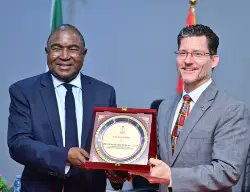
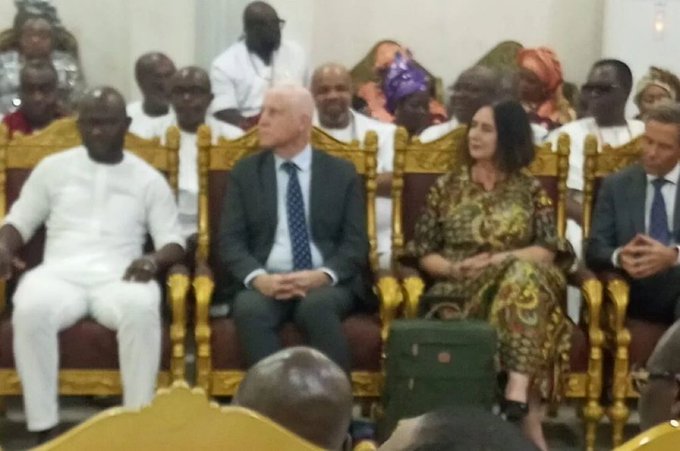
The artefact was formally presented at the Oba’s Palace in Benin City on Tuesday, October 20, 2026, during activities marking Oba Ewuare II’s 10th coronation anniversary. The presentation was made by Dutch officials, including Frank Keurnorst, Consul General of the Netherlands, and Beatrice van Bormann, Executive Director of Museum De Fundatie in the Netherlands.
The latest restitution adds to growing international efforts to return cultural objects removed from the former Benin Kingdom during the colonial era.
Artefact returned to the Benin Palace
The returned object had been held at Museum De Fundatie in the Netherlands since 1937, according to van Bormann. She said research into its history traced its production to the 18th century and linked its symbolism to reincarnation and the Olokun deity.
The specific name or catalogue designation of the artefact was not provided in the reports announcing the return.
Its presentation directly to the Oba of Benin was therefore significant to the traditional institution, coming at a ceremony dedicated to marking a decade since Ewuare II ascended the throne.
Chief Lucky Imasue, chairman of the Oba’s 10th coronation anniversary committee and a former deputy governor of Edo State, described the return as an important development in the longstanding campaign to recover Benin cultural heritage.
Imasue said the Netherlands had initiated the return of artefacts taken from the Benin Kingdom following the 1897 invasion. He added that further objects were expected to be returned.
He also maintained that Benin artefacts belong to the Oba of Benin, regardless of the number of objects involved.
The 1897 invasion and the loss of Benin heritage
The restitution is connected to one of the most significant episodes in the history of Nigeria's cultural heritage.
In February 1897, British forces invaded Benin City during a punitive expedition against the Benin Kingdom. The invasion resulted in the destruction and looting of the royal palace and the removal of thousands of objects, including bronze plaques, sculptures, ivory works, royal regalia and other objects documenting the history and traditions of the kingdom.
Many of those objects were subsequently dispersed among museums, galleries and private collections across Europe and North America.
The Netherlands has acknowledged the colonial circumstances surrounding a large number of Benin objects in its collections.
In February 2025, the Dutch government announced that it would return 113 Benin Bronzes from the Dutch State Collection to Nigeria following provenance research and a recommendation by the country's Colonial Collections Committee. The municipality of Rotterdam separately agreed to return six additional Benin objects.
Those 119 objects were subsequently returned to Nigeria in 2025, making the Netherlands one of the European countries actively involved in the restitution of Benin heritage.
The latest return to Oba Ewuare II is separate from that earlier 119-object restitution.
Oba Ewuare II's role in the restitution campaign
Imasue said efforts to recover Benin artefacts had existed under previous monarchs but gained additional momentum during the reign of Oba Ewuare II.
The Oba's diplomatic background has been particularly relevant to international engagement. Before ascending the throne, Ewuare II served as a Nigerian diplomat and ambassador.
According to Imasue, that experience helped strengthen diplomatic efforts aimed at recovering objects associated with the Benin royal palace.
The Federal Government, through the National Commission for Museums and Monuments (NCMM), has also been involved in the wider restitution process.
Imasue said the commission recognises that the objects were taken from the Oba's palace and should ultimately be returned there.
The issue of ownership and custody has been an important part of Nigeria's negotiations with museums and governments holding Benin objects abroad.
In the 2025 Dutch restitution, for example, the Dutch government stated that the returned objects would go to the Nigerian government, which would determine how and where they would be displayed. The objects were initially placed at the new NCMM Oba Ovonramwen storage facility at the National Museum in Benin City.
A growing international restitution movement
The Netherlands' decision is part of a broader international movement to address the presence of African cultural heritage in European and North American collections.
Germany reached an agreement with Nigeria in 2022 concerning the repatriation of more than 1,000 Benin Bronzes. London's Horniman Museum also returned 72 Benin objects, while institutions in the United States have returned additional objects.
The Dutch government has described its restitution programme as part of an effort to address historical injustice involving cultural objects removed from former colonies.
When announcing the return of the 113 objects in 2025, then-Dutch Culture Minister Eppo Bruins said the Benin Bronzes were important records of the history of the Benin Kingdom and held significant meaning for Nigeria.
The Netherlands also said its decision followed detailed provenance research conducted in cooperation with Nigerian authorities.
The significance of the latest return
For the Benin Kingdom, the return of individual objects has significance beyond their artistic or monetary value.
Benin artefacts provide visual records of the kingdom's political structure, royal traditions, religious practices and relationships with other societies.
Many of the objects were created by highly skilled royal guilds and were used within the palace or associated with the Oba and the kingdom's institutions.
Their dispersal after the 1897 invasion meant that important elements of Benin's tangible heritage ended up thousands of kilometres away from the community in which they were produced and used.
The return of an individual object can therefore reconnect part of that history with its original cultural setting.
Van Bormann's account of the returned artefact's association with reincarnation and Olokun adds another layer to its significance. Olokun is associated with the sea and wealth within Edo traditional belief, while the returned object was described as having symbolic significance connected to the deity.
Oba Ewuare II seeks stronger ties with Portugal
The restitution ceremony also provided an opportunity for the Oba to discuss Benin's historical relationship with Portugal.
Portugal's Ambassador to Nigeria, Paulo Martins Santos, attended the anniversary ceremony alongside the Dutch delegation.
In his remarks, Ewuare II said he intended to strengthen cultural and historical relations between the Benin Kingdom and Portugal.
The monarch referred to the longstanding relationship between Portugal and Benin, including the establishment and development of the Holy Aruosa Church during the period of Portuguese contact with the kingdom.
Ewuare said his ancestors had attempted to adopt elements of Catholicism while maintaining traditional Benin religious beliefs.
He also recalled his experience as Nigeria's ambassador in Rome, saying he was surprised to learn about the Vatican's recognition of African traditional religions.
More Benin artefacts expected to return
The latest restitution is unlikely to be the final chapter in the campaign to recover Benin cultural objects.
Chief Lucky Imasue said more artefacts were expected to be returned, reflecting the continuing efforts by Benin traditional authorities, Nigerian institutions and international partners.
The Netherlands itself has already established a significant precedent through the return of 119 Benin objects in 2025, while its latest presentation to Oba Ewuare II demonstrates that restitution discussions are continuing beyond that earlier transfer.
The challenge now extends beyond securing returns to determining how recovered objects should be preserved, documented and displayed.
For Nigerian authorities and the Benin Kingdom, the returns provide an opportunity to develop stronger museums, conservation facilities and cultural programmes capable of preserving the objects for future generations.
The Netherlands has previously expressed hope that restitution would become the foundation for continued cooperation between Dutch and Nigerian museums rather than the end of their relationship.
The return to Oba Ewuare II, coming on the 10th anniversary of his coronation, therefore carries both historical and symbolic importance.
After 129 years outside the kingdom, another piece of Benin's cultural heritage has been brought back into the custody of the institution from which it was removed.