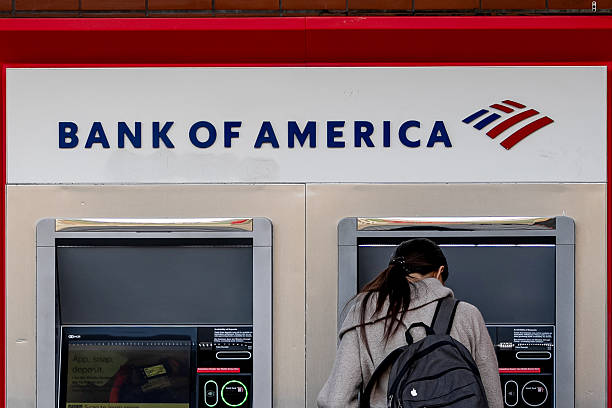
The United States government has imposed more than $1.21 billion in penalties on Bank of America over widespread failures in its anti-money laundering and sanctions compliance systems, including the bank’s failure to report more than $5 billion in suspicious transactions.
The enforcement action, announced by the US Treasury Department on October 13, represents the third-largest penalty in Treasury history and the largest civil money penalty ever imposed by the Office of the Comptroller of the Currency (OCC).
The action targets deficiencies that regulators say persisted despite a 2024 cease-and-desist order requiring Bank of America to improve its anti-money laundering controls.
Bank Failed to Report More Than $5 Billion in Suspicious Activity
According to the Treasury Department, Bank of America admitted that it willfully violated the Bank Secrecy Act by failing to maintain an effective anti-money laundering programme and failing to file required suspicious activity reports.
Regulators found that the bank failed to report more than $5 billion in suspicious transactions to the Financial Crimes Enforcement Network (FinCEN).
More than $1 billion of the transactions involved national-security-related and other priority illicit-finance risks, including activity associated with Chinese money-laundering networks, fraud and potential trade-based money laundering linked to the US southwest border.
The Treasury said the bank's internal systems allowed suspicious activity to accumulate without being investigated for extended periods, resulting in reports being filed late and reducing their usefulness to law enforcement.
$750 Million OCC Fine
The OCC separately imposed a $750 million civil money penalty on Bank of America for deficiencies in its Bank Secrecy Act and anti-money laundering compliance programme.
The OCC described the programme as deficient and ineffective and said the bank's transaction-monitoring system failed to properly monitor trillions of dollars in transactions.
The regulator also found that Bank of America's compliance personnel lacked sufficient training and expertise in identifying, investigating and reporting suspicious activity.
The $750 million penalty is the largest ever imposed by the OCC.
Importantly, the $750 million is credited against the $1.2 billion FinCEN penalty rather than being added on top of it. The separate sanctions settlement brings the overall regulatory bill to approximately $1.21 billion.
Bank Also Settles Sanctions Violations
The enforcement action extends beyond money laundering controls.
The Treasury's Office of Foreign Assets Control (OFAC) announced an additional $11.6 million settlement with Bank of America over 475 apparent violations of multiple US sanctions programmes.
Regulators said the violations involved payments connected to sanctions programmes targeting Russia, Belarus, Iran, Burma, Somalia, narcotics and global terrorism.
The Treasury said the bank processed millions of dollars in payments involving blocked banks and designated individuals as a result of technical and human errors, inadequate sanctions-alert calibration and failures to promptly update watchlists.
Regulators Say Problems Continued After 2024 Order
The latest penalties are particularly significant because Bank of America had already agreed to a December 2024 cease-and-desist order requiring it to address deficiencies in its anti-money laundering programme.
According to the OCC, the bank still had major weaknesses more than a year after agreeing to that order.
The regulator said Bank of America continued to fail to escalate potentially suspicious activity to investigators and had not completed important measures required to establish an effective compliance programme.
The OCC also found that the bank's audit function failed to identify longstanding compliance problems that were later uncovered by regulators.
Bank of America Responds
Bank of America acknowledged the enforcement actions and said it had invested billions of dollars in technology and employed thousands of people to combat financial crime.
“Financial crime compliance is serious, and we are responsible for getting it right,” a bank spokesperson said, adding that the institution was committed to completing the work required by regulators.
The bank's third-quarter results were also affected by the penalty.
Reuters reported that Bank of America recorded a $1.2 billion charge related to the regulatory action, reducing third-quarter net income by approximately 17 cents per share.
Independent Review Ordered
As part of the enforcement action, Bank of America must work with an independent third party to conduct a review of past transactions.
The review will seek to identify suspicious transactions that the bank failed to detect or report when it was required to do so.
The bank will also undergo independent reviews of its suspicious-activity monitoring, customer due diligence, foreign correspondent account controls and relevant data-governance systems.
The reviews will specifically examine risks connected to the US southwest border, potential narcotics trafficking, Iran and Russia.
Third-Largest Treasury Penalty
The $1.2 billion FinCEN penalty ranks among the largest enforcement actions ever taken by the US Treasury Department.
Treasury described it as the third-largest penalty in the department's history, behind major settlements involving Binance and TD Bank.
The case highlights the increasing regulatory pressure on major financial institutions to maintain effective systems for detecting money laundering, terrorist financing and sanctions violations.
For Bank of America, the financial penalty is accompanied by mandatory remediation and independent oversight designed to address the weaknesses regulators identified.