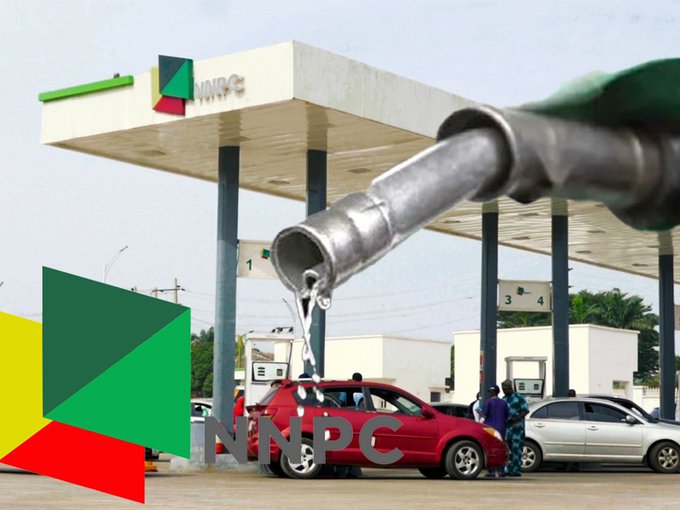
The Nigerian National Petroleum Company Limited (NNPC Ltd.) has extended its ₦66-per-litre petrol discount at NNPC Retail stations nationwide until October 31, 2026, giving motorists additional relief as global crude oil prices remain elevated amid the conflict in the Middle East.
The discount was initially introduced on October 1 to mark Nigeria’s 66th Independence Anniversary and was expected to run for only a week. NNPC has now extended the initiative for the remainder of October.
NNPC Extends Discount Across Its Retail Network
NNPC said on Friday that the ₦66 discount would continue at its retail stations across the country through October 31.
The company described the initiative as a temporary customer-relief measure designed to reduce the immediate impact of higher petrol prices on Nigerian households, commuters, transport operators and businesses.
NNPC’s Chief Corporate Communications Officer, Andy Odeh, said the discount was introduced as global crude oil prices rose amid heightened uncertainty associated with the Middle East conflict.
The company said the extension is part of efforts to support the Federal Government’s measures aimed at cushioning the effects of higher energy costs on Nigerians.
For motorists who purchase petrol at participating NNPC Retail stations, the extension means the ₦66-per-litre reduction will remain available until the end of October, subject to the applicable terms of the promotion.
NNPC Says Discount Is Not a Return of Fuel Subsidy
The extension has also prompted NNPC to clarify that the initiative should not be interpreted as a restoration of Nigeria’s former petrol subsidy regime.
The company said the discount does not alter the country's market-based petroleum pricing framework.
According to NNPC, the measure applies specifically to its retail outlets and does not establish a uniform national pump price for petrol sold by other marketers.
The company urged Nigerians to disregard interpretations suggesting that the discount represents a return to the subsidy system abolished in 2023.
Finance Minister and Coordinating Minister of the Economy, Taiwo Oyedele, similarly explained that a retailer reducing its margin is different from a government-funded subsidy.
Under a traditional subsidy arrangement, public funds are used to cover part of the difference between the market cost of a petroleum product and the price paid by consumers.
In this case, the government has said NNPC Retail is reducing or foregoing part of its retail margin to provide temporary relief.
Middle East Conflict Pushes Up Global Oil Prices
The discount comes as international energy markets face renewed pressure from the conflict in the Middle East.
Nigeria's petrol prices remain closely connected to global crude oil prices, exchange-rate movements and the cost of supplying refined petroleum products to the domestic market.
The Federal Government has acknowledged that the global energy shock is putting additional pressure on Nigerian households and businesses.
The Presidency said NNPC Retail had agreed to forgo its petrol retail profit margin and sell fuel at cost for a period of 30 days as part of a broader package of measures designed to cushion Nigerians from global crude oil price volatility.
The government has also said it is working on measures aimed at reducing volatility in petrol prices rather than returning to a blanket subsidy.
Government Announces Additional Measures
The petrol discount is only one component of the Federal Government's response to the recent increase in fuel prices.
According to the Presidency, the government is considering a ceiling of ₦1,350 per litre on the ex-gantry or landing cost of petrol to help limit sharp movements in pump prices.
Under the proposed mechanism, refiners and importers would carry temporary differences when costs rise above the ceiling and recover them when market conditions improve.
The government said the mechanism would be reviewed periodically and would not amount to conventional price control or a return to fuel subsidy.
Other measures announced include increased cash transfers for vulnerable households, subsidised credit for small businesses and consumers, faster deployment of compressed natural gas (CNG), and efforts to reduce taxes and levies that add to transportation and logistics costs.
The government is also considering an excess-profit tax for businesses accused of taking undue advantage of consumers during the energy-price shock.
CNG Expansion Also Part of the Response
The Federal Government is seeking to reduce the country's dependence on petrol by accelerating the deployment of CNG-powered transportation.
The Presidency said CNG can be significantly cheaper than petrol and that increased adoption could help transport operators reduce operating costs.
The government expects transporters to pass some of those savings to passengers through lower fares.
It also announced plans for a National Strategic Fuel Reserve, which would allow refined petroleum products to be released into the market during future supply disruptions or periods of excessive price volatility.
The government said the reserve would be designed to protect supply without fixing pump prices or reintroducing a blanket subsidy.
What the Extension Means for Motorists
For motorists who regularly buy petrol from NNPC Retail stations, the extension provides another three-plus weeks of access to the ₦66-per-litre reduction beyond the original October 7 deadline.
The savings could be significant for high-volume users.
For example, a motorist purchasing 50 litres would receive a nominal saving of ₦3,300 at the ₦66-per-litre discount rate.
A customer purchasing 100 litres would save ₦6,600 under the same calculation.
However, the actual pump price paid by motorists can vary between locations because the discount does not establish a single national petrol price.
NNPC has emphasised that the initiative applies to its own retail outlets rather than creating a mandatory price reduction for every petrol station in Nigeria.
NNPC Maintains Market-Based Pricing
Despite the temporary discount, NNPC said it remains committed to the market-based pricing framework for petroleum products.
The company said the initiative was designed to provide immediate relief while maintaining commercially responsible operations.
The distinction is significant because Nigeria's removal of petrol subsidy in 2023 was followed by substantial increases in fuel prices and transportation costs.
The latest intervention therefore seeks to reduce the impact of an external oil-price shock without formally reversing the policy framework.
NNPC said it would continue providing information about the scope and duration of its customer initiatives so that consumers can understand how the discounts operate.
Relief Comes as Nigerians Face Higher Living Costs
The timing of the extension is significant for Nigerian households already dealing with elevated transportation, food and operating costs.
Petrol prices have a broad effect on the economy because fuel is used not only by private motorists but also by commercial transport operators, businesses, farmers and logistics companies.
An increase in petrol prices can therefore raise the cost of moving people and goods and contribute to higher prices across other sectors.
By extending the discount through October 31, NNPC is providing a temporary buffer against some of those effects.
However, the relief remains limited in duration. The government has stressed that the measures are intended to cushion Nigerians while global energy markets remain volatile rather than permanently replacing the market-based pricing system.
For motorists, the immediate benefit is straightforward: the ₦66-per-litre NNPC Retail discount will remain available until October 31, 2026.
The longer-term question will be whether global oil prices stabilise sufficiently for petrol prices to ease without further intervention, or whether additional measures will be required if the Middle East conflict continues to affect energy markets.